
Slate Magazine: David Weigel: ‘Filibuster Reform Kicks Open the Coffin and Returns From the Dead’

Filibuster Reform Kicks Open the Coffin and Returns From the Dead

Source:Slate Magazine– Richard Cordray is President Barack Obama’s nominee to head the Consumer Financial Protection Bureau.

“So far, it seems like only Greg Sargent and HuffPost are noticing: Democrats are talking about filibuster reform again. The latest progress report comes in this story from Ryan Grim and Jennifer Bendery, who find Democratic senators newly frustrated by their failure to pass bills or confirm nominees, especially CFPB head Richard Cordray.

Reid indicated Tuesday that he would bring Cordray’s nomination to a vote in July, and a Senate Democratic aide said that vote will come at a time when Reid is ready to launch into a broader fight over all of Obama’s stalled nominees. The “plan is to wait until immigration is complete before engaging in total all-out nom[ination] fight,” said the aide.

What kind of fight are we talking about? It starts with Democrats claiming to hold 51 votes to end the filibuster on executive branch nominees, because Republicans are being unreasonable. Republicans have tried to blunt the attack by proving that, hey, they’re letting people through and you’re not noticing.

“This President is being treated exceptionally fairly,” said Iowa Sen. Chuck Grassley, the ranking member of the Judiciary Committee, on the floor this week. “The President has recently submitted a few new nominations. I know I have been reminding him that we can’t do anything about vacancies without him first sending up nominees. But again, even with the recent nominations, 58 of 82 nominations still have no nominee.”

Basically, Republicans need to lower the temperature and portray Democrats as unreasonable liars. “More executive branch appointments, confirmations, by and large – it’s been handled in a very bipartisan way,” said Mitch McConnell yesterday in his brief weekly on-camera press conference. This is one reason you saw so much harrumphing when Sen. Ted Cruz bragged to Texas conservatives that “squishes” sold him out on his filibuster of the motion to proceed to debate on guns. That fed into the public impression that Republicans were obstructionists – and, well, they are, for lots of good reasons, but it’s tough to sell when something popular is being obstructed.

So Republicans hype the nominees they let through, ask why Obama isn’t sending more nominees, and (as Daniel Foster pointed out in National Review) nominating conservatives for mandatory seats on bipartisan panels, whenever possible. They also express shock that Democrats would change the rules, or think about it.
“The majority leader said earlier this year that he would not change the rules in any extraordinary way, the nuclear option, in this Congress,” said McConnell on Tuesday. “I take him at his word. The assumption is that will not be done.”

From Slate Magazine

“Senate Majority Leader Harry Reid (D-NV) clearly explains how the republican minority was abusing senate rules at historic levels, leaving the democrats no choice but to change those rules and lower the number of votes needed from 60 to 51 to overcome obstructionist filibusters of presidential nominees.”

Filibuster Reform Clearly Explained by Senate Leader Harry Reid

Source:TOC– U.S. Senate Majority Leader Harry Reid (Democrat, Nevada)

From TOC

To be completely fair and to put everything out there and I do agree with probably everything that Majority Leader Harry Reid said in his speech, but Senate Democrats led first by Tom Daschle in 2003-04 and later Harry Reid when he was Senate Minority Leader from 2005-06, did the exact same thing that Senate Republicans led by Mitch McConnell are doing now, that Republicans are in the minority. They’re blocking nominees simply because they don’t like them, or are worried that Democrats will get a partisan advantage in the Federal court system. Which is exactly what Senate Democrats first led by Tom Daschle and later Harry Reid, did to then President George W. Bush, when Democrats were in the minority in the mid 2000s.

I think the only solution here is really clear and I also agree with Leader Reid on this as well. There should be no more filibusters on any executive or judicial nominee, that clears the committee with a majority vote. And in exchange, the minority party led by the Minority Leader can offer amendments to all the nominees that they disapprove of. Amendments like before this nominee is approve, the Senate needs answers to these questions or have these documents turned over first. But those amendments would just need majority approval as well. But at the end of the day, if the President and the Senate has a majority vote for the nominees, they should be approved.

You can also see this post on Blogger.

You can also see this post at The Daily Press, on Blogger.

You can also see this post at The Daily Press, on WordPress.

Posted in Originals, Slate Video | Tagged , , , , , , , , , , , , , , , , , , , , , , , , , , , | 3 Comments

ABC News: ABC Evening News, January 11, 1978

ABC Evening News Anchor Frank Reynolds

ABC Evening News Anchor Frank Reynolds

Source:The Daily Press

The economy was probably the biggest story of 1978, because that’s went it went down hill and didn’t come back until late 1983. With high unemployment, high interest rates, high inflation, and energy shortage and a recession in 1979-80 and all these things started in 1978. It was called the Great Deflation that started with the 1973 oil embargo that led to energy shortages. America was getting out of Vietnam and jobs were no longer being created from that war. Economic growth slowing down, unemployment going up. As well as the Federal budget deficit, interest rates and inflation. Even if the economy looked solid in January, of 78 with fairly low unemployment that was about to change very quickly by the spring that year.

As far as the smoking report, I’m not a fan of the nanny state and anyone who is familiar with by blogging knows that. But I am a big fan of education and commonsense regulation and that is what the Carter Administration was doing here. Tobacco obviously comes with serious health risks even if you don’t smoke, but hang out with people who smoke around you. So of course Americans have a right to know what they’re putting in their bodies before they do that, along with having the right to make the decision themselves what exactly they should put in their bodies. So of course no to prohibition when it comes to tobacco and no to the nanny state in general. But Americans have a right to breathe clean air and not to have to pay for other bad decisions. Which is where commonsense regulations and taxes come in.

What was otherwise a pretty bad year politically for President Jimmy Carter and his administration with the economy about to tank, which by itself may have cost President Carter his reelection, was actually pretty good for him in foreign affairs. With the Camp David Accords that he and his administration helped negotiate between Israel and Egypt. A peace agreement that got Egypt to recognize the only Jewish country in the world in Israel and the only Jewish state in the entire Middle East. That is surrounded by big Arab countries like Egypt, Syria, Iraq, Saudi Arabia and a big Persian country in Iran and a big Turkish country in Turkey. And that peace agreement almost forty-years later has held ever since. President Carter also got the Panama Canal Treaty passed by the Senate as well.

1978, the start of the second year of the Carter Administration that had an economy that was about to go south. Rising interest rates, inflation, rising energy costs and an energy shortage, but they did manage to get some important legislation through Congress. An energy bill and they got the airline industry deregulated which created a lot more competition there. They kept us out of war, they kept the deficit down even dealing with a very Progressive if not New-Left Democratic Congress that wanted all sorts of new spending and new taxes to finance their new programs. So President Carter and his administration, actually managed to get a lot done in their four years.

Posted in Classic News, The Daily Press | Tagged , , , , , , , , , , | Leave a comment

The Washington Post: Charles Lane: ‘Austerity & Keynes Can Coexist’

Charles Lane_ The Washington Post - Google SearchSource:The Washington Post columnist Charles Lane.

“For those of us trying to sort out the debate over economic “austerity,” there’s a limit to what can be learned by inspecting the credentials of the contending economists.

Yes, the fiscal-stimulus vanguard includes a couple of famous Nobel winners, but those pesky Swedes also gave their prize to the harshest postwar critic of Keynesian economics, a man whose signature policy proposal was the balanced-budget amendment.

I refer to the late James Buchanan, dean of the “Public Choice” school of economics and the 1986 Nobel recipient.

Now, you might say this contradiction discredits the Nobel. I prefer to see it as appropriate recognition that both Buchanan and such anti-austerian Nobel laureates as Paul Krugman and Joseph Stiglitz have their points.

Both sides actually agree that deficit spending or loose monetary policy, or both together, can goose the economy in the short run.

Their differences reflect not so much economic principles as deep-seated beliefs about how society should, and does, operate.

Krugman et al. place top priority on the short-term problem of alleviating unemployment. Although they often cast this as a moral issue, they also argue that avoidable idleness reduces the economy’s growth potential, as jobless workers tend to lose skills or quit the labor force altogether. Compared with these risks, possible future inflation and debt accumulation hardly matter, and wise politicians would proceed accordingly. “In the long run we are all dead,” quoth John Maynard Keynes.

Buchanan’s contribution was to remind everyone that, in a democracy, deficit spending is very easy to turn on and very hard to turn off. This one-way ratchet in favor of debt reflects not mistaken economic thinking but ordinary political thinking: Spending programs create dependent constituencies, which lobby for them long after the initial crisis has passed. And vote-seeking politicians oblige, usually neglecting to raise the corresponding, but unpopular, taxes.

Keynes argued that depression-­fighting deficits should give way to boom-moderating surpluses. Buchanan said, in effect, “fat chance.” If you think he was wrong, consider the longevity of the mortgage interest deduction or such New Deal programs as farm supports and the Federal Housing Administration.

No doubt, persistent unemployment shrinks the economy’s capacity to grow, and to create jobs. Buchanan argued, though, that the same result comes from persistent mis-allocation of resources through outmoded but politically untouchable government programs.

In other words, Buchanan identifies the Achilles’ heel of Krugmanomics: that politicians simply cannot be trusted, over time, to manage the economy as Keynes prescribed. In the name of fighting unemployment today, they lay the basis for more of it tomorrow.

Buchanan foresaw the industrial world’s accumulation of structural inefficiencies — from U.S. entitlement programs to Italy’s rigid labor markets to Japan’s protectionism — none of which caused the Great Recession but all of which impede optimal use of resources.

Buchanan was, however, unrealistic in his own way. Not all spending is pandering; some of it, such as basic research funding, can boost the economy’s growth potential. And democratic politicians can hardly be expected not to respond to the short-term economic suffering of their peoples.

Buchanan wanted to constrain governments through constitutional rules. But the difficulties of this one-size-fits-all approach are on display in Europe, where Germany is unwisely trying to impose its balanced-budget orthodoxy on the entire euro zone.

It’s possible, in theory, to reconcile the Krugman and Buchanan worldviews. During crises, governments could use term-limited fiscal and monetary stimulus to prop up demand, buying time to reform accumulated structural impediments to growth.

Japan is trying a version of this approach under Prime Minister Shinzo Abe — though its actions during the previous two decades, when it used spending and debt to, in effect, avoid structural reforms, suggest this will be much easier said than done.

Krugman, Stiglitz and their German nemeses can argue endlessly, and probably will. The only thing I’m sure of is that neither side can achieve the kind of scientific victory that, say, Copernicus won over the Ptolemaic model of planetary motion.

This ostensibly economic debate is being conducted amid uncertainty over such basic parameters as the multiplier effect of taxes and spending; the long-term impact of zero interest rates; and even “full” employment. (Come to think of it, does “austerity” even have a technical definition?)

It is also essentially about value judgments and trade-offs. Nobelists may be better qualified to describe the issues than the average voter, but they are no better qualified to decide them.”

From The Washington Post

Posted in Originals, The Washington Post | Tagged , , , , , , , , , , , , , , , , , , , , , , , | Leave a comment

Levi’s: Curve ID Commercial

10965

Source: Kim Neidhardt– Levi’s Curve ID commercial

Source:The Daily Press

“The Levi’s® Curve ID fit system was created as a result of studying and listening to more than 60,000 women around the world. Through this research, Levi’s® designers created a new approach to measuring a woman’s body and identified the three distinct body types that account for 80 percent of women’s shapes universally.

The video was shot by award winning feature film director Andrew Lancaster and features a hot 60s inspired track.”

From Lewis Aunz

Three models for Levi’s Curve ID denim jeans. These aren’t skinny girl jeans, but jeans for women with meat on their bones (as the saying goes) that are proud of their physical features and like to show them off. Not for women who starve themselves and are scared to death of putting on an entire pound.

Curve IDSource:Levi’s– Curve ID denim jeans.

I love Levis commercials for women. I think they are the best looking denim jeans on women and there’s no secret why Levis Strauss is so big and popular and I believe a big part of that is their women’s jeans are so classic and simple.

Classic tight blue denim that highlights women’s curves, legs and butts without needing any special decorations or anything else to get people to want to look at the jeans. They are simply great looking jeans because of the material of denim that they use both their blue and black denims.

And I really Levis Curve ID, which is what this commercial is about. Tight denim Levis for sexy healthy women. Not stick-figures or obese women, but sexy healthy women who take care of their bodies and like to reward themselves for looking great and taking care of their of themselves and want to highlight their curves.

Which is what you see in this commercial. Healthy sexy women who look great and because of that they look great in their Levis Curve ID jeans and makes this a good commercial.

Posted in Style, The Daily Press | Tagged , , , , , , , , , , , , , , , , , , , , , , , , , , , | Leave a comment

Chris Myers: Interviews Joe Montana

Chris Myers interviews Joe MontanaSource:Chris Myers interviewing Pro Football Hall of Fame QB Joe Montana.

Source:The Daily Press

“A look at the past Chris Myers Interviews. Chris Myers interviews Joe Montana from CMI Chris Myers Interview”

From Chris Myers

If you judge quarterbacks by their size or their physical abilities or their numbers, Joe Montana doesn’t stack up very well except for his numbers. But if you judge quarterbacks by how well they play in big games and how they do when the game is on the line and how they play the game, then you are going to have an impossible time finding a list of quarterbacks who you could even compare with Joe Montana as far as great quarterbacks. The list would be like two quarterbacks at least as far as I’m concern. John Unitas and John Elway and perhaps Otto Graham as well and that’s about it.

Some QB’s have a nice run 5-6 years where they do well and then you can say they are one of the best quarterbacks in the NFL, Rich Gannon comes to mind with the Oakland Raiders. And then there are quarterbacks who may have a short run of greatness, but accomplish so much in that period that it lands them in the Hall of Fame. Terry Bradshaw comes to mind with the Pittsburgh Steelers. But it’s hard to find many if anyone who were as great as Joe Montana for as long as Montana in the history of the NFL.

When I think of Joe Montana I think of the QB who played for the best team and the best head coach of his era. The San Francisco 49ers playing for the best offense and playing with a great defense where he for the most part didn’t have to win games on his own. Joe Cool was a possession passer who would beat you with play after play, pass after pass. And when the defense got tired of that and came after Joe, he could go deep on the defense with wide receivers like Jerry Rice or John Taylor.

And earlier Joe had Freddie Solomon and Dwight Clark. So if you want to play press coverage against Joe and the 49ers, now you are at risk of giving up the deep pass against the 49ers. Because their West Coast offense always had the deep threat in guys who would look for the big play. Especially against press coverage which is what made this offense so great because it forced defenses to defend the whole field. Short, middle and deep and Joe was the best at running this offense.

What separates Joe Cool from anyone as far as quarterbacks again except for John Unitas and John Elway, you could make a very good case for any of these three quarterbacks as the best all-time, is they all played a long time, but they were all great quarterbacks for a long time and how well they played in the big games for as long as they did. A lot of quarterbacks hang around and stay in the league for a long time. But it’s the special quarterbacks that are not just in the league forever as it may seem, but they are great QB’s for so long. Winning so many games and championships and that’s the type of QB Joe Cool was.

Posted in NFL Greatest, The Daily Press | Tagged , , , , , , , , , , , , , , , , , , , , , , , , , , , , , , , , | Leave a comment

Julie G: ‘Fashion Friday- Levis Denim Jeans For Your Shape’

Attachment-1-563

Source:Julie G– Levi’s Curve ID denim jeans.

Source:The Daily Press

“Take Levis Curve ID Quiz:Levi’s.”

From Julie G

I love women, especially curvy sexy women that are even willing to do videos like this and show what a woman with curves looks like in Levis denim jeans. The jeans she is wearing I believe are for curvy sexy women. Not stick-figures or women who live at all you can eat meat lovers buffets. But healthy sexy curvy women who take care of themselves including staying in shape.

And it’s not just the body, but the jeans that a woman like this curvy sexy woman in general wear. This woman I believe picked out the perfect jeans for her body and sexy women tend to do it. I believe Levis and perhaps Levis Curve ID in particular are not only the perfect, but the best jeans for sexy curvy women.

And to me sexy woman are curvy women. What she described as straight-figured women to me are women that perhaps do not have curves at all. At least in the lower body and slim and perhaps tall as well. Valley girls tend to look like this and put down curvy women as automatically being fat. Even if the curvy woman’s curves are tight and strong, like the woman in the video. Curvy women are simply that, women with curves and sexy curvy women are also healthy.

Posted in Style, The Daily Press | Tagged , , , , , , , , , , , , , , , , , , , , , , , , | Leave a comment

Newsmax: The Steve Salzberg Show- Bud Grant on His NFL Career

Bud Grant, former NFL Head CoachSource:Newsmax– talking to former Minnesota Vikings and Hall of Fame head coach Bud Grant.

Source:This Daily Press

“Bud Grant, former NFL Head Coach joins Steve to discuss his new book, “I Did It My Way: A Remarkable Journey to the Hall of Fame.”

From Newsmax

I don’t want to sound cold here, but if you look at the Vikings four Super Bowl appearances, they were the second best team in every game, so why they would be on a missing rings list from. NFL Films is surprising to me and in really at least two of those games they were clearly the second best team in the Super Bowl. Because only Super Bowl 8 against the Miami Dolphins and Super Bowl 9 against the Pittsburgh Steelers, before the Steelers became a great team on offense, the Vikings were clear underdogs in these games.

The Vikings remind me of the Buffalo Bills of the early 1990s, as teams that got beat badly in Super Bowls by teams that were clearly better than them. The Vikings were overmatched upfront on defense and offense by the Kansas City Chiefs in Super Bowl 4. And by the Oakland Raiders in Super Bowl 11, which meant the Chiefs and Raiders could run against them real well. And take away the Vikings run game and throw the ball when they wanted to do and force the Vikings to throw the ball when they had too.

The Vikings of the late 1960s and 1970s were very good teams on both sides of the ball. But that’s not enough when you play teams that are clearly better than you in the Super Bowl. They lost to two of the best teams of all-time in the 1969 Chiefs and the 1976 Raiders in the Super Bowl. Which is how both games turned into blowouts because the Vikings simply weren’t big and good enough up front to take on those big powerful offensive and defensive lines that the Chiefs and Raiders had.

The Vikings getting beat badly up front, messed up their offense in these games where they had to throw practically every down. Against those big strong quick defensive lines. Against the 69 Chiefs, 73 Dolphins, 74 Steelers and 76 Raiders. The missing rings should be about teams that would’ve won the Super Bowl that year, but came up short and the 98 Vikings would be on that list. Perhaps the 86 Cleveland Browns, the 68 Baltimore Colts or the 1990 San Francisco 49ers. Not for teams that lost the Super Bowl to a better team.

The 69 Vikings are one of the most dominant teams of all-time as far as how they won games and simply dominated their opponents. A team that finished 14-2. But the 68 Colts who lost Super Bowl three were a better team both on offense and defense and a team that should be on this list. A team that won Super 5 against the Dallas Cowboys. What the Vikings were of this era were very good teams especially on defense that didn’t have enough to win the Super Bowl.

Posted in NFL Classic, The Daily Press | Tagged , , , , , , , , , , , , , , , , , , , | Leave a comment

The New Republic: Michael Kinsley: ‘Paul Krugman’s Misguided Moral Crusade Against Austerity’

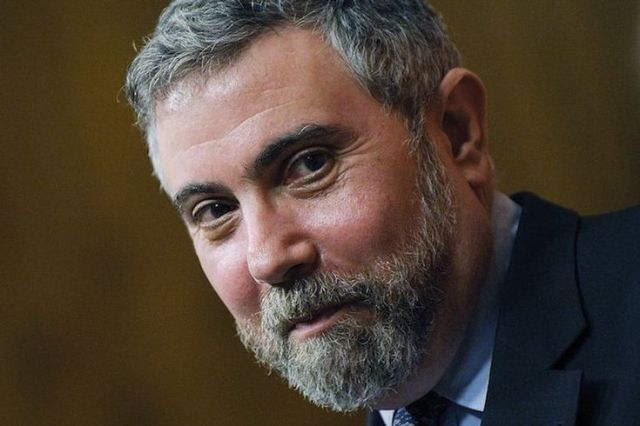
Paul Krugman's Misguided Moral Crusade Against Austerity _ The New RepublicSource:The New Republic with an article about New York Times left-wing columnist Paul Krugman.

“Feeling perhaps that columnist Paul Krugman hasn’t made the point emphatically enough, The New York Times Monday published an op-ed shocker by two academics with the title, “How Austerity Kills.” Kills? Yes, kills.

“Austerity” is the label for one side of the current debate over what to do next for the economy. People who favor austerity are “austerians,” a clever Krugman coinage that makes adherents sound like aliens from another planet. Krugman and his followers are anti-austerians, or sometimes “Keynesians.”

It’s easier to describe what the anti-austerians believe than the austerians themselves. Anti-austerians believe that governments around the world need to stop worrying about their debts for a while and continue pouring money into the economy until the threat of recession or worse is well and truly over. Austerians want the opposite. But what is the opposite? Is President Barack Obama, for example, an austerian? To Republicans and conservatives, no: He pushed through a stimulus package of almost a trillion dollars early in his first term, and remains a symbol of “big spending.” To liberals and Democrats, yes: They feel we need a second and much larger stimulus and Obama has let us all down.

This debate has been going on enjoyably since about 2008, with Krugman almost single-handedly swatting away one feral-looking austerian after another, maddened by their failure to do as he says. He did not write the paper about how austerity kills, but it fits comfortably with everything else he’s been writing on the subject.

The paper at issue, by social scientists from Stanford and Oxford, uses statistics, anecdotes, and international comparisons to demonstrate an unsurprising correllation between unemployment and suicide. They predict that the “sequester” resulting from the most recent budget crisis will increase infant mortality because it cuts off money for child nutrition programs. Prescriptions for antidepressants are up, and 750,000 people, mostly young men, have taken up binge drinking. The authors say that in the United States there were 4,750 “excess” suicides—suicides over and above the number you would expect based on earlier trends.

Meanwhile in Greece, there has been a “public health disaster” because of a 40 percent reduction in medical spending. Thirty-five thousand Greek doctors and other health care professionals have lost their jobs. The authors attribute these upsetting numbers not just to the recession but specifically to the austerity response.

By contrast in Iceland, according to the authors, they held a couple of votes about how to spend IMF bailout money. “Icelanders voted overwhelmingly to pay off foreign creditors gradually, rather than all at once through austerity.” That is one of the least remarkable poll results of all time. But Iceland is better off, they say, than if its citizens had voted the other way.

Bottom line: Austerity is immoral.

What’s more, the authors of this paper are right, in a way. And Krugman is right: Bad economic times are bad for your health. People get depressed and commit suicide. They drink and ruin their livers. They don’t buy their prescription drugs or see the doctor when they should in order to save money. They lose their jobs, come home, and murder their spouses. And austerians fairly explicitly favor bad times. Or at least they favor worse times in the short run than do their rivals, the anti-austerians or (why deny him the glory?) Krugmanites. So austerity does kill in this sense.

But only in this sense. Austerians believe, sincerely, that their path is the quicker one to prosperity in the longer run. This doesn’t mean that they have forgotten the lessons of Keynes and the Great Depression. It means that they remember the lessons of Paul Volcker and the Great Stagflation of the late 1970s. “Stimulus” is strong medicine—an addictive drug—and you don’t give the patient more than you absolutely have to.

I’m not sure how relevant the experiences of Greece and Iceland, as described in this paper, are to the United States. No one here is proposing anything like a 40 percent cut in overall health care spending. On the other hand, “to pay off foreign creditors gradually” sounds more or less like what the austerians in this country have in mind. And no one is suggesting that we start right away, just as no one on the non-austerian side of this debate is proposing that we can run up the national debt forever and we never have to pay any of it back, although they can be hard to pin down on exactly when the payback starts.

Krugman now says that what he is against is “premature” fiscal austerity. So is everybody. They just disagree on what is “premature.” You know what they say: Disputes in academia are especially vicious because the stakes are so small. The stakes in the austerity debate—the actual differences of opinion—get smaller and smaller even while the argument itself gets larger and louder.

Krugman sometimes writes as if, right or wrong, his view is the courageous one, held by folks willing to stand up to the plutocrats and their lackies. But his message to all classes is: party on. It’s your patriotic duty. How much courage does that take? The really tough message—once again, right or wrong—is the one the austerians have to deliver, which is that the party is over. And this leads to a question that Krugman finally addressed in a recent column: What’s in all this for the austerians? If Krugman is right that the results of austerity are harmful and potentially catastrophic, why should the elites who he says have the real power be pushing it so hard? No one on either side of this debate actually wants the economy to tank, surely. But before you can have an ulterior motive, you’ve got to have a motive. What is the austerians’ motive?

Krugman’s answer isn’t bad. He writes:

Some [powerful people] have a visceral sense that suffering is good, that we must pay a price for past sins (even if the sinners then and the sufferers now are very different groups of people). Some of them see the crisis as an opportunity to dismantle the social safety net. And just about everyone in the policy elite takes cues from a wealthy minority that isn’t actually feeling much pain.

There’s something to this, though not enough. There may be a Snidely Whiplash out there somewhere who is willing to take a recession if that’s what is required to rip apart the social safety net. But surely the Obama administration is not filled with people secretly trying to repeal the New Deal, although it’s the Obama administration whose policies Krugman finds so disturbing.

Krugman also is on to something when he talks about paying a price for past sins. I don’t think suffering is good, but I do believe that we have to pay a price for past sins, and the longer we put it off, the higher the price will be. And future sufferers are not necessarily different people than the past and present sinners. That’s too easy. Sure let’s raise taxes on the rich. But that’s not going to solve the problem. The problem is the great, deluded middle class—subsidized by government and coddled by politicians. In other words, they are you and me. If you make less than $250,000 a year, Obama has assured us, you are officially entitled to feel put-upon and resentful. And to be immune from further imposition.

Austerians don’t get off on other people’s suffering. They, for the most part, honestly believe that theirs is the quickest way through the suffering. They may be right or they may be wrong. When Krugman says he’s only worried about “premature” fiscal discipline, it becomes largely a question of emphasis anyway. But the austerians deserve credit: They at least are talking about the spinach, while the Krugmanites are only talking about dessert.”

From The New Republic

Posted in Originals, TNR | Tagged , , , , , , , , , , , , , , , , , , , , , , , , , | Leave a comment

C-SPAN: The Contenders- Wendell Willkie: Wendell Willkie For President (1940)

The Contenders - Wendell Willkie (October 21) Preview

Source:CSPAN– Presidential historian Richard N. Smith, talking about 1940 Republican presidential nominee Wendell Willkie in 2011.

“C-SPAN continues its series “The Contenders” LIVE on Friday, October 21 at 8:00 p.m. ET with Wendell Willkie. In this clip, Presidential Historian Richard Norton Smith, Goucher College History Professor Jean Baker and Washington Editor of Real Clear Politics Carl Cannon discuss Willkie. More information on the series can be found here:CSPAN.”

From CSPAN

Wendell Willkie, is the perfect example of why todays so-called Modern Liberals (the Occupy Wall Street crowd and others) aren’t Liberals, because Wendell Willkie was a real Liberal. And if you look at Franklin Roosevelt’s career the man Wendell ran for President against in 1940, President Roosevelt wasn’t much of a Liberal either, but what I at least call a classical Progressive Democrat: (The real Progressive Democrats)   Someone who believes in using government to help people and advance the country forward through government policy.

But Wendell was the real thing when it comes to being a Liberal as C-SPAN’s The Contenders series program about him shows, that hopefully I’ll have up on this blog in the future. Someone who believed in both capitalism, economic freedom, but balanced with a regulatory state to protect consumers and workers from people who would look to make a profit at their expense.

As well as someone who believed in a safety net for people who needed it. But not a welfare state to take care of people. When individuals should have the freedom to do that for themselves. As well as someone who also believed in civil rights, personal freedom, and civil liberties.

Posted in Classical Liberalism, Originals | Tagged , , , , , , , , , , , , , , , , , , , , , , , , , | Leave a comment

NFL Network: Mike Ditka A Football Life

80s Football Cards_ A Football Life - Mike Ditka HDSource:NFL Network A Football Life Mike Ditka.

Source:The Daily Press

“A Football Life – Mike Ditka HD”

From 80s Football Cards

To understand Mike Ditka you have to understand his upbringing growing up in a tough Western Pennsylvania town. From a blue-collar Polish-American family with a very tough and demanding father who really loved him. Who ends up going to college at Pittsburgh University another real tough iron blue-collar city and then gets drafted by the Chicago Bears. Similar town as Pittsburgh culturally, but with about ten times as many people.

So, Iron Mike for the most part has always been around where he came from and what he’s most comfortable with as a man. And then he ends up playing one of the toughest positions in the game tight end where you have to be tough and physical to be successful.

The Mike Ditka that people got to see as a football player is the Mike Ditka that a lot more people saw as head coach of the Chicago Bears. This get in your face tough ass didn’t take crap from anyone who simply wanted the best from his players.

Mike Ditka was the ultimate tough love head coach father figure that coached the Chicago Bears for eleven seasons (1982-92) and if you look at his record he was very successful one of the most winningest head coaches in the NFL in the 1980s.

You do your job and you give your best effort, Ditka is your best friend. But if you screw up and make mental mistakes or are lazy, Ditka is the last person you want to be around. Because he’ll tell you how bad you were, how dumb you were and how bad of a mistake you’ve made.And if you don’t do better in the future, you better look for another job.

Which was the message of Mike Ditka and you might not like his tactics, but that’s what Ditka was about. And I think something he learned from Tom Landry in Dallas, that if you want the best out of your players, you have to want it, you have to expect it and you better demand it. And your players must be aware of it as well.

Mike Ditka was a blue-collar Polish-American head coach coaching in a blue-collar city with a large Polish-American community.

Iron Mike fit Chicago as well as any head coach has ever fit any major pro sports city. And why he called his football team the 85 Bears the Grabowski’s, because his team were so blue-collar and represented that city so well. And it worked very well in the 1980s until it burned out in the early 1990s when the Bears let him go.

Posted in NFL Films, The Daily Press | Tagged , , , , , , , , , , , , , , , , , , , , , , , , , , , , , , | Leave a comment