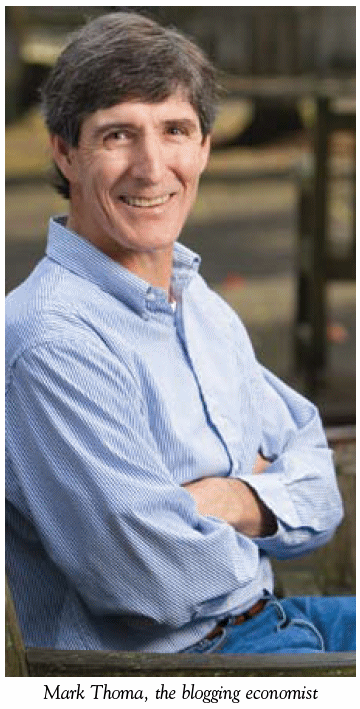
Economist’s View: Mark Thoma- ‘Inequality Rising and Permanent Over Past Two Decades’

Mark Thoma_ Economist's View - Google Search

Source:Economist’s View– economics blogger Mark Thoma.

“(PDF), Vasia Panousi and Ivan Vidangos of the Federal Reserve Board, Shanti Ramnath of the U.S. Treasury Department, Jason DeBacker of Middle Tennessee State and Bradley Heim of Indiana University use new data to closely examine inequality, finding an increase in “permanent inequality” — the advantaged becoming permanently better-off, while the disadvantaged becoming permanently worse-off. …

From the Economist’s View

This idea that men making more money then women on average or European and Asian-Americans making more money then African-Americans on average that that is somehow unfair: well, unless employers are paying European and Asian-Americans more than African-Americans and men more than women for the same work and same productivity because of race and gender, if that’s the case, then that would be a violation of the civil rights laws if its done based on race and gender.

If African-Americans and women are being paid less than their counterparts based on their race and gender and if that’s the case, then we should be looking at governments role in enforcing the civil rights laws. If all of these people are being discriminated against based on their race and gender, rather then just assuming that employers are racist and sexist.

It’s not income inequality that we have in America that’s the major problem. If there are people who are making less money then their counterparts based on race and gender (and I’m sure there are) then they should be suing over that because that would be a violation of our civil rights laws.

But the major problem we have in America with very few people as a percentage being very wealthy and making so much money, with a lot of people being poor and a lot of other people being close to living in poverty, that has to do with what I call an education gap in America. We are simply not producing enough well-qualified workers in this country and have a lot of low-skilled and low-income workers in this country. But the people who do make a lot of money in America tend to be very well-educated and have marketable talents that they can use to get a good job and do very well there.

You want to have more people doing very well in America and less people living in poverty or close to living in poverty, then we simply need to do as better job of educating our students and training our low- skilled workers and providing job training and educational opportunities to our unemployed workers in this country. Otherwise we’ll continue to have few haves and a lot of have-nots.

Posted in Economy, Originals | Tagged , , , , , , , , , , , , , , , , , , , , , , | Leave a comment

Dennis Prager’s War On Drugs

Lady Gaga Talks Openly About Her Addiction To Weed _ Michael Medved

Source:Sean Giordano– a woman’s face on Lady Gaga and Sean Giordano?

Source:FRS FreeState 

“(Above) Michael Medved touched on Lady Gaga’s (Stefani Joanne Angelina Germanotta) astute and candid admissions about her addiction to marijuana. In this revealing discussion, she weaves a tale that has led her to a sober (more sober?) life. I give her props and pray she is not part of “Club Twenty-Seven.” More importantly, I hope she finds the Life Medved mentions (as I wish for Michael as well).”

From Religio Political Talk

“Some numbers coming down the pike about legalization of marijuana.”

Prager Reads About Colorado's Issues with Drugs

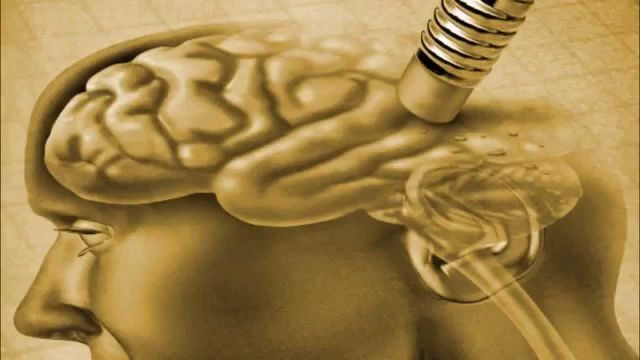
Source:Sean Giordano– a human brain on Dennis Prager Giordano?

From Sean Giordano  

Right-wing radio talk show host Dennis Prager I believe speaking out against marijuana legalization in Colorado or Washington. Populist-rightists love to talk about individual freedom, federalism, and local control, but just as long as individuals, states are doing what they approve of. But when they do something that violates their fundamentalist beliefs, they’re the first to call Uncle Sam for backup and to step in and outlaw what they disapprove of.

Dennis Prager

Source:FRS FreeState– Dennis Prager obviously on the right (unless that’s a crossdressing, transgender man) but I don’t know who the woman is.

Right-wing talk radio show host and columnist Dennis Prager I believe speaking out against marijuana legalization in Colorado or Washington. The Religious-Right or Populist-Right in America loves to speak out in favor of individual freedom, federalism, and local control, but just as long as they approve of the activities that people want to be involved with. Otherwise they’re the first to call Uncle Sam for backup when something that they disapprove of is going on somewhere like in Colorado or the State of Washington.

Dennis Prager's War on Drugs

Source:FRS FreeState– right-wing radio talk show host and columnist Dennis Prager, I believe speaking out against marijuana legalization in Colorado or the State of Washington.

Anytime I hear someone on the right (however they define their politics) say they believe in individual freedom and are against big government, I want to know where they stand on the War on Drugs, especially as it relates to marijuana.

People on the right unless they are actually conservative in the real sense, tend to speak in favor of choice and letting the individual decide, except when it comes to the War on Drugs and marijuana.

Economic freedom especially as it relates to opportunity for people who need it and not overtaxing and regulating is critical. But the ability for people to be able to make their own decisions with their personal lives and have personal freedom is just as critical. Without big government interfering with how they live their lives.

What Dennis Prager and I guess the Religious-Right in America, as much as they talk about individual freedom and the need for it, at the same time they bash Liberals for embracing individual freedom and freedom of choice when it comes to issues like marijuana and homosexuality and other key social issues. What Americans should be allowed to do in the privacy of their own homes.

Big Government Christian-Conservatives, have embraced big government prohibition as it relates to marijuana and harder narcotics. Which is just one example of why the Republican Party is having such a hard time right now appealing to young voters, because the Leave it to Beaver 1950s big government wing of the party is seen as big government paternalists, who want to control how they live their own lives and young people now tend to be liberal-libertarian on social issues.

Prohibition on its face is big government-paternalist idea, with the idea being that individual freedom is dangerous and when people have the freedom to make their own decisions, they make mistakes that s harmful to society. This was the case with alcohol prohibition in the early 20th Century and is the case with leftists who want to band tobacco, junk food, and soft drinks today and even marijuana in some cases. And yet now we see people on the right embracing the same thing which is prohibition.

Posted in FRS FreeState, New Right | Tagged , , , , , , , , , , , , , , , , , , , , , , , , , , , | Leave a comment

The Hill: Erik Wasson- ‘House Democratic Budget Includes $1.2T in Taxes, $200B New Stimulus’

Chris Van Hollen _ Congress_gov _ Library of Congress

Source:U.S. Congress– U.S. Representative Chris Van Hollen (Democrat, Maryland) Ranking Member of the House Budget Committee (113th Congress)

Source:FRS FreeState

“House Democrats on Monday unveiled a 2014 budget proposal that includes $1.2 trillion in new taxes and $200 billion in stimulus spending.

That’s about twice the level of stimulus spending that what was in the Senate Democratic budget, which included $975 million in new taxes.

House Republicans have a budget that would lower tax rates and cut spending by $5.7 trillion compared to the Congressional Budget Office baseline.

The House Democratic budget, authored by Budget Committee Ranking Member Chris Van Hollen (D-Md.), would raise $1.2 trillion in revenue over ten years by ending tax breaks for both corporations and individuals.

“We focus immediately on accelerating the economic recovery, on growing jobs rather than shrinking jobs,” Van Hollen told reporters.”

From The Hill

This is a better plan then the House Republican budget plan because it moves us past the George W. Bush borrow and spend policies where you can cut taxes indefinitely and increase defense spending indefinitely without paying for any of it.

What House Democrats are trying to do led by Chris Van Hollen (Ranking Member of the Budget Committee) is say we have both a revenue and a spending problem. We are spending too much money in some areas. We aren’t collecting enough money to pay for the things that the Federal Government needs to do and we need to invest more in areas that we should be spending on, that leads to better economic and job growth, like in infrastructure, science, and other research.

So the goals are clear and very laid out and if Representative Paul Ryan wasn’t Chairman of the Budget Committee and Representative Van Hollen was, this plan would probably pass in the House.

The problems with the Van Hollen budget plan are both pragmatic and structural. This is the plan that will be offered by the House Democrats that will be the minority substitute to the Ryan Plan. Which is Congressional speak for House Democrats are currently the minority party in the House, therefor don’t have the members and votes to pass their own bills. They can only offer amendment and substitutes to what House Republicans will be doing. And therefor this plan will never become law, at least not in this Congress.

And then there’s the structural problem with the Van Hollen Plan: they want to raise taxes during a weak economy to pay for more Federal spending. I agree with them on infrastructure, I just don’t think you invest more in in infrastructure in a weak economy that’s barely growing a 1%, by making the cost of doing business in America more expensive. But instead have everyone chip into the new roads and other infrastructure projects that we need, as well as the improvements.

As I’ve written before, Congressional budget plans are generally not worth more than pop culture catch phrases and political slogans and tend not to be anything more than visions and wish lists: “This is what we would do if we just had the power and votes to get it done.” But at least this gives American voters a real choice in who they want to see in control of the House of Representatives two years from now: Republicans or Democrats.

Posted in FRS FreeState, The Hill | Tagged , , , , , , , , , , , , , , , , , | Leave a comment

Paul Ryan: Federal Spending Workout

The Paul Ryan Workout

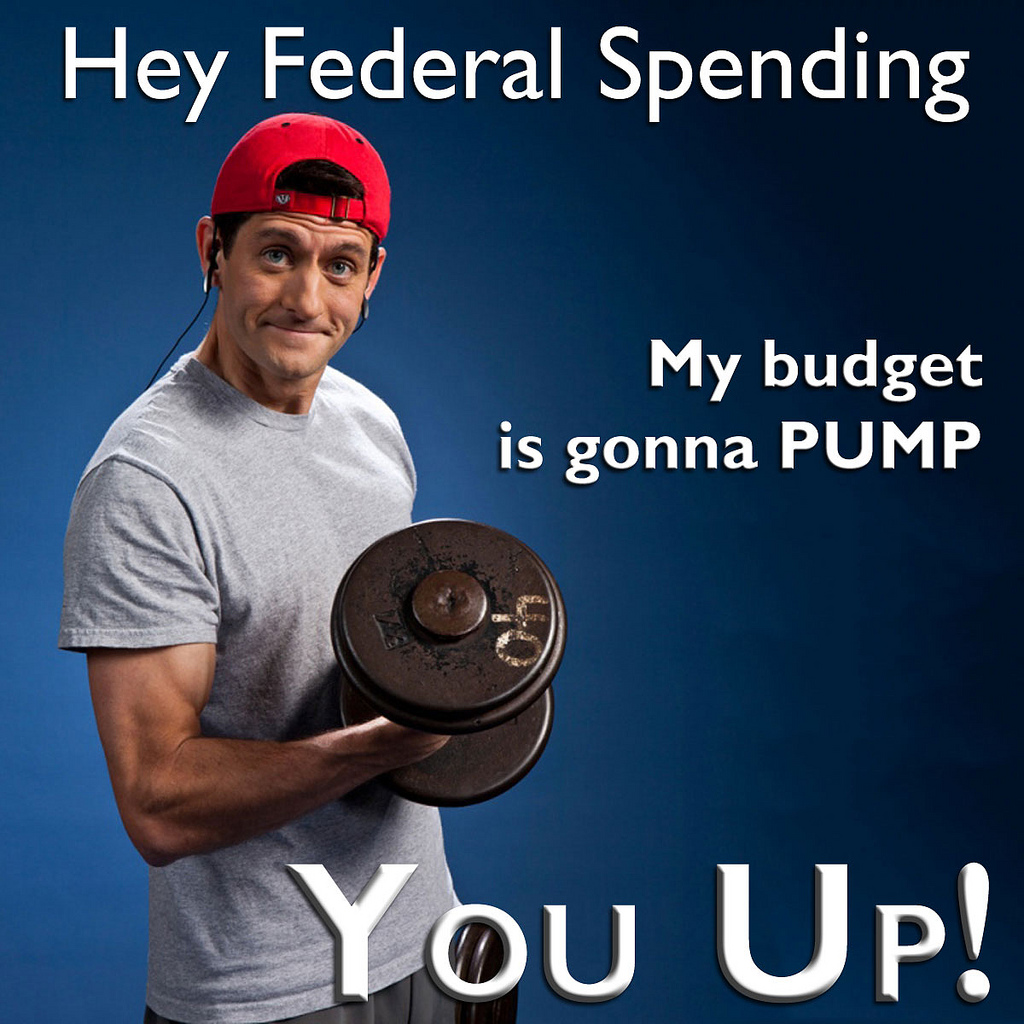
Source:FRS FreeState– U.S. Representative Paul Ryan (Republican, Wisconsin) Chairman of the House Budget Committee. And when he’s not chairing his committee, he pumps up for America.

I don’t know if Representative Paul Ryan is a professional conman or a hyper-partisan, overly ambitious politician, who sees the national debt and deficit as his taxpayer funded ticket to political power in America. I guess he could be both, but I’m having hard timing taking him seriously when it comes to debt and deficit reduction, just based on what he and House Republicans have passed the last 3 years since they won back control of the House of Representatives in 2010.

Politically unless you are a left-wing Democrat, it’s easy to say that the national debt and budget deficit are major problems in America and if we’re ever going to get back to strong, consistent economic growth again in this country, we have to address our fiscal issues. But words in politics and government are like advertising or pop culture catch phrases: they don’t actually mean anything. It’s what’s in the policies and laws that are actually passed and voted out of Congress, or just in the House or Senate. It’s what members of Congress actually going on the record as far as being in favor of or against that matters.

House Republicans have officially made the national debt and deficit their biggest issue as far as what they say needs to be addressed, for the last three years, along with repealing ObamaCare (also known as the Affordable Care Act) and yet they haven’t really done anything about it. You don’t eliminate a Federal deficit by cutting 10-20 billion here and 10-20 billion there.

To paraphrase Billy The Kid: you go where the money is if you are actually serious about cutting the debt and deficit. You take on entitlements, you eliminate waste in defense and the tax code and you pass policies that lead to economic and job growth, like middle class and business tax relief, and infrastructure investment.

Or you do what professional politicians do who actually don’t have to work to make a living and act like you are concerned about the national debt and deficit, while blaming the other party for the problems that you have no real plan to fix, with one arm behind your back. Which seems to be the course that Representative Ryan is on right now.

Posted in Congress, Originals | Tagged , , , , , , , , , , , , , , | Leave a comment

ABC News: Chris Good- ‘Left, Right Unveil US Budget Utopias

Left, Right Unveil US Budget Utopias (2013) - Google Search

Source:ABC News– “Rep. Paul Ryan, R-Wis., speaks about the 2014 Budget Resolution during a news conference on Capitol Hill in Washington, March 12, 2013. Carolyn Kaster/AP Photo” From ABC News.

“Budgets are like dreams.

When conservative House Republicans and liberal Democrats in the House Progressive Caucus each released their broad budget plans this week, what we really saw was a window into two drastically different visions of the future.

Republicans, led by Budget Chairman Paul Ryan, issued a 91-page doctrine of fiscal conservatism that claims to balance the budget in 10 years. The House Progressive Caucus, led by Reps. Raul Grijalva, D-Ariz., and Keith Ellison, D-Minn., released their own 19-page blueprint that lowers the deficit (but doesn’t eliminate it) by raising taxes while pumping investments into all the infrastructure, education, and public welfare programs liberals love.

It’s a tale of two budgets, and America’s alternate futures couldn’t be more different.

In the future according to Paul Ryan, most people take some kind of a hit, and the government survives to serve future generations because it’s restrained in the near term. Tax reform lowers rates on people and corporations (including high incomes) while stripping out deductions and credits. National defense remains fully funded, but Medicare is essentially voucherized for people turning 55 now; Medicare survives and health-care costs are restrained, as patients turn down unnecessary procedures, saving the system from fiscal ruin.

Medicare is block-granted, giving states more flexibility to do with the funds as they please. “Obamacare” is repealed, meaning no one has to buy health insurance, but also that the government spends a lot less helping people buy it. Tort reform means doctors don’t get sued as often, the government only gives welfare to people meeting the full set of work requirements; job-training programs and “career scholarships” help people get to work, and the federal government accounts more accurately for the money it loans out.

If Ryan has his way, the federal government works in a streamlined and sustainable fashion, balancing its books in 10 years and saving basic services from bankruptcy so that future generations can enjoy them.”

From ABC News

The main reason why I don’t take the Republican Party, especially Congressional Republicans seriously when it comes to deficit reduction and the national debt, because they spend taxpayers money like drunken Irish-American sailors, who are just home on leave or have just gotten out of the Navy and are celebrating that fact. (To sound politically incorrect) That wasn’t a joke about Representative Paul Ryan, specifically.

Let’s be real: when George W. Bush became President in January, 2001, he inherited a budget surplus pf 200 billion dollars. Eight years later and having a Republican House for six years and a Republican Senate for four years, two huge tax cuts that weren’t paid for, a two wars that weren’t paid for, the expansion of Medicare, (which is an entitlement program, by the way) No Child Left Behind, which is another Federal expansion dealing with public education, and of course the Great Recession which started under President Bush’s watch, TARP, which wasn’t again paid for. President Bush leaves office in January, 2009 with a trillion-dollar deficit.

I’m not saying the Democratic Party is full of fiscal conservatives: they give more government promises than Santa Clause and all of his helpers combined. I think you would have a harder time finding more people who make promises with other people’s money at a conman convention. The Democratic Party sort of owns the government patent on making promises with other people’s money.

But Democrats don’t talk like fiscal conservatives. They promise free stuff from government and then don’t even deliver the stuff that they promised, let alone deliver it for free. But Republicans only talk like fiscal conservatives when there’s a Democratic President, especially a Progressive Democratic President.

So when you are looking at Congressional budget plans from either Republicans and Democrats, remember that’s exactly what they are: they are visions for what both parties would do if they had all the power and could do exactly what they want. But they shouldn’t be taken very seriously, because they tend to be written by career politicians and their staffs, as well as the people they rely on to stay in power.

Posted in Congress, Originals | Tagged , , , , , , , , , , , , , , , , , , , , , , , | Leave a comment

President John F. Kennedy: Ft. Worth Prayer Breakfast Speech (1963)

125517744_3769558876409547_1807883307089032825_n

Source:Traces of Texas– President John F. Kennedy (Democrat, Massachusetts) speaking at the Ft. Worth Prayer Breakfast in 1963. “President John F. Kennedy speaks to the Fort Worth Chamber of Commerce at a breakfast on the morning of his assassination, November 22., 1963. I think I may have mentioned this before but my maternal grandfather was a tough, old Irish mechanic, the kind of man who’d just as soon fight you as anything else. My father told me that, when J.F.K. was assassinated, my grandfather sat in a chair and sobbed. My dad was stunned.” From Traces of Texas.

“Sound recording of President John F. Kennedy’s remarks to members of the Fort Worth Chamber of Commerce during a breakfast held at the Texas Hotel in Fort Worth, Texas. In his speech President Kennedy discusses the emerging Tactical Fighter Experimental (TFX) military aviation technology and the recent shift in United States foreign policy from isolationism to a conceptual framework that encourages cooperative international partnerships.”

From the JFK Library

“Shortly after 9:00, President John F. Kennedy and entourage made their way through the kitchen adjoining the second floor Grand Ballroom. The event was attended by over 2,000 guests. Politicians and their wives, including Governor John Connally, Vice President Lyndon B. Johnson, Senator Ralph Yarborough, and Chamber of Commerce President Raymond Buck, took positions at tables on the dais. President Kennedy entered the room amid a standing ovation. Mrs. Jacqueline Kennedy, summoned unexpectedly by the President, arrived 10 minutes later dressed in a pink wool suit with pill box hat. The President took the podium and delivered remarks emphasizing the importance of national defense – a subject popular with the crowd, many with ties to Fort Worth’s General Dynamics and other North Texas defense projects. The President and First Lady were presented with Justin western boots and a Peters Brothers western hat which the President declined to model. Breakfast concluded at 10:30, and the First Couple then rested briefly in their suite before heading to Dallas.”

November 22, 1963 - President John F_ Kennedy's at the Fort Worth Chamber of Commerce breakfast

Source:Helmer Reenberg– President John F. Kennedy (Democrat, Massachusetts) at the Ft. Worth Prayer Breakfast in 1963.

From Helmer Reenberg

“JFK’s Last Speech given at the prayer breakfast in Ft. Worth”

JFK's Last Speech given at the prayer breakfast in Ft_ Worth (2012) - Google Search

Source:David Martin– President John F. Kennedy (Democrat, Massachusetts) speaking at the Ft. Worth Prayer Breakfast in 1963.

From David Martin

Not sure exactly where this photo of John F. Kennedy and his little brother Robert F. Kennedy is from, but it was taken as The White House during the Kennedy Administration in the early 1960s. When you’re talking about brothers in government and politics together, I think JFK and RFK are perhaps the most powerful and influential political brothers, at least in the 20th Century.

IMG_0369

Source:FRS FreeState– President John F. Kennedy (Democrat, Massachusetts) and his brother Robert F. Kennedy (Democrat, Massachusetts) at some point in the early 1960s.

What I don’t think the Left (especially the Far-Left) will ever understand about John F. Kennedy, is that JFK whether he was in Congress or as President of the United States, he was a cold warrior-anticommunist. A lot of this speech is about the Cold War and America’s war against Communists and Communism.

JFK was a Progressive in the sense that he believed and wanted government to be used to create progress and make America better for more Americans. But that’s not the definition of Progressive that the Far-Left in America (Socialists, Social Democrats, and Communists) believe.

The Far-Left believes that government can be used to create total quality in America and that no one should ever have to live in poverty, because the government can be used to wipe out poverty in America by guaranteeing that everyone has exactly what they need to live well in society. And that individual freedom is somehow selfish and dangerous.

If anything your average Far-Leftist doesn’t have any problem with communism or Communists and believe that Communists is anything are misunderstood. That’s not John F. Kennedy and never was. He was always opposed to Communists and communism. And didn’t like socialism either.

Posted in JFK Presidency, Originals | Tagged , , , , , , , , , , , , , , , , , , , , , , , , | Leave a comment

Liberal Democracy: The Philosophy of Individual Rights, Rule of Law & Limited Government

jeffersonian liberalism - Google Search

Source:Wikipedia– Thomas Jefferson: The Father of Liberal Democracy.

“Today the most liberal regimes in the world, those of the advanced Western countries, are typically referred to either as liberal democracies or, more often, simply as democracies. This reflects one of the most striking ways in which twentieth-century liberalism differs from the older liberalism that emerged in the late seventeenth and eighteenth centuries. Today, wherever one finds liberalism (understood as constitutional and limited government, the rule of law, and the protection of individual rights), it is almost invariably coupled with democracy (understood as the selection of government officials by universal suffrage). The converse proposition, however, has in recent decades been becoming less and less true. With the downfall since 1975 of scores of authoritarian regimes and their replacement by more or less freely elected governments, there are now many regimes that can plausibly be called democratic but not liberal. As a result, the relationship between liberalism and democracy has once again become a subject of intense intellectual and policy debate.”

From The Journal of Democracy

“The early liberals, then, worked to free individuals from two forms of social constraint—religious conformity and aristocratic privilege—that had been maintained and enforced through the powers of government. The aim of the early liberals was thus to limit the power of government over the individual while holding it accountable to the governed. As Locke and others argued, this required a system of government based on majority rule—that is, one in which government executes the expressed will of a majority of the electorate. The chief institutional device for attaining this goal was the periodic election of legislators by popular vote and of a chief executive by popular vote or the vote of a legislative assembly.

The third part of the solution followed from liberalism’s basic commitment to the freedom and integrity of the individual, which the limitation of power is, after all, meant to preserve. From the liberal perspective, the individual is not only a citizen who shares a social contract with his fellows but also a person with rights upon which the state may not encroach if majoritarianism is to be meaningful. A majority verdict can come about only if individuals are free to some extent to exchange their views. This involves, beyond the right to speak and write freely, the freedom to associate and organize and, above all, freedom from fear of reprisal. But the individual also has rights apart from his role as citizen. These rights secure his personal safety and hence his protection from arbitrary arrest and punishment. Beyond these rights are those that preserve large areas of privacy. In a liberal democracy there are affairs that do not concern the state. Such affairs may range from the practice of religion to the creation of art and the raising of children by their parents. For liberals of the 18th and 19th centuries they also included most of the activities through which individuals engage in production and trade. Eloquent declarations affirming such rights were embodied in the British Bill of Rights (1689), the U.S. Declaration of Independence (1776) and Constitution (ratified 1788), the French Declaration of the Rights of Man and of the Citizen (1789), and the basic documents of countries throughout the world that later used these declarations as their models. These documents and declarations asserted that freedom is more than the right to cast a vote in an occasional election; it is the fundamental right of people to live their own lives.

From Britannica

“Liberal democracy, also referred to as Western democracy, is the combination of a liberal political ideology that operates under an indirect democratic form of government. It is characterised by elections between multiple distinct political parties, a separation of powers into different branches of government, the rule of law in everyday life as part of an open society, a market economy with private property, and the equal protection of human rights, civil rights, civil liberties and political freedoms for all people. To define the system in practice, liberal democracies often draw upon a constitution, either codified (such as in the United States)[1] or uncodified (such as in the United Kingdom), to delineate the powers of government and enshrine the social contract. After a period of expansion in the second half of the 20th century, liberal democracy became a prevalent political system in the world.”

From Wikipedia

Today’s pop culture and mainstream media definition of Liberal, is someone who is essentially an antiestablishment, revolutionary, hipster or hippie, who hates everything about America and what we’re supposed to stand for and wants to tear down the system and the man and replace it with some type of socialist state. Perhaps not even a democratic socialist state.

Today’s Liberals, at least according to be pop culture and the so-called mainstream media, are supposed to be antichoice, (except when it comes to sexuality and women’s reproductive rights) and pro-state, meaning big, centralized government.

Today’s Liberals supposedly (at least according to pop culture and the mainstream media) are supposed to people who believe that capitalism and economic freedom is dangerous and racist, individual wealth is selfish, personal freedom is dangerous, and free speech (unless it’s speech that they agree with) is bigoted. Today’s Liberals are supposedly believe that men (at least Caucasian men) are pigs and bigots and that women should rule the rule, at least rule over men.

So I just gave you most of the bogus (to be too kind) stereotypes of what Liberals are supposed to be and what liberalism is supposed to be about. And if American leftists weren’t scared to death of the s-words (meaning socialist and socialism) as well as the c-words (meaning communist and communism) most American leftists would probably self-identify as Socialists or even Communists and then have the brains and balls to explain to people why they’re Socialists and Communists. Instead of running away like they’re running out of a burning house of their own politics and political philosophy.

Liberals aren’t even Center-Left, let alone left or leftist or democratic leftists. In Europe and Australia, Liberals are considered to be Center-Right. The Center-Right political parties in Europe in many cases call themselves Liberals, like in Germany. And down in Australia, the Center-Right party there is called the Liberal Party. The Center-Left party there is called the Labour Party.

There are Liberals who believe in progress and that government can contribute and help people in need help themselves. People like John F. Kennedy was a Progressive Liberal. But Progressive Liberal is not another way of saying leftist or Socialist, but a Liberal who believes in progress. Not a big, centralized, overpowering, national superstate.

Liberalism (or classical liberalism, if you prefer) comes from liberal democracy which is a philosophy and form of government based on the defense of the individual and our individual rights. It’s not about big government and collectivism, but a philosophy based around individual freedom and promoting our individual freedom. Which yes, sound very conservative compared with socialism. But what political philosophy isn’t to the right of socialism?

Posted in Classical Liberalism, Originals | Tagged , , , , , , , , , , , , , , , , , , , , , , , , , , | Leave a comment

ABC News: ‘Pope Francis Elected: Cardinal Jorge Bergoglio of Argentina to be New Leader of the Catholic Church’

Pope Francis Elected_ Cardinal Jorge Bergoglio of Argentina to be New Leader of the Catholic Church (2013) - Google Search

Source:ABC News– The Catholic Church has a new Pope.

“Cardinals have chosen Cardinal Jorge Bergoglio of Argentina to be the new leader of the Catholic Church.”

From ABC News

It’s not so much that I don’t believe in God, I’m Agnostic officially, which is the reason I’m not very religious, but I tend to not only look at politics as a Liberal, but also at life as a Liberal. And it’s not that you can’t be a Liberal and be religious. America is a liberal democracy and by far the most religious country in the western world outside of South America, at least. And we have a lot of Liberals in this country including in the Democratic Party who are very religious.

The reason why I’m not very religious, is because I tend to look at my politics though a liberal lens and believe in things like individual freedom and a high degree of tolerance as far as how we judge and treat people. That individuals should have a high degree of freedom in how they live their lives as long as they aren’t hurting innocent people with what they are doing. And what you get from a lot of these Christian as well as Islamic faiths is a high level of intolerance and that there’s only a certain way for people of faith to live their lives and that freedom should be limited.

If there was a religion and maybe there is and I haven’t found it that was a truly Christian religion that believed in values like tolerance, equality for all people regardless of race, ethnicity, religion, gender, sexuality, that believed in freedom, opportunity, responsibility, individual and equal rights for all, that we should treat people exactly the way we want to, then maybe I would join that church, even though I still don’t believe in God. But I haven’t found that church yet.

It’s not that I can’t be religious as a Liberal, but that I can’t be part of a religion that puts down people just because of how they live their personal lives. Even if they aren’t hurting any innocent people with what they are doing. Where there isn’t any real level of privacy and where we are all supposed to be collectivists and members of a larger group. Instead of being allowed to just be ourselves and live our own personal lives.

Posted in ABC News, Originals | Tagged , , , , , , , , , , , , , , , , , , , , , , , | Leave a comment

Professor Conor Gearty: ‘Liberty and Security For All’

Amazon_com_ Liberty and Security_ 9780745647197_ Gearty, Conor_ BooksSource:Amazon– Conor Gearty’s book about civil liberties and income inequality.

Source:FRS FreeState

“All aspire to liberty and security in their lives but few people truly enjoy them. This book explains why this is so. In what Conor Gearty calls our ‘neo-democratic’ world, the proclamation of universal liberty and security is mocked by facts on the ground: the vast inequalities in supposedly free societies, the authoritarian regimes with regular elections, and the terrible socio-economic deprivation camouflaged by cynically proclaimed commitments to human rights.

Gearty’s book offers an explanation of how this has come about, providing also a criticism of the present age which tolerates it. He then goes on to set out a manifesto for a better future, a place where liberty and security can be rich platforms for everyone’s life.

The book identifies neo-democracies as those places which play at democracy so as to disguise the injustice at their core. But it is not just the new ‘democracies’ that have turned ‘neo’, the so-called established democracies are also hurtling in the same direction, as is the United Nations.

A new vision of universal freedom is urgently required. Drawing on scholarship in law, human rights and political science this book argues for just such a vision, one in which the great achievements of our democratic past are not jettisoned as easily as were the socialist ideals of the original democracy-makers.”

From Amazon

“Watch Professor Conor Gearty, Professor of Human Rights Law at London School of Economics discuss liberty and security as part of Durham Castle Lecture Series on 23rd January 2013.”

Conor Gearty

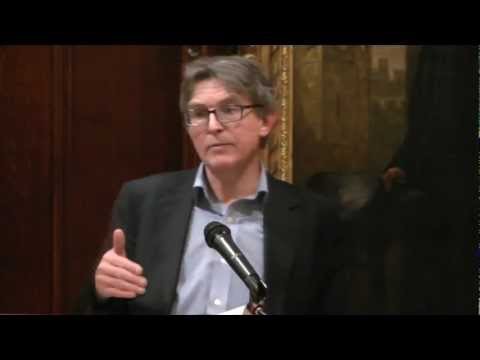
Source:Durham University– Professor Conor Gearty talking about his book about civil liberties and income inequality.

From Durham University 

“Broadly speaking, liberty is the ability to do as one pleases, or a right or immunity enjoyed by prescription or by grant (i.e. privilege).[1] It is a synonym for the word freedom. In modern politics, liberty is the state of being free within society from control or oppressive restrictions imposed by authority on one’s way of life, behaviour, or political views.[2][3][4] In philosophy, liberty involves free will as contrasted with determinism…

From Wikipedia

To paraphrase Professor Milton Freedom: you can’t have security without liberty. And I would add vice-versa. Whether you are being oppressed by the state or from criminals or terrorists, you are being oppressed. Whether you are in physical danger from your own government or by criminals or terrorists, the result is the same: you are in physical danger.

When government cracks down on individuals civil liberties and rights even to protect the society from attacks by criminals or terrorists or just to protect it’s own regime from people who want a new government and that represents them and promotes and protects their freedom, you are still being oppressed. And you are giving up your freedom or it’s being taken away from you, for the promise of more security, or not being further oppressed and in more physical danger from your own government.

When I talk about liberal democracy and a free society, I’m not talking about people having the freedom to hurt innocent people to to make decisions with their own lives that others have to pay for. But for the right for people to act and think for themselves or not act at all, so long as they’re not hurting any innocent person with what they’re doing. Since the so-called War On Terror was declared in 2001 by the United States, we’ve moved away from definition of a free society, for the promise of more security.

Posted in FRS FreeState, Originals | Tagged , , , , , , , , , , , , , , , , , , , , , , , , , , , | Leave a comment

President John F. Kennedy: Cuban Missile Crisis Speech: 10/22/1962

Cuban Missile Crisis
Source:David Von Pein– President John F. Kennedy’s speech on the Cuban Missile Crisis.

“This high-quality version of President Kennedy’s 10/22/62 Cuban Missile Crisis speech is somewhat rare, because it is complete and unedited. Usually only small bits and pieces of the speech are presented on television and in documentaries. But this is the entire 18-minute address from start to finish.”

From David Von Pein

What President Kennedy wanted to show during this crisis was that his National Security Council was on top of the situation from the beginning. And the question which was a huge question, was what to do about it to prevent missiles from being launched at the United States.

President Kennedy, obviously did not want to go to war with another superpower and risk destroying the world in the process. Which might have happened had the United States gone to war with the Soviet Union.

Trying to invade the Communist Republic of Cuba with Russian ships in the area was not going to happen without some war. Which meant that the Kennedy Administration, was going to need a negotiated settlement with Russia.

Russia, was literally able to stick their own nuclear weapons on the island of Cuba, just ninety miles from Miami, Florida. With enough power to eliminate the East Coast of the United States. So President Kennedy and his National Security Council knew they had to get those weapons out of Cuba. They also knew that going to war with a country the size and that was as powerful militarily as the Soviet Union, probably wasn’t an option at all. So they were going to have to work this out diplomatically to get the weapons out of Cuba, America was going to have to give Russia something they wanted as well.

What prevented World War III during the Cuba Missile Crisis was Russia agreeing to pull their weapons out of Cuba, in return for America pulling their weapons out of Turkey.

America, didn’t pass new economic sanctions on Russia hoping that Russia would eventually take the weapons out of Cuba. As well as hoping they would never use them, or give them to Cuba. And America didn’t go to war with Russia and try to settle it that way.

Both countries had something that the other wanted and wanted something that the other had. And both were smart and sane enough to settle the crisis diplomatically.

Posted in FRS FreeState, JFK Presidency | Tagged , , , , , , , , , , , , , , , , , , , , , , , , , , , , | Leave a comment