NCAA: CB 1985- National Championship- Villanova Wildcats vs Georgetown Hoyas: Full Game

Villanova vs_ Georgetown_ 1985 National Championship _ FULL GAME

Source:CBS Sports

Rolly Massimimo cutting down a string for the Wildcats.

Source:The Daily Press

“Watch this complete national championship game from 1985, when one of the original Cinderella stories, Villanova, marched its way to the championship game against heavy favorite Georgetown. Villanova pulled off the upset with a 66-64 victory in the first year of the 64-team NCAA tournament format.”

From March Madness

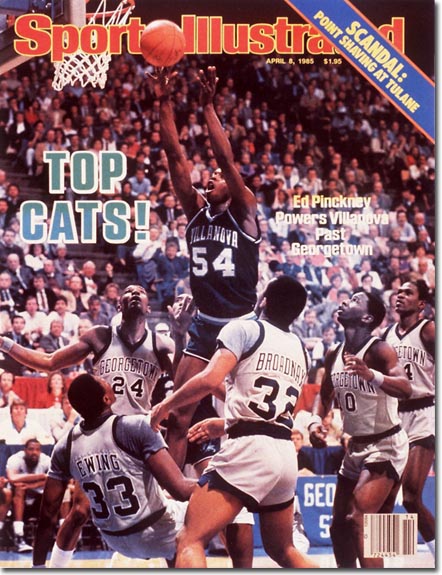
“The ball was deep in the end-zone seats, punched there in desperation by a Georgetown player to stop the clock. Georgetown? Desperate? Yes. Then it was on the floor, scrambled for, and finally smothered—bam, splot—as if a runaway caboose had left the tracks somewhere in the Kentucky night and crashed through the walls of Rupp Arena. A train on a basketball court? Yes again. Because it was Dwayne (D-Train) McClain who fell on the ball as time ran out on Georgetown’s try for a second straight NCAA championship, and McClain who cradled it in his arms and refused to let go until he was absolutely positive his Villanova Wildcats’ 66-64 victory wasn’t a dream.

These were just the ultimate improbabilities in a fantasy of a basketball game Monday night that manifested all that is spectacular in sport, while at the same time recalling nothing more than the simple lyrics of the late Harry Chapin…
25474120874_56d0342ff0_o

“Ed Pinckney Powers Villanova Past Georgetown April 8, 1985 X 31324 credit: Carl Skalak – assign”

Source:Sports Illustrated– Ed Pinckney and the Villanova Wildcats defeating the Hoyas in 1985.

From Sports Illustrated

The one basketball game that John Thompson would probably like to have back. The Georgetown Hoyas wee poised to win back-to-back national championships in 1985 having what clearly looked like the best team in the tournament, with the best player in center Patrick Ewing. Who I at least believe without the leg injuries from the early and mid 1990s I think we’re talking about the best two-way center of his generation. Who was a dominant offensive and defensive force. With his great size, strength and athletic ability. Who accomplished so much in his career with bad knees and never being able to play with another great player. And in many seasons being the only All Star on his team with the New York Knicks.

I’m a Georgetown Hoyas fan even though I’m not as big of a fan as I was when I was growing up and watched a lot of both NBA and college basketball back then. And even though the Hoyas lost this game this season still brings up great memories for me. Because it was a time when the Big East Conference was not only relevant, but it ruled college basketball. It had the same importance as the SEC has for football today.

You win the Big East back in the 1980s, or at least do very well and you’re probably a national title contender. Very similar with the ACC of the 1990s and 2000s. The Big East had the Hoyas, but they also had the Villanova Wildcats, but the St. Johns Redman, Syracuse Orangeman and later the Connecticut Huskies and Providence Friars. All very good and top-level basketball programs.

The Big East Conference was like the SEC for college football, what the ACC is fo college basketball today, what the NFC East has traditionally been for the NFL. That one division or conference where if you do well there, you’re having a very good season. You’ve accomplished something very important, because it means you’ve beaten a lot of good teams.

It also means that everybody you play in that division or conference will be gunning for you to take you down. Especially if they’re not having a good season. It was a conference again similar to the NFC East where you don’t have a rival, but you have several arch-rivals and it’s just a matter of which of those arch-rivals hates you the most in a sports sense.

I’m not taking anything away from the Villanova Wildcats here. They played a great game and beat a great team that had two of the best players in college basketball in 1985 on them in Pat Ewing and David Wyngate. Who both went on to have good NBA careers. Patrick of course being one of the top 5-10 centers of all-time. And the Wildcats are not just still the lowest seed to win the national championship, but they also beat the best team in college basketball that year. And had they played each other for the championship ten times, the Wildcats might not have won another game.

But what I’m saying here is that the Big East was so great back then having three teams in the 85 Final Four alone, that you had to very good just to get where the Wildcats got that season. In position to win the national championship.
Posted in Hoyas Classic Games, The Daily Press | Tagged , , , , , , , , , , , , , , , , , , , , , , , , , , | Leave a comment

Minister Malcolm X: ‘By Any Means Necessary’

IMG_0649

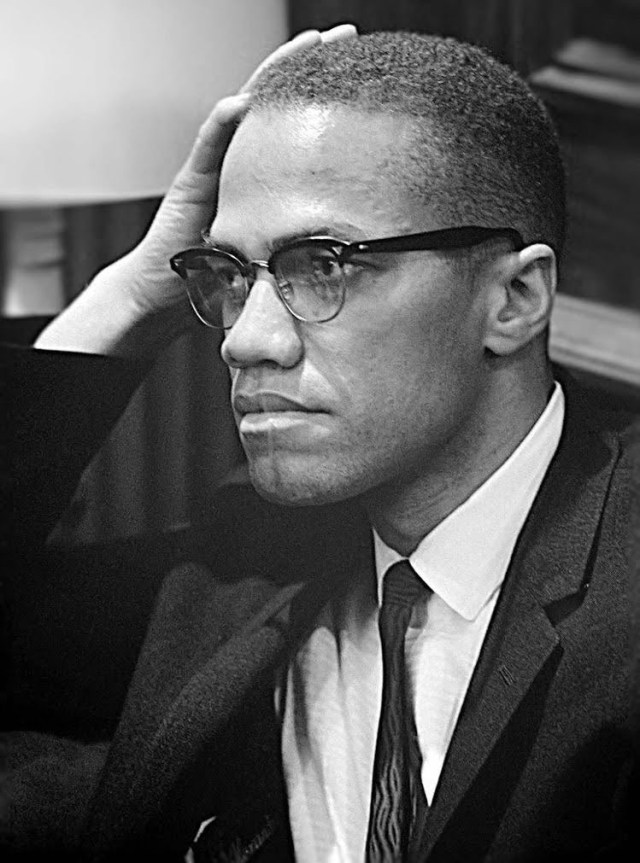
Source:Black Past– Nation of Islam Minister Malcolm X.

Source:The Daily Press

“Malcolm X’s life changed dramatically in the first six months of 1964. On March 8, he left the Nation of Islam. In May he toured West Africa and made a pilgrimage to Mecca, returning as El Hajj Malik El-Shabazz. While in Ghana in May, he decided to form the Organization of Afro-American Unity (OAAU). Malcolm returned to New York the following month to create the OAAU and on June 28 gave his first public address on behalf of the new organization at the Audubon Ballroom in the Washington Heights section of Manhattan. That address appears below.”

From Black Past

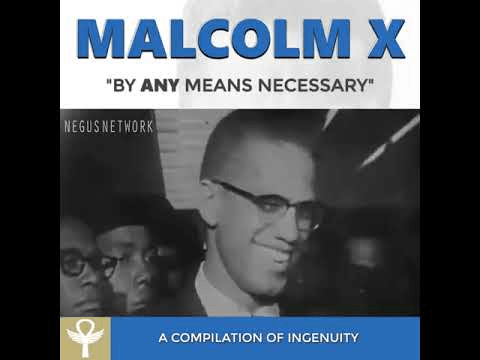
“Malcolm X By Any Means Necessary Compilation”

Malcolm X By Any Means Necessary Compilation (2021) - Google Search

Source:Baseball Ruski– Nation of Islam Minister Malcolm X.

From Baseball Ruski

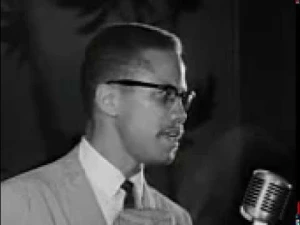
This photo is from a speech or from several speeches that Nation of Islam Minister Malcolm X gave in the early or mid 1960s about what he means by Any Means Necessary and his vision for Black Power in America. But the video that this photo is from is not currently available online right now.

Malcolm X Network_ Malcolm X- By Any Means Necessary_ A Look at African-American Nationalism _ The Daily Press

Source:Malcolm X Network– Nation of Islam Minister Malcolm X during the 1960s.

As Minister Malcolm X said multiple times in this video, he wasn’t advocating violence by African-Americans or any other Americans. His vision was about freedom for the African-American community and to accomplish that by any means necessary. What he was saying was that if an African-American is under physical attack by a Caucasian or anyone else, that African-Americans have the right to self-defense and to defense themselves when they’re under physical attack. Which is obviously very different from what Reverend Dr. Martin L. King was talking about which was nonviolence at any costs, even when African-Americans are under physical attack.

Posted in Malcolm X, The Daily Press | Tagged , , , , , , , , , , , , , , , , , , , , , , , , , , , , | Leave a comment

New America Foundation: Michael Lind: ‘Expanded Social Security: A Plan to Increase Retirement Security for All Americans’

Expanded Social Security_ A Plan to Increase Retirement Security for All Americans _ Demos

Source:New America Foundation– with a paper on Social Security.

“The conventional wisdom about Social Security is profoundly misguided. According to today’s mistaken consensus, the U.S. as a society cannot afford to allocate the money to pay for the present level of Social Security benefits for retirees in future generations. The solution, it is widely argued, is to cut benefits – either directly by means-testing or indirectly by raising the retirement age or allowing inflation to erode their real value over time. In this narrative, tax-favored private savings vehicles like
401(k)s and IRAs should be expanded in order to compensate for the allegedly necessary cuts in Social Security.

This consensus is not only misconceived in its diagnosis but also mistaken in its prescriptions and potentially disastrous in its consequences. Retirement security is often thought of as three-legged“stool” consisting of Social Security, employer retirement plans, and private savings. Social Security has been far more stable and successful than the other two legs of the stool…

You can read the rest of Michael Lind’s paper at New America Foundation

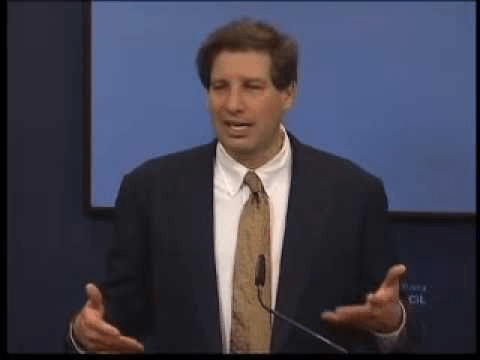
What Michael Lind and his colleagues are talking about here is expanding Social Security to the point that it is no longer a retirement insurance system, which it is today so everyone has at least some retirement income. And turning it into a national pension system so people could just live off of Social Security in their retirement and no longer need a pension plan and perhaps not even a government pension plan if they worked for the government for a long period of time like in the military, Foreign Service, etc.

So I guess that would be the big government approach to fixing Social Security: instead of just reforming the program so it stays around to meet future retirees and doesn’t go bankrupt, you just expand the current system that’s facing future shortfalls and promise more taxpayer funded benefits.

Reforming Social Security as it now stands is fairly easy, but perhaps politically difficult and you could even be progressive in doing it. You wouldn’t even need to cut the benefits of the wealthy or people who have generous private pension plans:

You tax the benefits of people who don’t need that income and put that money back into the SS system.

Instead of having a flat 6% rate which is a steep payroll tax on Americans, you go from 3-12% and perhaps even expand the Earned Income Tax Credit for low-income Americans to cover retirement savings.

And raise the retirement age for wealthy, white-collar workers.

When it comes to economic policy and government reform, I’ve always as a Liberal preferred more freedom of choice for individuals, over more government control. (Call me an individualist, if you want too)

I prefer Social Security Plus over just expanding the current program and allowing for every working Americans including low-income workers to put some of their own money like 3-6% into their own private Social Security accounts, that would be matched by their employer or perhaps even the government, that would be tax free, just as long as they don’t spend any of that income before they’re eligible to retire.

Our system and economy has proven that once individuals have the tools and freedom to make their own decisions in life, they tend to do very well with that information and power. We don’t need big government running our lives for us.

Posted in New America Foundation, Originals | Tagged , , , , , , , , , , , , , | Leave a comment

CBS Sports: NFL 1966

IMG_0633

Source:Getty Images– the game that kicked off the Super Bowl in America.

Source:The Daily Press

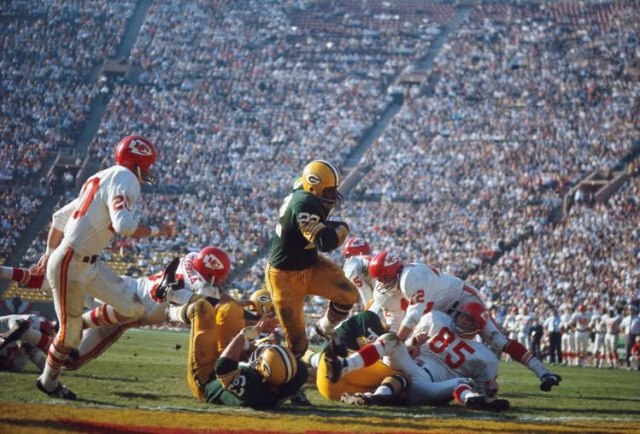
“LOS ANGELES – JANUARY 15: Green Bay Packers’ Elijah Pitts #22 runs with the ball during Super Bowl I against the Kansas City Chiefs at Memorial Coliseum on January 15, 1967 in Los Angeles, California. The Packers defeated the Chiefs 35-10. (Photo by Focus on Sport/Getty Images)”

From I’m A Sportsphile

1966 was a huge transition year for the NFL because it was the first season of the Super Bowl to decide who was the pro football champion of America, not the world. The championship game between the Green Bay Packers of what eventually became the National Football Conference and the American Football Conference, and the Kansas City Chiefs of the American Football League that would become the American Football Conference.

It was the first year of divisional play in the NFL where the Eastern Conference and Western Conference was broken up into four team divisions. Pre-1966 the NFL Championship was played between the Easter and Western Conference’s regular season champions. No playoff games at all before the Championship, unless their were ties for first place in the conference’s.

Big year for the NFL because they won the first Super Bowl and was at the beginning of the end of the NFL-AFL rivalry as they became of league by 1970 with the NFC and AFC. So the NFL was certainly in transition in 1966-67 and becoming a much larger national league.

Posted in NFL Classic, The Daily Press | Tagged , , , , , , , , , , , , , , , , , , , , , , , , , , | Leave a comment

Ginoong Kamote: Vintage NBA- Moses Malone: ‘The Chairman of The Boards’

Ginoong Kamote_ Vintage NBA- Moses Malone_ 'The Chairman of The Boards'

Source:Ginoong Kamote– Moses Malone, when he was with the Houston Rockets, playing the Boston Celtics, perhaps in 1981.

Source:The Daily Press

“Moses Malone is an American former National Basketball Association (NBA) basketball player who also played in the American Basketball Association (ABA), as well as on the NBA’s Atlanta Hawks, Houston Rockets, Milwaukee Bucks, Philadelphia 76ers, San Antonio Spurs and Washington Bullets. Malone played 21 seasons in the NBA. Before retiring from basketball, he was the last ABA participant to still be playing in the NBA. In 2001, he was inducted into the Basketball Hall of Fame”

From Ginoong Kamote

Just from looking at the background of this photo, I would say this game was played at the Atlanta Omni, with the Philadelphia 76ers playing the Atlanta Hawks. But that’s all I know about it.

Moses Malone

Source:NBA-TV– one of the things that made Moses Malone so effective as an NBA big man, was his ability not just to get to the free throw line, but to make his free throws. He always shot around 75-80% from the foul line, which always made his one of the best free show shooting big men in the NBA. Which put even more pressure on the other teams big men, because not only where they in foul trouble a lot, but they were also giving up a lot of free points to Moses and his team.

Moses Malone was simply a bull with a lot of skills who was almost impossible to box out with his brute strength, quickness and determination. Whose one of the top five centers of all-time because of what he could do in the paint both offensively and defensively. Who also might be the best offensive rebounder of all-time as well. Kareem, Wilt, Bill Russell and maybe Hakeem and that would be the only centers I would take over Moses and I could easily have Moses over Hakeem, but that would be a tossup.

Imagine a man 6’9-6’10 260 pounds or so, of brute strength and muscle, but who was also very quick and athletic. The man was impossible to box out for the most part, I’m not sure Wilt Chamberlain could box out Moses in his prime. The man was simply a bull physically as a man, but with a heart bigger than that. And when he was finally put on a very good team, a great team, one of the best teams of all-time in the NBA, the 1983 Philadelphia 76ers, you really got to see how great he was and how great he could make other players, including other great players.

Posted in NBA Greatest, The Daily Press | Tagged , , , , , , , , , , , , , , , , , , , , , , | Leave a comment

Minister Malcolm X: ‘Our History Was Destroyed by Slavery (1963)’

YouTube_ MALCOLM X - Our History Was Destroyed By Slavery (1963) - Google Search

Source:Unstripped Voice– Nation of Islam Minister Malcolm X, appearing on the Chicago City Desk, in 1963.

Source:The Daily Press 

“MALCOLM X – Our History Was Destroyed By Slavery (1963) Check all our videos/docs and share to your friends:Unstripped Voice.”

From Unstripped Voice 

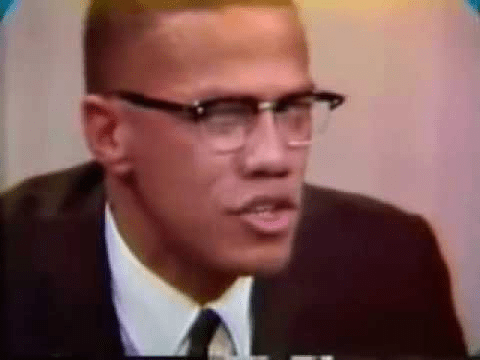
Nation of Islam Minister Malcolm X appearing on the Chicago City Desk talk show in 1963, arguing that slavery has robbed African-Americans their history and ancestry.

Malcolm X

Source:Malcolm X Network– Nation of Islam Minister Malcolm X, appearing on the Chicago City Desk, in 1963.

Malcolm X’s message was about empowering African-Americans who were simply being held down in America because of their race, to have the same freedom to live their own lives as Caucasian-Americans have. It’s really what his message is about and doing whatever it took to accomplish that and allowing for African-Americans to be able to decide for themselves how best to get to freedom in America. Even if that means going their own way and simply living in their own communities. And as he grew and developed personally and professionally, he realized that not all Caucasian-Americans were evil and devils.

Malcolm X, concluded and rightfully so, that it was the ignorant people in the Caucasian community that were the problem and need to be confronted and taken on. But the goal of Malcolm X’s message was always the same: empowering African-Americans to be able to own their own business’s and homes and so-forth. And not have to be dependent on anyone including government for them to live. But he wanted them to have the power to be able to take care of themselves.

Minster Malcolm, was a big believer in education, economic development and economic opportunity. Something that Liberals such as myself and Conservatives, should really respect about him.

Minster Malcolm X and Dr. Martin King, were both great men and both wanted freedom for the African-American community. They just went about it different ways and had different messages in how to accomplish those goals.

Dr. King, wanted African-Americans to be freed from poverty and racism. Minister Malcolm, wanted the same community to be free. And be able to live their own lives and be able to take care of themselves. Not have to live off of government even though very generous benefits. Not have to live off of government at all. True individual freedom including economic freedom. The ability to take care of yourself and be able to defend yourself. Malcolm, was a true freedom fighter.

Posted in Malcolm X, The Daily Press | Tagged , , , , , , , , , , , , , , , , , , , , , | Leave a comment

Think Progress: John Halpin- ‘The Obama Coalition, The Working Class, And RFK’

John Halpin_ The Obama Coalition, The Working Class, And RFK (2013) - Google Search

Source:Think Progress– the Obama Coalition is a beautiful portrait of America.

Source:FRS FreeState 

“The potential of the new Obama coalition is truly impressive, given its 2012 performance and how many of its constituent parts are likely to grow in numbers over the course of the decade. But the word “potential” should be stressed. There is no guarantee that turnout and support levels will stay as high as they have been going forward. And there is definitely no guarantee that these constituencies will remain active and involved in the legislative battles that must be fought to turn progressive policies into law. Thus, implementing a progressive agenda will, to a large extent, be dependent on the mobilization level of the Obama coalition both in future elections and between those elections.

This is a big challenge, but Obama and his team have taken some significant steps to address it. These steps have been driven by the recognition that the best way to maintain enthusiasm and support is to deliver for the groups that put you in office. Thus, the administration has been aggressively pushing a number of policy priorities that resonate with the concerns of different groups in the coalition: immigration reform, curbing gun violence, same sex marriage, climate change and universal pre-K.

This strategy is a good one. These fights are all substantively important in policy terms and may, with luck, result in some important victories. And they should indeed pump up enthusiasm levels as different groups in the coalition see how strongly Obama is willing to fight for their priorities. Nor does it seem likely that a big political price will be paid for touching on issues that have a social dimension; the country has moved rapidly in a progressive direction on most of these issues and these issues lack the power they once had to elicit a backlash.”

From Think Progress

I think the main advantage that the Republican Party has over the Democratic Party has do with with their voters. I’m not talking about race, ethnicity, gender, etc, but cultural and generational. Republicans tend to show up and show in big numbers and when they lose, it’s generally not because their voters didn’t show up, but Democrats had record turnout, at least when you are talking about competitive elections in swing districts or states, or at the presidential level.

Republicans tend to get stereotyped as people who are all or nothing voters:

“You do exactly what I want you to do and say exactly what I want you to say and believe in the exact same things that I do, or I won’t vote for you.” When the fact is Republicans tend to vote for the candidate in the Republican primary who has the best shot at beating the Democrat in the general election. And the Republicans who didn’t vote for the most mainstream Republican in the primary, turn out and vote in the general for the Republican that they didn’t vote for in the primary, because that person isn’t the Democrat and is to the right of the Democrat, and they probably at least tend to agree with that Republican on economic issues.

Democratic voters are just very different. They tend to be younger and less politically active, more ideological, and tend to vote for candidates based on personal issues. They want someone who they like, who they have personal and cultural connections with. And they’re also voters who won’t show up in the general election to vote for Democrats just to beat the Republicans. But they have to like the Democrat personally and ideologically before they can vote for them.

So if you are a leader in the Democratic Party right now, especially at the Democratic National Committee or at the state level, you should be focusing on Democratic turnout. How do you get Democrats to show and vote during every primary and general election, even if the Democratic candidates or incumbents aren’t ideologically pure (according to the left-wing) and get those folks to turnout and vote for the Democrats anyway. Because at the end of the day, political parties are in the business of winning political elections. Not advancing partisan, ideological, political movements.

Posted in Democratic Party, FRS FreeState | Tagged , , , , , , , , , , , , , , , , , , , | Leave a comment

Karen Nussbaum: ‘New Culture War Addresses Fairness of Wealth Allocation’

Karen Nussbaum_ Working America - Google Search

Source:Working America– leader and labor union organizer Karen Nussbaum.

Source:FRS FreeState

“Jonathan Haidt has an interesting post, “Of Freedom and Fairness: The new culture war is about economic issues, and the side that better sells its idea of fairness will have the upper hand” up at Democracy Journal. With the old culture war moving off center stage, Haidt argues that,

…Economic issues such as taxation are moral issues–no less so than social issues like gay marriage–and neither side has full control of the key moral foundations that underlie economic morality: fairness and liberty. Both sides are vulnerable to being outflanked and outgunned. Both sides could use a detailed map of the moral ground on which economic battles are waged.

In this essay I offer such a map, showing the territory currently controlled by Democrats (equality and positive liberty) and by Republicans (proportionality and negative liberty). What remains up for grabs is “procedural fairness”: the integrity of the process by which we decide who gets what. Both parties are open to charges that they don’t want everyone to “play by the same rules.” Both parties have ways of answering this charge and persuading the broader public that its concept of fairness is the better one. The party that wins that point will have the upper hand in this new culture war.”

From The Democratic Strategist  

“GRITtv: The US’s largest labor federation, the AFL-CIO, pledged at its ’13 Convention to work more closely with community-based affiliates & its grassroots organizing arm, Working America. Laura Flanders talked to WA Director Karen Nussbaum after the vote.”

Karen Nussbaum_ Working America Works!

Source:The Laura Flanders Show– talking to Karen Nussbaum from Working America.

From The Laura Flanders Show

Someone should define what positive and negative liberty means, whether you are left-wing or right-wing.

Just a thought, but when I hear let’s saying leftists (people who I tend to call Socialist or Social Democrats, that others call Progressives) talk about positive liberty, they’re talking about the freedom for people to not have to worry about themselves, not to have to go without the basic necessities in life and that government will make sure that no one has to take personal responsibility over their own lives, because government will either take care of everyone financially or outlaw certain individual personal and economic decisions that big government believes is bad for us and bad for society.

And when leftists are talking about negative liberty, they’re talking about people having the freedom to make mistakes with their own lives that government (according to them) has to pay for. That according to leftists, the world is too big and complicated of a place to let people make their own economic decisions:

Pick their own health coverage

Plan their own retirements

Where to send their kids to school

How much individual wealth that they should have, and unfortunately I could go on, but hopefully you get the point by now. And that we need a government big enough manage everyone’s life for them, because the world is too big and complicated a place to allow individuals to live freely. According to leftists.

I like Andrew Jackson’s 1820 presidential campaign slogan as well: Equal opportunity for all, special privileges for none” that’s where I am as an Independent Democrat with classical liberal and progressive leanings. Almost 200 years later that’s the America we should be trying to build.

We shouldn’t be trying to go back to the 1940s or 50s when minorities and women were treated like second-class citizens compared with Anglo-Saxon men. Which is what the Tea Party seems to want to do. Or try to move America Scandinavia economically, politically, and culturally. Which is what the New-Left (Socialists or Social Democrats) want to do with us.

What we should be doing instead is create an America where everyone has a real opportunity to succeed and live in freedom in America and then get to enjoy the awards of their successes and pay for their own mistakes themselves. Which is what personal freedom and responsibility is all about. Which the America that we should be working to create instead of on Christian-theocratic monarchy, or some socialist utopia.

Posted in FRS FreeState, New Left | Tagged , , , , , , , , , , , , , , , , , , , , , , | Leave a comment

Gary North: ‘A Constitutional Agenda For Social Conservatives’

Doug Casey's Take [ep_#140] Gary North on Conservatism, Best and Worst Presidents, & What Comes Next

Source:Doug Casey– and Gary North.

“Doug Casey’s Take [ep.#140] Gary North on Conservatism, Best and Worst Presidents, & What Comes Next. You’re in for a treat today as we’re joined by the great, Gary North. You can find him at:Gary North.”

From Doug Casey

Strike me as old fashion, but there’s a good reason why we have terms like Old-Right, New-Right, Classical Conservative, Christian Conservative and many other terms in American politics to describe right-wingers, everyone from Center-Right Conservatives, to Far-Right Christian Nationalists and Theocrats and even right-wing terrorists.

I think and I’m one of them as far as people who follow American politics, philosophy, and ideology closely, I think when people think of political Conservatives, they think of people who believe in the U.S. Constitution devoutly and believe that’s the document that you need to limit government in America, especially the Federal Government and that they’re people who also believe in limited government.

When I think of a Conservative, that’s someone I think of and I think of someone like a Barry Goldwater or William F. Buckley and the old get government out of our bedrooms, boardrooms, and classrooms. That being Conservative is about conserving our individual rights, not trying to run our lives for us. That the best government is the government that does the least and governs closest to home and only does what we need it to do according to the U.S. Constitution.

People who are called Social Conservatives, don’t really believe in conserving anything, other than their Southern-Anglo-Saxon-Protestant, fundamentalist, 1940s and 1950s lifestyle. And that it’s the job of government not to conserve everyone’s individual rights, but to make sure that the country stop progressing and moving forward. People who believe that the 1940s and 50s called and want their America back and that government should force every American to go back to that time, place, and culture and live that way. Those are the people I think of when I hear the term Social Conservative. But those folks aren’t very conservative at all, not even fiscally and economically, let alone constitutionally.

Posted in New Right, Originals | Tagged , , , , , , , , , , , , , , | Leave a comment

Foreign Affairs: Gideon Rose- ‘Iraq in Retrospect’

War in Iraq
Source:Foreign Affairs– welcome to Iraq, also known as Hell on Earth.

Source:FRS FreeState

“Ten years ago this week, the United States and a few of its allies invaded Iraq, writing the final chapter in Washington’s checkered decades-long relationship with Saddam Hussein. Thanks to problems of both conception and execution, the Iraq war ended up becoming the most egregious failure in half a century of American foreign policy, costing a vast amount of blood and treasure for all concerned and tarnishing the United States’ reputation for international leadership, honesty, morality, and even basic competence.

A swift and successful invasion dissolved into chaos once Baghdad fell: liberation turned into occupation; local uncertainty turned into insurgency and then civil war. Four long years after the toppling of Saddam’s statue in Firdos Square, a new and better-resourced American strategy managed to build on some positive local trends and stabilize the situation, so that by the end of the decade Iraq had pulled back from the brink and gained a chance at a better future. But even then nothing was guaranteed, as low-level violence and political turmoil continued; the withdrawal of the last American troops in December 2011 left behind a deeply troubled country…

From Foreign Affairs

“Gideon Rose, editor of Foreign Affairs, discusses where planning for the Iraq war went wrong.”

Gideon Rose_ Iraq War - Google Search

Source:Carnegie Council– Gideon Rose speaking about the Iraq War.

From the Carnegie Council

Based on what we know now and what opponents were saying (whether they’re always against military intervention or not) Congress and the America people, as well as the Bush Administration, didn’t have enough real evidence and facts to justify invading Iraq in March of 2003.

The case for the Iraq War was originally about preventing Saddam Hussein from obtaining a nuclear weapons program. But by the summer of 2003 we then learned that he never had that program in 2003. Then it was about getting all of the weapons of mass destruction out of Saddam’s Iraq. But then we learned again in the summer that the Iraqi military didn’t have enough WMD to defend Iraq from an outside invasion.

By 2005-06 the argument for the Iraq War was about Saddam and his Baathist regime were really bad people and deserved to be kicked out-of-power. If thats what President Bush and his Neoconservatives were arguing in 2002-03 when Congress first started debating an invasion of Iraq, it wouldn’t have passed. The Democratic Senate would’ve felt no political obligations to approve that resolution. And probably doesn’t pass the Republican House and that was almost evenly divided politically.

Congress and the American people simply didn’t have enough information to make a decision like this and that had we just spent 3-6 months, or taken all of 2003 even to think about this, if we just had more information and better information, I don’t believe Congress approves of this war.

I thought after 9/11 that weapons of mass destruction in the hands of a Baathist dictator in the heart of Arabia in a big country the size of Iraq (we are talking about California here) with the Islamic terrorists in the area, would be bad for not only the broader Middle East but for America as well. But because Saddam’s regime was so weak at the time and could’ve used the money that would come from selling his weapons to terrorists groups and other authoritarian regimes. What I didn’t know (and this comes from not doing all of my homework) is that Saddam no longer had any WMD and didn’t have connections with terrorists groups at all.

One of the legacies of the Iraq War is that there were many mistakes made upfront and have bipartisan hands written on them. Like the fact that the Democratic Party led at the time by Tom Daschle controlled the U.S. Senate and that there was a divided Congress as a result. So Senate Democrats led by Leader Daschle could’ve simply said no to the Iraq War and killed it in Congress by themselves. Takes both chambers of Congress to write laws, but it only takes one chamber to kill laws and resolutions.

Senate Democrats could’ve simply said: “No, we are not ready to do this. Congress doesn’t have all the information that we need to make this decision.” And Joe Biden, Carl Levin and Bob Graham Chairman of the Senate Foreign Relations, Armed Services and Intelligence Committees could’ve spent the last couple months of that Congress in 2001-02 holding hearings to get more information about Iraq. And the situation it was in financially, militarily and everything else.

The legacy of the Iraq War is really about bad intelligence and not having enough solid information. How we not know going in that Saddam was as weak as he was and his country was as weak as it was. How we go in there without enough people to occupy this big country and not knowing that the Iraqi people weren’t ready to govern themselves. Takeover the military and law enforcement agencies and govern the country and the provinces and so-forth. And how we not know how weak their economy was especially in the energy sector where this country should be energy independent.

All of these things we should’ve known especially Congress upfront before you commit your country’s resources and manpower to invade a country like this. Had we had this information upfront we would’ve known that Saddam isn’t a threat to anyone outside of his country.

The legacy of the Iraq War on the positive is that one of the worst dictators and serial murderers and tortures of the 20th Century was eliminated allowing for a country rich in resources and in people to do very well.

Iraq now has a real shot at a bright future, but at heavy cost for the Iraqi and American people. In lost treasure and in money and lives and for the most part. The lessons of it are how not to invade a country and do your homework and get all the needed information available and decide based on all of that is it worth it or not and go from there.

Posted in Foreign Affairs, FRS FreeState | Tagged , , , , , , , , , , , , , , , , , , , , , , , , , , , , | Leave a comment