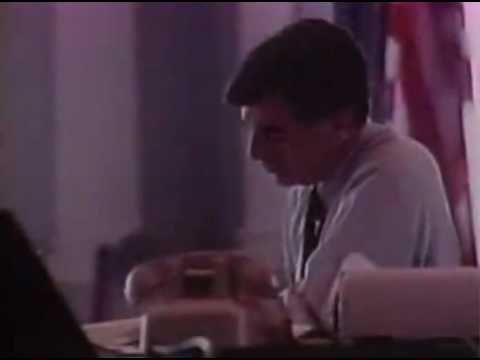
Napalm Captain: Michael Dukakis For President 1988- ‘A New Era’

1988 Michael Dukakis _New Era_ Ad Campaign

Source:Napalm Captain– Governor Michael Dukakis: D, Massachusetts.

Source:FRS FreeState

“Michael Dukakis: We’re going to build the kind of America where hard work is rewarded, where American goods and American workmanship are the best in the world. That’s what this election is all about.

Narrator: He turned around the ten-year economic slide and created a boom that has made Massachusetts one of the hottest economies in the country. He brought people together, created over four hundred t jobs and pushed personal income to the highest levels in the nation. He erased a massive deficit, balanced ten budgets in a row and cut taxes five times. It wasn’t a miracle. It was leadership.

Michael Dukakis: By working together to create opportunity and a good life for all, all of us are enriched, not just in economic terms but as citizens and as human beings.

Narrator: For a new era of economic greatness in America, Michael Dukakis for president.”

From Napalm Captain

On paper going into the 1988 presidential election, Governor Michael Dukakis of Massachusetts was a perfect presidential candidate to go against Vice President George Bush. He was a popular successful governor of a major state, a heavily Democratic state. Unlike Walter Mondale he had no ties to the Carter Administration. He was an outsider a governor. Someone with considerable executive experience running a major state.

Governor Dukakis, was an outsider running against the ultimate insider who since 1967 when George Bush took his seat in the House, was working in Washington and the Federal Government in some capacity. Except from 1977-81 when he was running for president and later vice president.

The Democratic Party had just won back the Senate in 1986 and added to their majority in the House. Iran Contra was still fresh in people’s minds politically speaking. Governor Dukakis was similar to Governor Bill Clinton of Arkansas. Mike Dukakis was of course a Northeastern or Massachusetts Liberal as he was labeled by Vice President Bush and others. But not some Far-Left Socialist which is how Reverend Jackson was labeled, but a Classical Liberal Democrat. Someone who believed in individual liberty and limited government.

Governor Dukakis, supported things as Governor of Massachusetts that became law by the Federal Government 5-10 years later. Like Welfare to Work, Three Strikes Law that was in the 1994 Crime bill, gun control same bill, deficit reduction. Mike Dukakis’s politics were pretty similar to Jack Kennedy, another Northeastern Massachusetts Liberal Democrat.

Mike Dukakis was even likable, reserve and cool sure which hurt him with connecting with voters in the general election. But he was up 17 points over George Bush when the Democratic Convention was over. So the Bush Campaign made a similar calculation that they did when they were trailing Bob Dole back in January and February 1988. That they aren’t going to beat Dukakis by showing America how great a guy George Bush was. That the way to beat Dukakis was to make him look like a bad guy, as someone who was Un-American, unpatriotic, soft on crime, etc. Someone who was a Far-Left Democrat that’s unacceptable to be President of the United States.

That’s why we saw the controversial Willy Horton ad, and the commercial of Mike Dukakis in a tank. All thanks to Lee Atwater George Bush’s chief political strategist. And with the Dukakis Campaign playing dead on these ads thinking that Americans won’t believe them and take them seriously. This is where we heard the term an attack that’s not responded to, must be the truth. And these ads killed Mike Dukakis’s chances of winning that campaign. Mike Dukakis brought a twig to a Gun Fight and got his head handed to him.

Mike Dukakis represents to me how not to run a presidential campaign. That its good to share your personal story and your family history and how you worked your way up in America. And what you want to do as President, but that you also have to understand that presidential elections are also wars. That if you don’t fight back it’s just as good as surrendering and you’ll get beat. And this is a lesson the Bill Clinton learned in 1992, with his War Room with Jim Carville and others. And while they were so able to respond to any attacks that were thrown at them in 1992.
Posted in FRS FreeState, Political History | Tagged , , , , , , , , , , , , , , , , , , , , , , , , | 1 Comment

Inside App: ‘President Lyndon Johnson Signs Medicare Law’

Inside App_ 'President Lyndon Johnson Signs Medicare Law' (1)

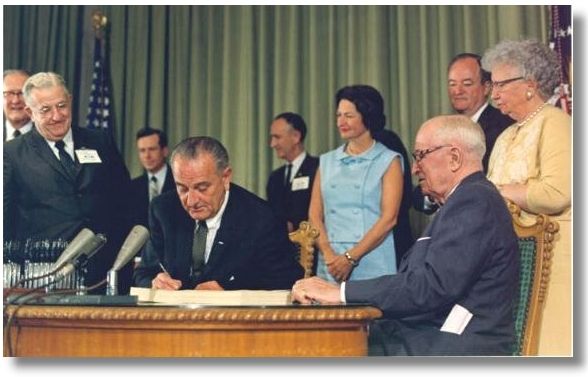
Source:Inside App– President Lyndon B. Johnson (Democrat, Texas) signing President Harry Truman’s idea into law, in 1965.

Source:FRS FreeState 

“The Medicare and Medicaid bill passes both houses of congress by an overwhelming vote. President Johnson signs it into law on July 30, 1965. Harry Truman was present at the signing and Johnson helped Truman sign-up for Medicare.”

From Inside App

President Johnson Signs Medicare into Law - Google Search

Source:Social Security History– President Lyndon B. Johnson (Democrat, Texas) signing President Harry Truman’s idea into law, in 1965.

When President Lyndon Johnson signed the Medicare bill into law that guarantees health insurance for senior citizens provided by the Federal Government and financed by an increase in the payroll tax, President Johnson finished off part of President Harry Truman’s presidential legacy. His Fair Deal agenda that he tried to pass through Congress. But since the Republican Party took control of Congress in 1947 and with President Truman’s unpopularity, he wasn’t able to pass it through Congress.

Lyndon Johnson was actually in Congress during the Truman Administration. (Both House and Senate) Elected to the Senate in 1948, actually served in Congress during the entire Truman presidency. And was in House during the first four years of the Truman Presidency. Both Truman and Johnson were New Deal Democrats on economic policy. So signing Medicare into law in I believe was a big deal to both Truman and Johnson and why President Truman was at the Medicare signing ceremony.

Health insurance for senior citizens is something that both Truman and Johnson were fighting for a long time. But a couple of Republican Congress’s, one in the late 1940s and another in the early 1950s, as well as the Eisenhower Administration, got in the way of Medicare coming into law. Actually, President Truman wanted to go farther and create a single payer health care system, but for the same reasons wasn’t able to get that done.

The legacy of Medicare I believe overall is pretty good, because it’s guaranteed health insurance for senior citizens as it was intended to. It wasn’t designed to become a single payer health insurer. That would essentially be the sole health insurer for everyone in the country. And outlawing private health insurers. If President Johnson wanted to do that, he probably would’ve proposed that. Because he had huge 2/3 majorities in the House and Senate up until 1967. When Congressional Republicans picked up a bunch of seats in both the House and Senate.

So President Johnson basically had three years to propose a single payer Medicare For All health care system, if he wanted to. But chose not to for whatever reasons. Perhaps he didn’t believe in a government-run health care system like they had at the time in the United Kingdom. Perhaps he didn’t believe the country was ready for that type of health care system or even wanted that. Perhaps he believed he didn’t have the votes for it.

Perhaps President Johnson didn’t have the votes for Medicare For All, with probably all Congressional Republicans voting against it, led by House Minority Leader Gerry Ford, Souse Minority Leader Everett Dirksen, Senator Barry Goldwater and others. As well as the Southern Caucus of Democrats in Congress.

Medicare has been very positive in guaranteeing health insurance for all of our senior citizens and at the time was considered revolutionary. But today would seem somewhat mainstream like and not trying to upset anyone or chop down a tree. But something that a consensus of Americans would support.

Posted in American Presidents, FRS FreeState | Tagged , , , , , , , , , , , , , , , , , , , , , , , , , , , , | Leave a comment

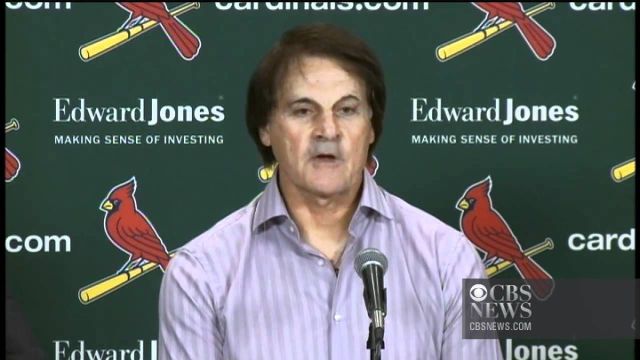
CBS News: ‘Tony La Russa Retires as St. Louis Cardinals Manager’

Tony La Russa retires as Cardinals manager

Source:CBS News– Tony La Russa: Manager of the St. Louis Cardinals (1996-2011) announcing his retirement as manager after winning the MLB World Series.

Source:The Daily Press 

“Tony La Russa announced his retirement as manager of the St. Louis Cardinals three days after winning a seven-game world series against the Texas Rangers.”

From CBS News

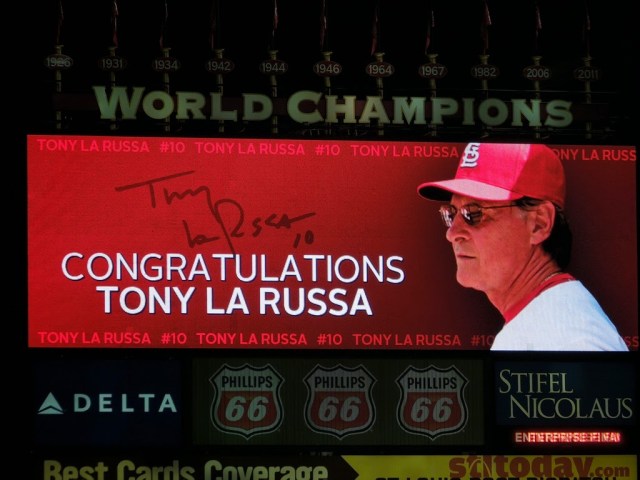
Tony La Russa

Source:St. Louis Cardinals– honoring the greatest MLB manager at least from his era and generation, Tony La Russa.

The only thing keeping Tony La Russa out of the Hall of Fame as a manager was himself, because he’s been managing for 33 years consecutively, his whole career, and I believe he’s been the best manager in Major League Baseball that whole period, and that includes people like Tommy Lasorda, Billy Martin, Earl Weaver briefly, Bobby Cox. Joe Torre, Roger Craig, Jim Leyland, and many others. Some may say Joe Torre because of the championships: 4 World Series Championships, 6 American League Championships, 11 Eastern Division Championships, and 13 playoff appearances. Only Tony La Russa and Bobby Cox come close to those accomplishments in this time period.

But when Joe Torre was with the New York Yankees from 1996 to 2007, you could make a case that he had the best team in MLB every year he was there, especially from 1998 to 2007, but they came up short several times, as in 2001 losing to the underdog Phoenix Diamondbacks, 2003 losing to the underdog Miami Marlins, both in the World Series, 2002 losing to the underdog Anaheim Angels in the American League Championship, and 2004 blowing a 3-0 Series lead to the Boston Red Sox in the American League Championship, something that will always be hated by Yankee Fans and loved by Red Sox Fans. I know a few of those fans myself. And of course the Yankees always had the most money in this time period and could always basically put all-star teams together to win the World Series.

Other than the time period during which Tony La Russa was with the Oakland Athletics from 1988 to 1990 or 1991, he was there from 1986 to 1995, but in those 4 years you could make a pretty good case that the Athletics should have won at least three World Series if not four, because from 1988 to 1990 they had the best three teams in baseball. And they only won one World Series. Of course, one is better then nothing but in the two World Series that the Athletics lost in 1988 and 1990, they won a total of one game.

They lost 4-1 in the 1988 World Series to, I believe, the worst World Series Champion since 1969, the Los Angeles Dodgers, who only won something like 85 games that season. And of course you had the famous Kirk Gibson home run in game one to win that game against the best closer in baseball at the time, Dennis Eckersly. When Tony La Russa was in St. Louis with the Cardinals from 1996 to 2011, he didn’t always have the best team and he still won 7-8 Central Division Championships, three National League Championships, and two World Series, and made the playoffs 9-10 times again. When only four teams make the playoffs in each league, they may go up to 5-6 teams in 2012, but we’ll see.

Tony La Russa was the best manager in MLB in his era as well as today because of what he got out of his players for the most part, not including his time in Oakland, but definitely in St. Louis, a midsize market. But with a great fan base, if not the best in MLB, it was just a matter of when Tony La Russa would retire. That would determine when he was going into the Hall of Fame, because he’s a first ballot Hall of Famer in waiting.

Posted in Sports, The Daily Press | Tagged , , , , , , , , , , , , , , , | Leave a comment

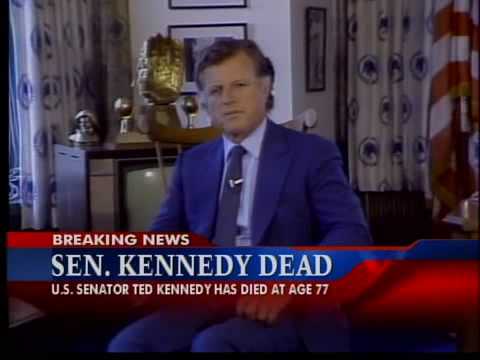
VOA News: Jim Bertel-U.S. Senator Edward Kennedy- ‘Dead at 77’

The Progressive Standard

Source:VOA News– U.S. Senator Edward M. Kennedy: D, Massachusetts (1932-2009) 

Source:FRS FreeState

“Senator Edward Kennedy was the last of the Kennedy sons born to Rose and Joseph Kennedy. He followed the trail blazed by his brothers, President John F. Kennedy and Attorney General and Senator Robert Kennedy, both assassinated in the 1960s. Ted Kennedy was known as the Lion of the Senate and was respected for his long-term commitment to health care for all Americans. On Tuesday night, at his home in Massachusetts, he lost his hard fought battle with brain cancer. VOA’s Jim Bertel has more on the career of this Democratic icon.”

From VOA News

When I think of the late Senator Ted Kennedy Edward M. Kennedy, I think of someone who represents the heart of the Democratic Party. Someone who represents the best of the Democratic Party as far as the things that we as Democrats have been fighting for going back at least to the 1930s or longer. Individual liberty, the U.S. Constitution and Bill of Rights, equality of opportunity for all, civil rights for all, workers rights, the little people, health care and health insurance for everybody. Retirement security for everybody, a foreign policy that represents the best of America. Basically a quality shot at the American Dream for everyone. Now we as Democrats don’t always agree on how to accomplish these things.

Democrats tend to have the same goals, but differ in how to accomplish those goals. Some times we don’t agree on any of those things as far how to accomplish them. We’ve always been a very diverse party. Politically, racially, different ethnicity’s and everything else. We are basically a political party of three different parties in one. And thats what happens when you have a two-party System in a country as large and as diverse as we are. But its that progressive agenda of the party that brings us together when we come together. And a lot of that credit goes to Senator Ted Kennedy who’s been the heart of the Democratic Party at least since 1980. When he unsuccessfully ran for President in 1980 and sort of took that mantle from Lyndon Johnson. When he left the White House in 1969 and when his brother Bobby Kennedy was assassinated in 1968.

Ted Kennedy didn’t represent the Democratic agenda as far as exactly what the policy’s would look like. Which is what Ron Reagan did for the Republican Party. he represented their agenda as well as policy’s. Even though Senator Kennedy had his own policy’s for all the key issues he cared about. The Democratic Leadership or the party as a whole, wasn’t always behind the bills that Senator Kennedy wrote. But they shared the same goals on a lot of bills that Senator Kennedy got passed out of Congress. He did that by working with the Democratic Leadership, Senate Republicans like Orrin Hatch, Bob Dole, John Chaffee, Arlen Spector and others. And then working out a compromise with the House whichever party was in charge.

Senator Kennedy, was also good at working out agreements with the White House. This is how legislating works in Washington and Senator Kennedy is about as good or the best legislature we’ve ever produced. But Ted Kennedy has been a big reason why the Democratic agenda has always been the same for the last 45-50 years. And a big reason why they’ve been able to pass a lot of that agenda, including health care reform which they passed in 2010. And still serves as the inspiration for the Democratic Party today. If the United States had a system where each party had their own official leader, whether they are the ruling party or not, meaning they run the executive, which is what most democracy’s have, then Ted Kennedy would’ve been that guy for the Progressive Party. Because he was the person that could bring the party together when times were good or bad. And is a big reason why he’s the Heart of the Democratic Party.

Posted in FRS FreeState, VOA News | Tagged , , , , , , , , , , , , , , , , | 1 Comment

Learn Liberty: Pavel Yakolev- What Are The Limits of Liberal Democracy?

Learn Liberty_ Pavel Yakolev- What Are The Limits of Liberal Democracy_

Source:Learn Liberty– Pavel Yakolev, talking about freedom and democracy. Which aren’t the same things.

Source:FRS FreeState 

“People often associate freedom with electoral democracy. According to Prof. Pavel Yakovlev, the freedom to vote is an inherently limited tool for fostering a free society. Although majority vote can serve as a useful tool for expressing the will of the people, it can be taken too far.

Imagine a world governed entirely by majority votes—including your personal decisions! Would you be happy if a majority vote determined who you could date? What you could eat? Now consider the world you currently live in, where you make decisions and purchases in the context of a marketplace. In a market, you can choose goods, services, and activities that diverge from majority trends. Moreover, markets also provide a greater number of choices.

Free markets and limited government depend upon and facilitate individualized and decentralized choices; they create the conditions necessary for a truly free and democratic society.

Watch more videos at:Learn:Learn Liberty.”

From Learn Liberty

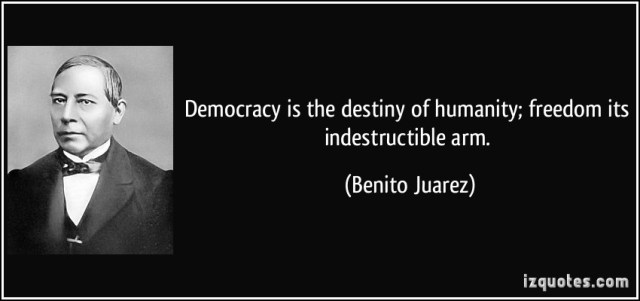
Benito Juarez

Source:IZ Quotes– Benito Juarez on freedom in Mexico.

What’s the best way to guarantee individual liberty for the people so they can be free to live their own lives as they see fit short of hurting anyone else with their liberty and not be harassed by government?

One, you need a constitution that guarantees individual liberty. And limits what government can do.

Two, you need rule of law to limit what government can do. But also how people interact with each other. But it’s not just a constitution that you need but constitutional rights that are in that constitution.

Like freedom of speech and expression, freedom of religion, or not practice religion.

Right to vote but through a multi-party system.

Decentralization of government, a Federal Government, but state, or provincial governments as well as local governments. That all have enough power under the Federal Constitution to govern themselves and handle their own affairs. As well as again to limit what the Federal Government can do. You don’t have to have a weak Federal Government either. That they have to be able to defend the country and to a certain extent look after its people’s welfare. But it needs to be limited so it doesn’t become too powerful.

You need a republic not a monarchy, or theocracy, but a republic. Where civilians are running the government. Again to limit the power of government and you also need checks and balances, separation of branches. Executive, legislative and judicial.

I just laid out a lot what the United States Government looks like. Some people say especially Conservatives and Libertarians that the best way to insure individual liberty is with a republic. But I counter that argument by say that there are also authoritarian republics. Like the People’s Republic of China, the Communist Republic of Cuba, or Baathist Republic of Syria, Iraq under Saddam Hussein was a republic and still are.

The difference being that under the Hussein Regime, Iraq was an authoritarian Baathist Republic. Today they are basically a democratic republic and a federal republic, but with some flaws. There good republics like America and bad republics like Syria. A republic basically lays out what type of powers the federal or central government have. In a liberal democracy like America, those powers are very limited, but in an authoritarian republic not to pick on Syria, but their government’s powers are basically unlimited.

Which is one reason why we see such an intense democratic opposition in Syria right now. The Syrian people are good-by in large, but their government is bad. My argument as a Liberal Democrat for what’s the best way to insure individual freedom is with a republic, but in the form of a liberal democracy. A liberal democratic republic with a liberal amount of individual rights and freedom. Not a liberal amount of government, which is very different. Which is what we have in the United States, with a Federal Constitution, separation of powers and checks and balances. With the individual liberty to live our own lives and be successful economically.

Posted in Classical Liberalism, FRS FreeState | Tagged , , , , , , , , , , , , , , , , , , , , , | Leave a comment

C-SPAN: President John F. Kennedy- 1963 Address on Civil Rights

Liberal Democrat

Source:CSPAN– President John F. Kennedy (Democrat, Massachusetts) addressing the nation about civil rights in 1963.

Source:FRS FreeState

“President John F. Kennedy’s Civil Rights Address”

From CSPAN

When I think of how Democrats should be and this is going to sound real arrogant, but I look at myself when I’m talking politically. Democrats should be Liberals and Progressives who believe in liberal democracy, because we believe in individual freedom.

Liberal democracy is about economic, social, political, religious, freedom of choice, as long as we are not hurting anyone else with our freedom. That we get back to what Old School Liberalism is. Not how liberalism is stereotyped today, which looks more like socialism. Liberalism is about individual liberty, again as long as we are not hurting anyone else with our choices. But thats me.

Every Democrat can have their own version of what Democrats should be. But to me we are supposed to be the Liberal Democratic Party in America, because we believe in liberal democracy. Not a Social Democratic Party, that some so-called Progressives today would like us to become. Or a Centrist Democratic Party, where those people could probably be Republicans as well. Like Senator Ben Nelson of Nebraska.

When I think of people who come the closest in representing what Democrats and liberalism should be, I think of Jack Kennedy with Bill Clinton being not that far behind. As well as some Liberal Democrats today like Senator John Kerry (another JFK with very similar politics as Jack Kennedy). People who are Liberals not because they believe in collectivism that government can solve all problems. But because they believe in individual liberty.

Jack Kennedy, in particular comes closest in representing what democrats are supposed to be. Not just because of his politics, but with his power to communicate his views. Just like Barry Goldwater represents exactly what Republicans are supposed to be because he was definitely a Classical Conservative. And communicated classical conservatism as well as it could be communicated and I would add Ron Reagan to that list as well.

Even though President Kennedy was late to the dance on civil rights and had he got there earlier, maybe he could’ve got the ball rolling on it earlier, but he got there. And it wasn’t that he didn’t believe in civil and equal rights, but that it was politics that was keeping him from it. Losing the South in the 1964 Election, which is a weakness on President Kennedy’s part and I’m not excusing it.

President Kennedy comes closest to representing what Democrats should be. Because he was strong and smart on defense not soft that a lot of Democrats after him got accused of being and to a certain extent for good reason.

JFK supported equal rights, individual freedom. Didn’t want the Federal Government growing indefinitely, that there was a limit in what it can do to help the country. Fiscally responsible, these are all things that Liberals actually believe in. That government can help people who are down get themselves up, with what’s called a safety net. Not a welfare state and they are different.

JFK is what it means to be a Liberal Democrat. (Someone who believes in liberal democracy) Now I’m sure I’m farther to the left on a lot of social issues than President Kennedy. Like decriminalization of marijuana and prostitution and perhaps gambling as well. But those issues, weren’t considered mainstream back in JFK’s time.

JFK comes the closest from every Democrat I’ve ever seen, as someone who doesn’t believe in any form of big government. Doesn’t believe in collectivism, but believes in individual freedom instead. Which is one of the reasons why he was such a strong anti-Communist, not only in Congress, but as President as well and I wish we had more Democrats today like Jack Kennedy.

Posted in FRS FreeState, JFK Presidency | Tagged , , , , , , , , , , , , , , , , , , , , , , , , , , | Leave a comment

VOA News: ‘Activists Seeking to Capitalize on ‘Occupy’ Protests’

VOA News_ 'Activists Seeking to Capitalize on Occupy Protests'

Source:VOA News– a woman who was interviewed for this piece.
Source:FRS FreeState

“Voice of America (VOA) is an American international broadcaster funded by the United States Congress. It is the largest[1][2][3] and oldest U.S. funded international broadcaster.[4][5] VOA produces digital, TV, and radio content in 47 languages which it distributes to affiliate stations around the globe. It is primarily viewed by foreign audiences, so VOA programming has an influence on public opinion abroad regarding the United States and its people.

VOA was established in 1942,[6] and the VOA charter (Public Laws 94-350 and 103-415)[7] was signed into law in 1976 by President Gerald Ford.

VOA is headquartered in Washington, D.C., and overseen by the U.S. Agency for Global Media (USAGM), an independent agency of the U.S. government.[8] Funds are appropriated annually under the budget for embassies and consulates. In 2016, VOA broadcast an estimated 1,800 hours of radio and TV programming each week to approximately 236.6 million people worldwide with about 1,050 employees and a taxpayer-funded annual budget of US$218.5 million.[9][10]

Some commentators consider Voice of America to be a form of propaganda.”

From Wikipedia

“As anti-Wall Street demonstrations continue in New York City, the growing furor over bank bailouts and the weak economy continues to spread throughout the United States. In Boston, dozens of protestors were arrested for refusing to leave Dewey Park. In Washington DC, protestors were hoping to have their permit renewed to allow demonstrations to continue. The “Occupy Wall Street” demonstrations there have given a boost to several other local campaigns looking to draw national attention to their causes.”

From VOA News

I believe at least a majority of the country supports these protests on Wall Street all across the political spectrum. Wall Street is not very popular with any political party right now, except for maybe the Libertarian Party and Tea Party. That’s why we are seeing large protests all across the country against Wall Street and even corporate America to a certain extent. I wish these protests would reach Congress as well, (both in the House and Senate) to get them to start moving and legislating and even coming together.

Occupying Congress and the members who are bought by Wall Street, at least in too many cases, would make more sense, then to simply try to occupy buildings where a lot of investing is done.

I mean if this was a real occupy movement (Left or Right) and this time it is certainly coming the Left (if not Far-Left) you go where the money is. (So to speak) And occupy the people who take the money from the business’s and investors you are say are destroying the American middle class. I know that sounds like commonsense and what does that have to do with American politics, probably nothing, but something to think about.

And hopefully OWS will at some point, with a 13% approval rating of Congress (and with the people who officially who approve of Congress either dead, living in Mongolia, or in a coma) there’s plenty incentive for them to do that, if they have the guts to take on their political bases. 468 members of Congress (between the House and Senate) are up for reelection in 2012.

And if 2012 is another anti-incumbent election, then a lot of members of Congress (in both parties) could be looking for new jobs after election night. Seriously, the scariest thought for any career politician, perhaps especially someone in Congress, is looking for a new job, Which is why pissed off Americans should be scaring the hell out of them right now. But right now they are focused on Wall Street so I’ll focus there. What these protesters have in common is that they are independent. Meaning they aren’t Democrats or Republicans in a lot of cases.

Not one national organization is running these protests and putting them together. But a bunch of different political organizations perhaps working together. And there’s also political diversity within this movement: Socialists, Libertarians, and some Liberals are all part of this movement, perhaps even some true Conservatives, who are fed up with bailouts corporate capitalism and want to see change in our economic system.A diverse somewhat American melting pot of political philosophy. Who have found at least one issue to not try to beat the heads of people they normally don’t agree with.

The political diversity in this movement is positive for them in this sense, it indicates that there’s broad support for it. That there’s not one political party behind it and that the country wants to see real change in our country and our economic system. But it’s a problem as well, because there isn’t a consensus in what change and reform should look like.

Conservatives and libertarians would like to see government less involved with our economic system spending less and downsizing and less regulation and no more bailouts and tax less. Socialists obviously are the complete opposite of that and perhaps would like to nationalize some industries, especially banking and health care.

Liberals would like to see reform with our entitlements, cutting the deficit and debt, infrastructure investment, tax cuts for the middle class, expand free trade. And bring our foreign troops home from Afghanistan, Iraq and other places.

There’s significant support for what Conservatives, Libertarians and Liberals want to do. Socialists have the most ambitious agenda of everyone, perhaps put together. Having a political coalition of Liberals, Libertarians, Conservatives and Socialists is not an odd couple. More like a melting pot put into a big stew, that makes people want to vomit after eating it. (Or go to jail for their food instead)

Socialists want to return America to the 1950s as far as tax policy. Tax rates starting at 25% and going up to 90% and people like socialist economist Richard Wolfe have been very upfront about that. As well as nationalizing our healthcare system, nationalizing our higher education system. With the Federal Government now paying for everyone to go to college at taxpayer expense. As well as other things. If you think America has a big government now, put Socialists in charge and this government would look like a midget that is shrinking in comparison to what they want to do.

There’s potential for a movement here as being against something, but that’s the easy part. The question is what do you do instead, what do you and what do you replace it with. And all of these political factions have their own agendas that they would like to see pass.

This is not a governing coalition (more like a prison riot made up of all certain types of gangs) but more like a protest coalition similar to what the Ross Perot movement of the 1990s. So I don’t see a consensus right now in what to do instead after the partnership between Wall Street and the Federal Government is broken up.

And that can only happen with either getting private money out of Federal politics. Can’t be done without a constitutional amendment, because the Supreme Court would throw it out. The only other alternative I see is full- disclosure which is very difficult to pass. Because it would require public officials to release to the public who they deal with and how much money they receive from them. Asking a career politician to release their political contributors, is like asking an obese food addict to give up eating cold turkey (including turkey) for a week straight without supervision. Good luck with that and let me know how it works out.

Until there’s a movement that has broad support in not only what its against, but what they want to instead and can get elected and reelected and puts proposals on the table that becomes law, We are stuck where we are in gridlock, with a do nothing Congress with its first eye always on the next election and how to get their base to the polls and votes for them.

But look at the bright side: when things aren’t going well for you and you are in trouble, you’ll always have Congress to make fun of and say: “At least I’m not as bad as those people and know how to get my work done, because I have to work for a living.”

Posted in FRS FreeState, VOA News | Tagged , , , , , , , , , , , , , , , , , | Leave a comment

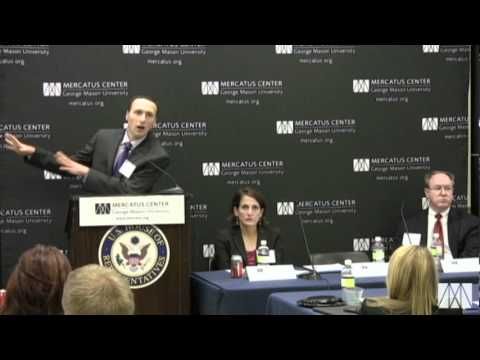
Mercatus Center: ‘Changing the Budget Process to Promote Fiscal Responsibility’

_ - 2021-05-14T150007.908

Source:Mercatus Center– holding an event on fiscal responsibility in Washington. (Which at the very least is an Oxymoron)

“Thursday October 7th 2011

This event is the third of a four-part series, “How the Debt Committee Can Significantly Improve Our Fiscal Course.” Don’t miss the other three events addressing fundamental tax reform, budget reform, and spending reform.

Many point to the past months’ rancorous debates and subsequent credit downgrade as an indication the federal budget process is “broken.” But if its principle aim is to control spending, has it ever really worked?

This discussion focuses on the following questions:

-What are the key weaknesses of the current federal budget process?

-How and why have most past process reforms failed, and how should new budget rules be designed and enforced to ensure effectiveness?

-What reforms could be immediately enacted to direct real near-term spending reform?

-What is necessary to ensure medium and long-term spending reforms actually materialize?

Help us caption & translate this video!”

From Mercatus Center 

Imagine living in a world where you live on Monopoly money and you own your own personal printer and have your own private banker who just gives you money when you are short: actually, you don’t have to imagine that, because that’s the world that the U.S. Government in Washington not just lives in, but operates and owns.

The U.S. Government (Administration and Congress) doesn’t pay for its operations simply because they don’t believe they have too. They have constituents who want Uncle Sam to this, that, and something else for them, on top of everything that government is already doing for them (or to them) but then also claim about their taxes being too high and would rather drive their sports car off the cliff into a lake than pay higher taxes. And any politician who raises their taxes risks their political careers in doing so.

So what government does instead (only at the Federal level) is say: “We have all of these priorities that we have to do and with the economy being weak and unemployment high, we can’t afford to pay taxes right now. And because of the economy, this not the time to cut real government spending, and with interest rates being low, we’ll just borrow the money.” Or blame the other part for deficit spending and accuse them of being exactly what they are, which is big spenders. Hypocrisy in politics goes together like hot dogs with mustard: it’s a natural combination.

And this is why we have the debt and deficit situation that we have. We have politicians who won’t tell their constituents the truth about government and taxation. We have voters who want government to do a lot for them, but they don’t want to pay for it.

Posted in Fiscal Responsibility | Tagged , , , , , , , , , , , , , , , , , , , , , , | Leave a comment

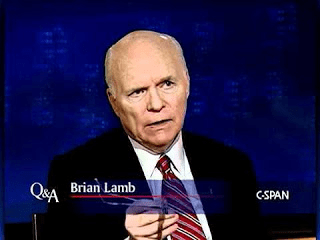
C-SPAN: Q&A With Brian Lamb- Mick Caouette on Hubert Humphrey: ‘The Art of The Possible’

C-SPAN_ Q&A With Brian Lamb- Mick Caouette on Hubert Humphrey_ 'The Art of The Possible' (3)

Source:CSPAN– Brian Lamb, interviewing Mick Caoette about his documentary about Hubert H. Humphrey.

Source:FRS FreeState 

“Film producer Mick Caouette speaks to Q&A about his documentary, “Hubert H. Humphrey: The Art of the Possible.” Program from Sunday, February 6, 2011.”

From CSPAN

“Producer Mick Caouette talked about his documentary on former Senator and Vice President Hubert Humphrey. The film is the story of his life with emphasis on his leadership role in the passage of the 1964 Civil Rights Act. The documentary also features video from his political years running for the Senate, vice-president, and president. The program featured clips from the documentary. Producer Mick Caouette started working on the documentary eleven years ago, and it was released in the fall of 2010.”

C-SPAN_ Q&A With Brian Lamb- Mick Caouette on Hubert Humphrey_ 'The Art of The Possible' (2)

Source:CSPAN– Mick Caouette, talking to Brian Lamb, about his documentary about Hubert H. Humphrey.

From CSPAN

“Mick Caouette is a documentary filmmaker who focuses on U.S. history and Sociology.
“Hubert H Humphrey: The Art of the Possible” follows Senator and Vice President Hubert Humphrey through his civil rights work, the Vietnam War and his loss to Richard Nixon. The film is available at http://www.shopbs.org and will premiere through APT on PBS fall 2010…

C-SPAN_ Q&A With Brian Lamb- Mick Caouette on Hubert Humphrey_ 'The Art of The Possible' (1)

Source:Mick Caouette– about U.S. Senator and Vice President Hubert H. Humphrey.

From Mick Caouette

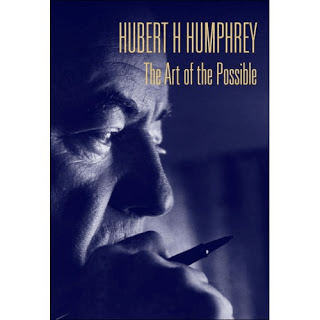
“For the last half of the 20th century, America was consumed by two struggles: the civil rights movement and the cold war. For 30 years Hubert Humphrey stood at the center of both. While he is most remembered for his loss to Richard Nixon in the 1968 presidential campaign, Humphrey left behind a legacy that few presidents can match. As a soldier of the New Deal and Great Society, he amassed one of the most prolific legislative records in senate history — from Medicare to the Peace Corps.

But Humphrey’s most significant and enduring achievements were in the area of civil and human rights. This film explores his 1948 speech at the Democratic convention and his pivotal contribution to the 1964 Civil Rights Act. In November of 1977, for the first time in U.S. history, Congress held a joint special session to honor a single senator. Special feature – a 1976 Bill Moyer’s interview with Hubert Humphrey.”

C-SPAN_ Q&A With Brian Lamb- Mick Caouette on Hubert Humphrey_ 'The Art of The Possible'

Source:Amazon– about former U.S. Senator and Vice President, Hubert H. Humphrey (Democrat, Minnesota)

From South Hill Films

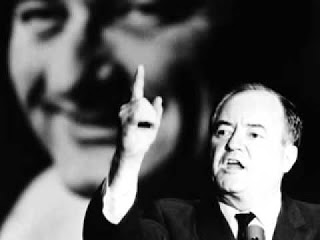
The Art of the Possible, which is the name of a documentary about former Senator and Vice President Hubert Humphrey, I believe is the perfect way to describe Hubert Humphrey. Because that’s how Senator Humphrey saw politics and government: serving the people and trying to solve problems that they face.

Hubert didn’t see government as a debating society, where Democrats and Republicans, Liberals, Progressives, and Conservatives, bashed each over the head. With neither party having enough power to destroy the other party. But he saw government as a way to try to solve problems, analyze the issues, examine what the political situation is between both parties and try to find solutions that can pass through Congress and that the President would sign. And Hubert Humphrey had plenty experience at this. Being in Congress for twenty five years and being the Assistant Leader of the Senate from 1961-65. Leader Mike Mansfield’s deputy and then Vice President from 1965-69.

Hubert Humphrey was pretty busy in that time period with the civil rights legislation. The civil rights debates actually were going on in the late 1940s. When Hubert Humphrey was elected to the Senate and he made his famous pro-civil rights speech at the 1948 DNC.

And the 1964 Civil Rights Act where Humphrey had a big role in getting that bill passed. And ending the Senate filibuster from the Southern right-wing Democrats. And helping to bring aboard some Northern Progressive Republicans.

And as Vice President he had a role in getting the 1965 Voting Rights Act passed as well as Medicare health insurance for senior citizens. But I believe Hubert Humphrey’s legacy in Congress was the civil rights legislation. Who without him those bills never get passed.

Hubert Humphrey had the perfect approach to civil rights, because he saw it as about human and constitutional rights. Which trumps states rights, which was of course the argument that the Southern Dixiecrat Democrats were making. That the states had the right to enforce constitutional rights as they see them. Even if it violates constitutional rights of African-Americans and other racial minorities.

The Republican Party of the 1960s even though they were the opposition party from 1961-69 and were a small minority party in both the House and Senate for the whole decade, deserve a lot of credit in Congress for those bills being passed at all.

Congressional Republicans like Senate Minority Leader Everett Dirksen, deserve a lot of credit for getting the civil rights legislation passed as well, because they don’t pass in the Senate without Senate Minority Leader Everett Dirksen, who without him these bills never get passed in this era.

Hubert Humphrey tends to get lost when we are talking about great politicians and public servants for whatever reason. But without him a lot of important legislation never gets passed. And a lot of Americans would’ve been denied their constitutional rights as a result, just because of their race. Which would’ve been a disgrace in a liberal democracy like America.

Posted in American History, FRS FreeState | Tagged , , , , , , , , , , , , , , , , , , , , , , , , , , , , , , , , | Leave a comment

Brookings Institution: Gigi Hinton & E.J. Dionne- ‘The Tea Party’s Influence on American Politics’

IMG_5773

Source:Brookings Institution– the New-Right in America.

“E.J. Dionne: Many members of the tea party movement repudiate government itself, and their extreme views have moved national politics to the right. That’s not good for moderate Republicans, or for the party as whole. More:Google.”

From Brookings  

I believe believe E.J. Dionne (left-wing columnist for The Washington Post) is right about the Tea Party, at least in the sense and why they’re emerged as a powerful force in American politics.

When things go bad in the country, the party in power (Democratic Party-2009-10) tends to take the fall for it and get hit hard by it. Or in 2006 when the economy was still doing fairly well, but President George W. Bush had the unpopular Afghan and Iraqi wars, but immigration on his plate that he and the Republican Congress seemed to have no ability to deal with.

When you have one-party control like what we had in 2005-06 and 2009-10 and that party is unpopular and things seem to go badly in the country, the voters, especially Independent voters tend to take their anger out on the party in power and vote for the opposition party. The party in power tends to be down in that situation and doesn’t show up to vote. While the out party can’t wait to vote and turns out in huge numbers that puts them in power, along with Independents.

The Republican Party didn’t win back the House of Representatives last year, because American voters decided they now love the Republican Party, especially the Tea Party and hate the Democratic Party. But because the Democrats had all the power in Washington during a time when things in the country were going badly and wanted the Democrats to be held accountable for that.

Posted in Brookings Video | Tagged , , , , , , , , , , , , , , , , , , , | Leave a comment