Wendell Willkie: Explaining Liberalism (1940)

Wendell Willkie_ Explaining Liberalism (1940)Source:BJ82– 1940 Republican Party presidential nominee Wendell Willkie.

“Wendell Willkie is speaking in this 1940 spot against Roosevelt as the Republican nomination.”

Source:BJ82

Wendell Willkie in about three minutes (and that’s it and all the time he needed) did what Michael Dukakis in an entire presidential-campaign in 1988 or John Kerry in an entire presidential-campaign in 2004 didn’t ,which is layout for the most part not all of his politics why he’s a Liberal.

Yes, Wendell Willkie  a Classical Liberal Republican, not a Democrat, at the time because he saw Franklin Roosevelt and the New Deal moving the Democratic Party in a socialist direction. Something that he didn’t want to be part of. This idea that you solve problems in society by government, especially the Federal Government, spending a lot of other people’s money for them.

In the 1930s and 40s, the Republican Party was a center-right party, that did have a center-right progressive faction in it. But they weren’t Henry Wallace Democratic Socialists. They had Robert Taft Classical Conservatives in the Midwest and other parts of the country and they had Thomas Dewey Liberal Republicans in the Northeast.

The Liberals were basically John F. Kennedy Liberal Democrats, because they believed in liberal democracy and that liberty was worth defending. That’s who Wendell Willkie was politically. The so-called Neoconservatives today, were once JFK Liberal Democrats. That’s Wendell’s political philosophy.

Posted in Classical Liberalism, Originals | Tagged , , , , , , , , , , , , , | Leave a comment

NFL Network: Tom Landry A Football Life

A Football Life Tom LandrySource:NFL Network– from the NFL Network documentary.

Source:The Daily Press

Mike Ditka on Tom Landry: “Grantland Rice had a quote on class:

Class is a hard thing to define:

It could be the swing of a slugger’s bat.

It could be the lift of a thoroughbred’s hoof.

It could be the flick of a quarterback’s arm.

But once you see it, you’ll never forget it. Tom Landry was class.” No better way to start of A Football Life Tom Landry, than with Mike Ditka, who perhaps knew him the best.

“A Football Life Tom Landry”

From Sports Freak Podcast

Tom Landry is an interesting subject for me as a Redskins fan because here’s the guy who built America’s Team that became the new arch-rival of the Redskins in the early 1970s replacing the New York Giants and cost the Redskins division-titles in the 1970s which the Redskins corrected in the 1980s. But Mike Ditka I believe has the best quote that at least I’ve heard about Tom Landry so far when he was talking about class.

And Iron Mike said and I’m paraphrasing here, but “that class is hard to define, but you know it when you see it. It might be a great throw from a quarterback or the sound of a ball off of a sluggers bat for a home run. Tom Landry was class”, that when you saw him or knew him you knew he was class and that’s a great way to describe Tom Landry. That greatness is hard to define, but you know it when you see it. You know a great play when you see it, you know a great player when you see them play and you know a great head coach when you play for him. Or watch his career and that’s what Tom Landry was.

Tom Landry’s philosophy of coaching was simply to get the best out of his players and teams that he could possibly could. To make them as good as could be, which is easier said then done and hopefully the goal of every head coach. But then how you do that and every head coach probably has their own philosophy to accomplish that. But with coach Landry it was about never being satisfied with any of his players until he got the best out of him that he could.

Which is why he never congratulated his players or tell them how great of a job that they were doing and never complemented them. Unless he was getting the best play and games out of his players that he could and when he did that is what we saw America’s Team in the NFL. The Dallas Cowboys of the 1970s a team that was almost impossible to beat. When they were all playing up to their capabilities and winning championships. And with Tom Landry pushing his players to the limit was on both offense and defense always pushing his players to get the best out of them.

You want to talk about football genius’, how many head coaches do you know that could be either the offensive or defensive coordinator on the team. That knew enough about both offensive and defensive football that he could not only call the offensive plays and defensive plays for his team, put both the offensive and defensive game plans together for his team, not just do all of these things, but do them very well. The only person that did all of these things and did them well is Tom Landry.

Tom Landry is one of the top 3-5 head coaches of all-time because of how knowledgable he was about both sides of the ball. But then was such a great teacher and knew how to communicate his knowledge to his players. And show them exactly what he wanted out of them and very few if anyone did that better than Tom Landry.The numbers in Tom Landry’s career. Twenty consecutive winning seasons from 1966-85 which I believe will never be broken. Eleven straight playoff appearances from 1975-85, that may be never be done again. Two Super Bowl championships in the 1970s, the Cowboys being the only NFC team to win a Super Bowl in the 1970s. Twelve division-titles, five conference championships.

All of these things happening after inheriting one of the worst expansion teams of all-time in the 1960 Cowboys. But it’s not the championships and the 270 odd victories that Tom Landry had but all the knowledge he brought to the game. And his great ability as a teacher to teach his knowledge which is why he’s Ss high on the list of greatest NFL head coaches of all-time.

Posted in NFL Greatest, The Daily Press | Tagged , , , , , , , , , , , , , , , , , , , , , | Leave a comment

Brookings Institution: Michael O’Hanlon: ‘Sequestration & U.S. Defense Spending: Healing the Wounded Giant’

Brookings Institution_ Sequestration & US Defense Spending_ Healing the Wounded GiantSource:Brookings Institution author Michael O’Hanlon.

“Michael O’Hanlon: Whenever you cut substantial amounts of money in the Department of Defense, you’re basically giving up some capability. Some of those capabilities are less crucial than others.”

From the Brookings Institution

Michael O’Hanlon is right sequestration is not the right way to cut the defense budget or any other part of the Federal budget. But there are smart ways to cut the defense budget as well as other parts of the Federal budget that doesn’t hurt anyone and wouldn’t hurt our economy and most importantly our national security.

You do deficit reduction by not spending things on defense that we simply no longer need to spend money on. Like getting out of Iraq and Afghanistan and the Middle East more broadly as far as trying to defend those countries. And instead just work with them to sell them the supplies, resources and training that they need to defend themselves.

As well as telling Europe that doesn’t have a major enemy capable of invading and occupying them are even bombing them or hitting them with missiles and that they need to either defend themselves and spend their own money doing that which they have. As well as more than enough manpower to defend themselves or pay America to do that for them.

And we say the same things to Japan and Korea and Saudi Arabia. So America can put more resources into America and do a better job of securing our Southern border.

Posted in Brookings Video, Originals | Tagged , , , , , , , , , , , , , , , , , | Leave a comment

Carrie Underwood: ‘Carrie Underwood – Mama’s Song (Official Video)’

Carrie Underwood - Mama's Song (Official Video) (2010) - Google SearchSource:Carrie Underwood Mamma’s Song.

Source:The Daily Press

“Carrie Underwood’s official music video for ‘Mama’s Song’. Click to listen to Carrie Underwood on Spotify…

From Carrie Underwood

How do I describe my own mother, the most important woman in my life who without I wouldn’t have a life. And how do I do that in a blog post. Which I guess is the challenge of this post, right. I guess the way I would do that would be to look at people who I truly respect who’ve influenced my life. and those people are the people, men and women who are never satisfied and never completely happy, who are never interested in settling. Not that they are depressed people always looking for the negative and only feel good when tears are flowing down their faces, who want to hang around depressed people all the time. I think that would even be depressing for shrinks, because it would be like going to a depression convention.

Depressed people, are well, depressing and listening to nothing, but sad stories all the time, could create more depression. But what I’m talking about is someone in my mother, who doesn’t let the people they care about and love settle when they know they can do better. Always looking for that edge who doesn’t settle for mediocrity always pushing the people they love to do the best they can. And that’s how I would describe my mom.

My mom is not only someone who doesn’t let her sons settle for being okay or good. And I’m one of three sons, my parents have three kids all boys, but she’s also someone whose always looking to challenge her kids. And try to get them to do something they normally wouldn’t do, especially if it’s good for them. And she knows they would be successful at it and would even enjoy it.

I can give you a small example of how Mom pushed me and a big example of that. When I was a kid, my mother was always pushing mashed potatoes on me, even though she knew I didn’t like them and I wouldn’t eat them. And she would keep saying: “These are really good you should try them I think you’ll like them I made them different this time.” And so-forth.

I hated mashed potatoes my whole time as a kid. But at some point as an adult I guess in my mid twenties, I tried mashed potatoes one more time, I guess. Either made by mom like on Thanksgiving, or perhaps at a restaurant where the mashed potatoes came with the meal. And actually liked them and have loved mashed potatoes ever since. As an adult and eat practically every time I’m eating meatloaf, or steak, or some type of meat like that. I guess my mom built up my tolerance for mashed potatoes as a kid and I grew to love them as an adult and they are also good for me. A bigger example of my mother’s influence on me has to do with what I’m doing at this very moment. Which is blogging and writing.

Ten years probably before blogging was a major industry, Mom knew I was a political junky from our family conversations and she suggested I should write a letter to the editor at the Washington Post about politics. I wish I had done that now, but I wasn’t even thinking about writing online at that point. And wasn’t sure what I wanted to do professionally. I wish I had done that, but I’m not blogging without my mother. And people who I use to work with at a bookstore and I have them to thank for that especially my mother. Who I’ll always love and be grateful for.

Posted in Life, The Daily Press | Tagged , , , , , , , , , , , , , , | Leave a comment

The New Republic: Nate Cohn: ‘November 2012 Census Data: Barack Obama’s Coalition Will Hold Together’

November 2012 Census Data_ Obama's Coalition Will Hold Together _ The New RepublicSource:The New Republic with a look at 2013 census.

“After President Obama’s relatively easy reelection, analysts and commentators wondered whether his young and diverse coalition would outlive his presidency. Many believe, based mainly on their intuition, that 2008 and 2012 were the anomalous results of a historic candidacy. On the other hand, the country is getting more and more diverse with each passing year. Recently, one prominent demographer at the Brookings Institute used the exit polls to argue that Obama would have lost if turnout rates returned to ’04 levels. But his effort was misguided and premature.

/After President Obama’s relatively easy reelection, analysts and commentators wondered whether his young and diverse coalition would outlive his presidency. Many believe, based mainly on their intuition, that 2008 and 2012 were the anomalous results of a historic candidacy. On the other hand, the country is getting more and more diverse with each passing year. Recently, one prominent demographer at the Brookings Institute used the exit polls to argue that Obama would have lost if turnout rates returned to ’04 levels. But his effort was misguided and premature.

Today, the Census released the November 2012 Current Population Survey (CPS) Voting and Registration Supplement, which is based on interviews with hundreds of thousands of residents. The CPS asks Americans whether they participated in the last election. The CPS is imperfect like any survey, but it is considered the gold standard for analyzing turnout. It demonstrates that, in the debate about the GOP’s future in an increasingly diverse America, both sides are right, to a certain extent. On the one hand, Obama’s historic candidacy led to historic black turnout. On the other hand, the Obama coalition is the product of irreversible demographic changes. If Republicans hope to win presidential elections, they will need to broaden their appeal—not just count on lower minority turnout in the post-Obama era.

Unsurprisingly, the CPS found that the 2012 electorate was more diverse than any in history. Whites represented just 73.7 percent of the electorate, down from 76.3 in 2008 and 79.2 percent in 2004. In comparison, the exit polls found that whites represented 72 percent of the electorate in 2012, compared to 74 percent in 2008 and 77 percent in 2004. For the first time, the CPS found that black turnout rates exceed white turnout rates, with 66.2 percent of voting age blacks turning out, compared to 64.1 percent of whites. Many expected that black turnout would decline in 2012, but the CPS actually found that black turnout was even higher in 2012 than it was in 2008, increasing from 64.7 to 66.2 percent.

Contrary to the pre-election expectations of many commentators, the CPS found that non-Hispanic white (henceforth white) and Hispanic turnout rates declined: Hispanic turnout fell from 49.9 percent to 48 percent, while white turnout declined from 66.1 to 64.1 percent of voting age citizens. Even so, the growing Hispanic share of the population allowed the Hispanic share of the electorate to increase by a full point, from 7.4 to 8.4 percent.

At the state level, the CPS often contradicted the exit polls—sometimes substantially. In every battleground state, the CPS found a more white electorate than the exit polls. In Colorado, Pennsylvania, and Ohio, the difference was 4.4 to 6.8 points. The CPS estimate is more plausible: The exit polls routinely found that the electorate was significantly more diverse than the voting eligible population and therefore suggested that minority turnout rates were implausibly in excess of white turnout rates, even in states with large Hispanic populations. In contrast, the CPS found that the electorate was whiter than the voting eligible population in the battleground states—often by a significant margin.

The CPS confirmed that there were “missing white voters” in 2012, as Sean Trende described in a post-election piece. However, the CPS found fewer than Trende expected. In Ohio, the CPS found about 250,000 white voters were “missing.” Nationally, the figure was 3 million. If those voters are allocated according to the exit polls, Romney gains a net 40,000 votes in Ohio and 600,000 nationally—not nearly enough to overcome Obama’s 5 million vote edge nationally, or 160,000 vote advantage in Ohio. In the other battleground states, the “missing white voter” phenomenon is less noticeable. Indeed, white turnout even increased in Iowa and Colorado. Obama’s strength in those two states calls into question whether the missing white voters were more Republican than white voters more generally. Obama’s tendency to do best in polls of registered voters, rather than likely voters, adds further doubt.

Even though the CPS found a far whiter electorate than the exit polls, the white share of the electorate still declined in every battleground state except Iowa. The declines were usually modest, but far greater in North Carolina and Nevada, where the white share of the electorate plunged by 5.8 and 5.5 points, respectively. In North Carolina, the CPS finding is probably wrong. The CPS, after all, is still a survey—subject to response rate issues, and a margin of error.1

The big problem for Republicans is that the primary cause of the declining white share of the electorate is demographic change, not high black turnout. Demographic changes have been so significant that the Obama coalition would survive a return to ’04 turnout rates. If minorities had turned out in 2012 at 2004 levels, whites would have represented 74.8 percent of the electorate—1 point higher than the actual 2012 electorate, but 4.4 points lower than 2004’s electorate, which was 79.2 percent white. If all voters turned out at ’04 levels—which increases white turnout and decreases minority turnout—whites would represent 75.6 percent of the electorate. That’s nearly 2 points higher than 2012, but it’s still even more diverse than the supposedly historic 2008 electorate, when whites represented 76.2 percent of the vote.

A return to ’04 turnout wouldn’t have cost Obama the presidency, either. If the exit poll survey results are plugged into the CPS, and adjusted for the discrepancies between the exit poll’s electorate, the CPS, and the actual results, then Obama would have won the election by 2.6 points with ’04 minority turnout rates and 1.9 points if white and minority turnout returned to 2004. In the battleground states, the consequences of declining minority turnout are felt unevenly. In states like Colorado or Iowa, with small black populations, a return to ’04 turnout does little to the president’s standing, since neither state has a significant African American population. On the other hand, Obama suffers 4 point losses in North Carolina and Virginia, making Virginia a true toss-up and pushing North Carolina solidly into the Republican column.

But the problem for Republicans is that the white share of the voting eligible population is likely to decline even further over the next four years. What’s causing the decline? Today’s 15-18 year olds are only about 58 percent white. As they enter the electorate and older whites depart, the non-white share of the voting eligible population rises. This prediction is not subject to great uncertainty. These 15-18 year olds are alive, they’re counted in the Census, and, unless they die, they’re going to be eligible to vote in 2016. If the non-white share of the voting eligible population declines by another 2 points, as expected, then the 2016 electorate will about as diverse as it was in 2012, even if turnout rates return to 2004 levels. The Obama coalition is not going away, even if elevated minority turnout rates are gone for good.

The biggest mistake that Republicans made in 2012 was assuming that 2008 was a special, one-time product of a historic candidate. That was superficially appealing and maybe even “felt” right, but the CPS said that the 2008 turnout wasn’t as unique as the huge crowds and palpable enthusiasm made it seem. The GOP should not delude itself into believing that taking Obama off of the ballot will return them to the White House, even if black turnout rates should be expected to decline in 2016. Demographic change, not turnout, is the primary force driving the declining white share of the electorate, and the GOP will need to adapt.

In 2008, the CPS showed that black turnout rates surged by 33 percent in Virginia, but just 6 percent in North Carolina—even though black voter registration increased by 21 percent in the Tar Heel State. The county-level results join Virginia, the voter registration numbers, and logic in suggesting that the big increase in black turnout came in 2008. For instance, in Bertie County, the North Carolina county where African Americans represent the largest share of the population, turnout increased by 22 percent in 2008, then 4 percent in 2012. Perhaps catching-up to its old error, the CPS in 2012 shows North Carolina black turnout increasing by 17 percent.”

From The New Republic

Posted in Originals, TNR | Tagged , , , , , , , , , , , , | Leave a comment

NBC Sports: CFA 1992-Pennsylvania Nittany Lions @ Notre Dame Fighting Irish: Full Game

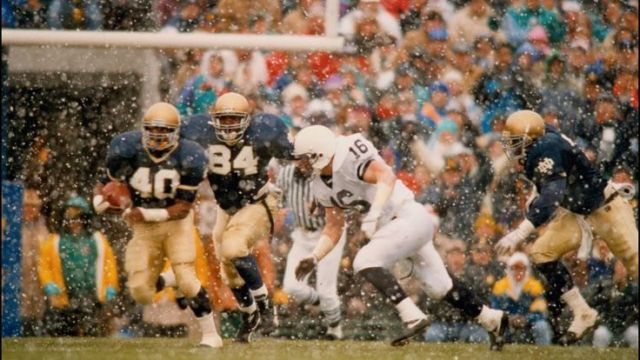
Notre Dame Fighting Irish_ FULL GAME _ The Snow Bowl (Notre Dame Football vs Penn State, 1992)Source:Notre Dame Fighting Irish– playing the Penn State Nittany Lions in 1992.

Source:The Daily Press

“On Nov. 14, 1992, the Fighting Irish met the Penn State Nittany Lions on a snowy Saturday at Notre Dame Stadium. Trailing 16-9 with 25 seconds remaining, Notre Dame quarterback Rick Mirer (‘93) threw a touchdown pass to Jerome Bettis to pull the Irish within one point. In the days before overtime, head coach Lou Holtz elected to go for the win. He drew up a two-point conversion play on the sidelines, and as they say, the rest is history. Mirer found Reggie Brooks (’93) in the back of the end zone, lifting Notre Dame to a 17-16 victory.”

From the Notre Dame Fighting Irish

Penn State-Notre Dame, was one of the better college football rivalries in the 1980s and early 1990s. And it’s just a shame that they still aren’t playing. And I believe one of the weakness’ of Notre Dame not being part of a conference because a lot of their big rivalries wouldn’t have to end, because of where they are located, if they could’ve been in the Big Ten or Big East. And never have to stop playing Michigan or Purdue or Penn State or West Virginia, Syracuse, Boston, because they would likely be in the same conference as most if not all of these teams.

The Big East, would make a great comeback in football if Notre Dame was part of it. And they bring back Pittsburgh, West Virginia, Syracuse. Add Penn State and perhaps Buffalo and you would have a great conference with Notre Dame as perhaps the top program in it.

Posted in Big East Classic Games, The Daily Press | Tagged , , , , , , , , , , , , , , , , , , , , , , , , , , , | Leave a comment

For President: Jimmy Carter 1980 TV Ad- Commander

_ - 2021-03-28T143142.337

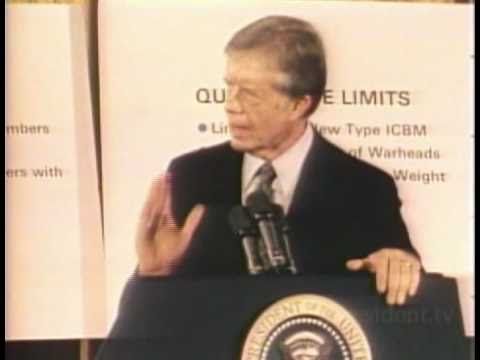
Source:For President– President James E. Carter (Democrat, Georgia)

You can also see this post at The Daily Press, on WordPress.

“Commander, Jimmy Carter 1980 Presidential Campaign TV Ad, Courtesy Jimmy Carter Presidential Library, http://www.4President.tv”

From For President

You do not see Jimmy Carter running on the economy here and telling people about how great the economy is with inflation not being much of a factor or with low-interest rates, or plenty of energy, oil and gas to go around, with low unemployment and high economic growth, with no American hostages around the world, or without Russia on the march in the Middle East, or anything like that. Because the Carter Campaign knew all of that wouldn’t be true and that actually all the opposites to those things were true.

The country was in bad shape in 1980 and back in recession with the American hostages still in Iran. A country that did not want Americans or other Westerners in their country at all. So what the Carter Campaign is trying to do here in this ad campaign is run on what they could and what was left to run on. That the military was stronger, that America was at peace in the world for the most part not involved in any foreign wars. And that even Egypt and Israel were at peace with each other as well. And all of that is true.

You can also see this post on Blogger.

Posted in Jimmy Carter, Originals | Tagged , , , , , , , , , , , , , , , , , , , , , , , | 3 Comments

NBC Sports: FBS 1993- Pittsburgh Panthers @ Notre Dame Fighting Irish: Full Game

The Vault_ ND on NBC - Notre Dame Football vs_ Pittsburgh (1993 Full Game)Source:NBC Sports– WR Lake Dawson would also go on to play in the NFL for the Kansas City Chiefs.

Source:The Daily Press

“Notre Dame handed Pittsburgh a stinging defeat as the Irish marched to a 44-0 victory.

The full game is available for a limited time only exclusively on The Fighting Irish Youtube channel. For more games check out the full “The Vault: ND on NBC” playlist.”

From the Notre Dame Fighting Irish

Talk about your total mismatches: the Pittsburgh Panthers have a great football tradition, at least until went downhill in the early 1990s and were no longer a winning program, let alone a consistent bowl team or national championship contender. Perhaps the main reason why head coach Johnny Majors left the Tennessee Volunteers, where he built a consistent Southeast Conference contender there in the 1980s, was to rebuild the Pittsburgh Panthers football program.

And then you look at the Notre Dame Fighting Irish, where they were a bowl team every year under head coach Lou Holtz, except his first season in 1986, won the national championship in 1988, contended for the national championship in 1989 and were looking to win another championship in 1993, and are playing the Pittsburgh Panthers who entered this game at 1-3. It’s hard to see how the Panthers can even compete with the undefeated Irish, especially at Notre Dame.

Posted in Big East Classic Games, The Daily Press | Tagged , , , , , , , , , , , , , , , , , , , , , | Leave a comment

Marilyn Monroe: Happy Birthday Mr. President (1962)

Marilyn Monroe_ Happy Birthday Mr_ President (1962) _ The Daily PressSource:Miss Malevolent– Marilyn Monroe, singing Happy Birthday, to President John F. Kennedy, in 1962.

Source:The Daily Press

“Marilyn Monroe – Happy Birthday Mr. President”

From Miss Malevolent

President Kennedy had the line of the night, at least from what I heard saying that after hearing Marilyn Monroe sing Happy Birthday to him, he could now retire from politics. I mean after hearing a goddess like that with that voice sing Happy Birthday to you, what is the point of going on, what else could you even hope to accomplish at that point after hearing Marilyn sing Happy Birthday to you.

It’s not just the President of the United States being the only politician that may be lucky enough to get Happy Birthday sung to you by Marilyn Monroe, but that Jack Kennedy might have been the only politician lucky enough to have Happy Birthday sung to them. Jack Kennedy was certainly ahead of his time as far as how he related to Americans. Because he wasn’t just judged by the job he did as President, which of course all President’s are and he wasn’t just judged by how he related to Americans personally, which of course all President’s are.

But JFK was also judged by how he related to people in a social way, he was our first hip President, someone who related well the entertainment community, including Hollywood. Which is a big reason why he had so many friends out there. Like Peter Lawford, who also happened to be his brother-in-law, Marilyn Monroe, Frank Sinatra and many others. That is how this event happened.

Posted in Hollywood Goddess, Marilyn, The Daily Press | Tagged , , , , , , , , , , , , , , , , , , , , | Leave a comment

CBS Sports: FBS 1977- Notre Dame Fighting Irish @ Clemson Tigers

Sop Ibaga_ 1977 Clemson vs Notre Dame Football GameSource:Sop Ibaga with this 1977 Tiger-Fighting Irish game.

Source:The Daily Press

“Game played November 12, 1977. Notre Dame won the national championship that year. Thanks to MyBloodRunnethOrange for this video. The 1979 game: .

In a classic showdown in 1977 between two top 15 teams, Notre Dame’s Joe Montana leads the Fighting Irish back from a 10-point 4th quarter deficit against .

The Catch Game, played November 19, 1977. Thanks to MyBloodRunnethOrange for the video copy. The Catch at 2:14:56.”

From Sop Ibaga

A classic matchup between two great football programs. The Fighting Irish have been one of the premier college football programs in the entire history of NCAA football. The Tigers were just starting emerge as a national, college football, power, in the late 1970s.

Posted in FBS Classic Games, The Daily Press | Tagged , , , , , , , , , , , , , , , , , , , , , , , | Leave a comment