Brookings Institution: Martin S. Indyk: ‘A Return to The Middle Eastern Great Game’

Middle EastSource:Brookings Institution– with a look at the Middle East.

Source:The New Democrat 

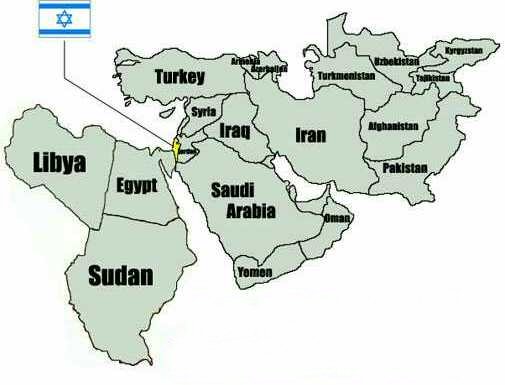
“There is no place in the world today where chaos is more prevalent and the reestablishment of order more critical than the Middle East. The “great game” between rival great powers may have originated in Central Asia but it found its most intense expression at the “crossroads of empire” in the Middle East. As long as American interests are still engaged the United States cannot desist from playing it.

The United States used to have a strategy for the Middle East. It was known as the “pillars” strategy, and it was based on working with the regional powers that were committed to maintaining the status quo—Iran, Saudi Arabia, Israel, and Turkey. The challenge was to contain the revisionist powers—Egypt, Iraq, and Syria—who were backed by the Soviet Union. Over time, the United States lost the Iranian pillar but gained an Egyptian one, reinforcing the Sunni Arab order, but now confronting a Shia revolutionary power in the Gulf.

In 1992, the United States became the dominant power in the region in the wake of the collapse of the Soviet Union and the eviction of Saddam Hussein’s army from Kuwait. After that, Bush ’41 and Clinton ’42 adopted a clear, common strategy for preserving stability that involved three components…

You can read the rest of this article at Brookings

Supporting Middle Eastern dictators in the past may have worked in the past up until 1978 or so with the fall of the Shah of Iran, as far as maintaining some form of peace and stability in this region. And giving America a good resource for energy which we don’t need anymore, as well as intelligence on certain terrorist groups and the worst dictators that had plans for expanding their territory like Saddam Hussein in Iraq. But we’ve paid a heavy price for both financially and with our own security. Like having troops in Kuwait and Saudi Arabia. Saudi Arabia a country more than capable of defending themselves both financially and with their current military.

Not excusing 9/11 obviously, but our involvement in Arabia and our subsidizing authoritarian states there, is one of the motivations for the attacks in New York, Washington, and Pennsylvania on 9/11. We subsidized the Shah of Iran for about forty years going back to Franklin Roosevelt and the Shah was a tough, ruthless, dictator, that beat down the opposition. And the Iranians rose up and threw the Shah out of power and of course replaced that regime with another authoritarian regime the Islamic Theocrats. There are huge costs that America is still paying for subsidizing states that don’t have our best interest and their own people’s best interest at heart. And we’re still paying for them today.

And you can say that well if America and Europe didn’t subsidize these authoritarian regimes, something else that is worst would come instead. Perhaps if all you did was not subsidize them in the first place and done nothing else instead. But an alternative would be to give those states conditional backing. That they respect the human rights of their people. Like not arresting political prisoners simply for being against the current government. Respect the rights of their women, racial, ethnic and religious minorities. Most of the countries are fairly diverse across the board. And instead of backing authoritarian regimes, back people who want democratic change and to build a democratic society in their country.

Backing authoritarians doesn’t stop or prevent future violence or terrorism. Is just moves it around, because instead of the regime backing terrorists who would hit you, what you do instead of give the people on the ground in those countries who hate their government motivation to want to hit you. Get organized, join a current terrorist group or create their own that would work to knockout the current regime, as well as try to hit American targets.

America needs to get past the better of two evils foreign policy in the Middle East. And stop subsidizing bad guys even if they aren’t as bad as other bad guys. And instead work with the good guys who want to build a developed peaceful society where their people would be respected.

Posted in Foreign Affairs, The New Democrat | Tagged , , , , , , , , , , , , , , , , , , , , , | Leave a comment

Foreign Affairs: Alan J. Kuperman: ‘How Barack Obama Failed Libya’

How Obama's Libya Intervention Ended in Failure _ Foreign Affairs

Source:Foreign Affairs– free at last in Libya?

Source:The New Democrat

“On March 17, 2011, the UN Security Council passed Resolution 1973, spearheaded by the administration of U.S. President Barack Obama, authorizing military intervention in Libya. The goal, Obama explained, was to save the lives of peaceful, pro-democracy protesters who found themselves the target of a crackdown by Libyan dictator Muammar al-Qaddafi. Not only did Qaddafi endanger the momentum of the nascent Arab Spring, which had recently swept away authoritarian regimes in Tunisia and Egypt, but he also was poised to commit a bloodbath in the Libyan city where the uprising had started, said the president. “We knew that if we waited one more day, Benghazi—a city nearly the size of Charlotte—could suffer a massacre that would have reverberated across the region and stained the conscience of the world,” Obama declared. Two days after the UN authorization, the United States and other NATO countries established a no-fly zone throughout Libya and started bombing Qaddafi’s forces. Seven months later, in October 2011, after an extended military campaign with sustained Western support, rebel forces conquered the country and shot Qaddafi dead.”

From Foreign Affairs

I supported a limited intervention of Libya that would have a coalition between America and Europe especially NATO that would establish a no fly zone over Libya as the Libyan rebels did the groundwork in Libya to knockout the Gaddafi Regime there. I was in favor of this by February 2011 and even criticized the Obama Administration for not acting soon enough.

President Obama finally makes the decision to intervene in Libya and be part of the NATO coalition that would hit Gaddafi forces in the air as the Libyan rebels did the groundwork. This was one of the most successful, cost-effective and quick military operations that America has ever been part of that ended in the early summer of 2011.

This was not Iraq 2011 where we would go in and invade the country with a hundred-thousand ground troops, knockout the government and establish our own state there to occupy the country. Why the Iraqi people would figure out what kind of country they wanted to have.

The operation in Libya was about knocking out a murderous dictator who was simply only interested in staying in power in Libya. And this is something I believe we could’ve done in Syria by now. Knocked out the Assad Regime in coalition with NATO and not have to debate and consider if we arm the Syrian rebels or not. But that is a different debate.

Libya is not a failed state now because America and Europe decided not to occupy it. Libya is a failed stated because they didn’t have the leadership to unify the country around a new government that could bring this large country the size of Saudi Arabia, Iran and Algeria physically, but with only six-million people, together and plot the course for the new Libya.

What Libya instead got was another semi-authoritarian government that wasn’t prepared to govern and defend the country. And now you have new rebels and terrorists including ISIS that Egypt of all countries has decided to intervene against and take out.

Posted in Foreign Affairs Video, The New Democrat | Tagged , , , , , , , , , , , , , , , , , , , , , | Leave a comment

Trond Repato: The Rise & Fall of Tony Blair

Attachment-1-464

Source: Trond Repato

Source:The New Democrat

The rise of Tony Blair I at least believe has to do with how he reformed the British Labour Party as Leader of the Opposition in the 1990s before becoming Prime Minister. When the Labour Party lost power in 1979 to the Conservative Party, the British economy was in bad shape. Because it was over-centralized, the economy was over-centralized and was too socialist with the U.K. Government owning so much of the economy and trying to run British industries themselves. The U.K. Government by 1979 owned something like seventy-percent of the economy.

When Tony Blair became Prime Minister in 1997 and the Labour Party which was New Labour took over they didn’t move to renationalize industries and perhaps nationalize British industries that weren’t under government control and ownership before. They didn’t reform the British welfare state by saying that people who were physically and mentally able to take care of themselves and work, no longer had to do that if they even if they were uneducated. He kept in place many Prime Minister Margaret Thatcher’s economic polices in place instead. And perhaps offended a lot of people in party who were much further to the left of him by doing that.

New Labour is Tony Blair and Tony Blair’s creation. They were out of power for eighteen-years from 79-97 because the British people remembered the state of the economy when Labour left power in 1979. And they also remember how the British economy finally took off and became the economic power that it is today in the late 1980s and early 1990s. And didn’t want to put Socialists in power that try to take the country back to where it was in the late 1970s. So Tony Blair’s challenge when he became Leader of the Labour Party in 1994 was to change the perception of the Labour Party. So it was no longer seen as Marxist, so socialist and central government oriented.

Tony Blair is a student of Bill Clinton and the New Democrats in America. Someone who didn’t want to transform his party into a conservative party. But someone who wanted his party to be a center-left party and not a far-left party. Someone who wanted to use government to empower people to be able to take control over their own lives and live in freedom. And not have to live off the welfare state or be forced to live off of the welfare state indefinitely. Blair wanted his party to be seen as a party that would defend the country and protect everyone’s freedom. And was very successful in doing that.

Trond Repato: The Rise and Fall of Tony Blair

Posted in The New Democrat, UK Labour | Tagged , , , , , , , , , , , , , , , , | Leave a comment

Richard Quine: The Notorious Landlady (1962) Starring Kim Novak & Jack Lemmon

The Notorious Landlady (1962) Original Trailer [FHD]

Source:HD Retro Trailers– Hollywood Goddess Kim Novak starring in The Notorious Landlady.

Source:The New Democrat

“The original trailer in high definition of The Notorious Landlady directed by Richard Quine. Starring Kim Novak, Jack Lemmon, Fred Astaire and Lionel Jeffries.”

From HD Retro Trailers

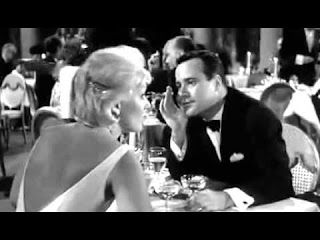
This photo is from another tailer of The Notorious Landlady. But the video that this photo is from is not currently available online right now. Otherwise the link for it would be on this blog.

The Notorious Landlady (1962) Starring Kim Novak & Jack Lemmon

Source:The New Democrat– Hollywood Goddess Kim Novak and Hollywood funnyman Jack Lemmon in The Notorious Landlady. Perhaps you can tell for yourself which one is which.

Kim Novak similar to Diana Dors in The Unholy Wife is the perfect woman to play a murder suspect because she’s so cute and sweet. It is hard to believe she’s capable or hurting anyone let alone killing someone.

Only in The Notorious Landlady the Kim Novak character is innocent and what happened to her husband no one actually knows. The Diana Dors character in The Unholy Wife is guilty of murdering at least two people.

Jack Lemmon plays an American diplomat in London who has just arrived there needing a place to live while he’s in Britain. Kim Novak is also an American, but now living in England who owns an apartment house. It is basically a large house with a flat upstairs.

Bill Gridley (played by Jack Lemmon) finds the house and asks if he can rent the apartment there that is vacant. Not knowing that the woman who owns the house is a murder suspect. She is very protective of her and her home and very specific about who she wants living there. And try’s to scare off Bill with a phony English accent that Kim does very well in the movie, but is unsuccessful and eventually gives in.

Once they figure out that are both are American, they hit it off. Bill’s boss at the U.S. Embassy in London finds out where Bill is living and who owns the house and bring in Scotland Yard. Because they believe she murdered her husband.

Bill similar to me can’t believe that this woman that he’s now renting a flat from and is in love with is capable of murdering anyone. Even though Scotland Yard and his superiors believe she’s guilty and basically spends the rest of the movie trying to prove that she’s innocent. Even though he has his own suspicions about who is the real killer and is Mrs. Hardwick (played by Kim Novak) is completely innocent in this case.

This is not a great movie or a great comedy, but Kim Novak is great in it and looks great in it. And Jack Lemmon is his usual funny, charming self.

Posted in Classic Movies, The New Democrat | Tagged , , , , , , , , , , , , , , , , , , , , , , , , , | Leave a comment

Columbia Classic’s: Pushover (1954) Starring Fred McMurray & Kim Novak

.
Source:The New Democrat

“Money isn’t dirty, just people are”. One of the better lines from Pushover delivered by the great Kim Novak who was great at delivering lines because she had a great voice and came off as so real because she was so real. She acted as if she was the person she was playing and delivered the lines not as an actress, but as if she was the person she was playing. I’ve at best seen bits and pieces of Pushover and saw the whole movie last night in preparation for this blog. And I was very impressed and saw a great crime drama involving real people and how they deal with bad situations.

Pushover starts off as being about a police stake out of a girlfriend of a bank robber that the police are after. Who stole two-hundred-thousand-dollars from a bank. They believe the girlfriend played by Kim Novak might be in on the operation or at the very least knows about it. And that her boyfriend is going to see her and perhaps tell her what he knows and where to meet her and all of that. Fred McMurray plays either a police sergeant or senior detective on this case who is leading the stake out and only has a police lieutenant to report to. He meets the girlfriend on purpose and they hit it off immediately.

Lona played by Kim Novak figures out that Paul Sheridan is a cop and has been investigating her. And he confesses to that and tries to get her to go downtown with him to tell the police what she knows about the bank robbery. She refuses and instead suggests that they get the money and split it and run off together. Paul refuses Lona’s offer strongly at first, but also wants to protect her from her boyfriend and the police in the stake out and tells her about the stake out and how to behave. How to answer the phone and how to talk to people and when to leave her apartment and everything else.

Paul finally gives in, but without a strong push from Lona. And now they are completely working together during this stake out that Paul is supposed to be leading as the senior detective or sergeant on the case. And now they are working together and just trying to buy time and not get caught and figured out while Paul’s men on the case are getting more suspicious of her and want to know what she knows about the case. Paul starts off as a good cop in the movie, but falls in love with the target he’s supposed to be investigating and the case goes bad from there.
Pushover

Posted in Classic Movies, The New Democrat | Tagged , , , , , , , , , , , , , , , , , , , , , | Leave a comment

Foreign Affairs: Alexander J. Motyl: Why Vladimir Putin’s Days Are Numbered

Source:The New Democrat 

If you look at how the Russian Federation is set up and what type of country and the government they are supposed to have on paper, it is very sound and looks very similar as the United States. They are officially a Federal Republic with checks and balances in their Federal Government. A strong executive, but independent judiciary and legislative branches. With states that they call republics who are also independent of the Federal Government. With their own governments and independently elected governors of their republics. Sounds like America, doesn’t it.

But that is not how President Vladimir Putin governs Russia and no he’s not as bad as Joe Stalin and a lot of Russian dictators from the Soviet era. Russia is a hell of a lot better off now than they were in the Soviet era as far as being able to move around the country and being able to build lives for themselves and being able to live in some type of freedom. And they do now have an independent media and access to foreign media. But this is not a liberal democracy by any stretch of the imagination and doesn’t even advertise itself as one. And if Vlad Putin is not a dictator officially, he is certainly one in practice with all the power he’s centralized in his own office.

But it looks like President Putin may have gone too far, because as much economic progress that Russia has made in the last fifteen years or so under his leadership, that has mostly been from their energy industry that is state-owned. Russia is one of the top three energy producers in the world. This is a country that should’ve been an economic superpower sixty-years ago with their natural resources and their educated public. But of course their communist system ruined that for them and the Putin Administration hasn’t done much to develop their other industries and create other industries. That America did a long time ago and that Europe in Japan did sixty-years ago.

And now that oil prices are falling and the with the American/European economic sanctions on Russia because of their unlawful invasion of Ukraine and all the money that Russia has spent to try to occupy parts of Ukraine which is a large country, the Russian economy is taking a big hit. And people in the Russian Government and around the country know this and have only their President Putin to blame for that. And as a result President Putin’s strong hand on that entire country of one-fifty-million people is getting a lot weaker. And hopefully his days as dictator of Russia are numbered.

Posted in Foreign Affairs Video, The New Democrat | Tagged , , , , , , , , , , , , , , , , , , , , | Leave a comment

The Washington Post: Jonathan Capehart: ‘John Boehner Needs to Follow His Own Advice on DHS Funding’

Source:The New Democrat

It is not often that I agree with House Speaker John Boehner on anything and I’ll let you judge for yourself how often that is. But he has a point here. The House did their job at least in round one and passed a Homeland Security funding bill. They passed a bad bill with the immigration defunding and the Senate shouldn’t pass that provision. What the Senate should do is first debate the bad House bill and then try to fix it.

You may already know this if you follow me on this blog, but I hate the motion to proceed rule in the U.S. Senate. And you really need to be a Congressional junkie on Congress to know what the Senate motion to proceed rule is. But the Senate Leader can’t bring a bill up on the Senate floor without sixty votes. Which is stupid because the whole point of being in the majority in the Senate is getting to set the agenda. If the Leader can’t bring up bills on his own and needs sixty votes to do that, it really makes the role of the majority pretty weak.

Another good thing about the Senate is the role of the minority. Unlike in the House the minority can try to change or in this case fix any bill that the Senate majority brings up. They can do that with the amendment process and they can block bills if they have forty-one votes to do so. Senate Democrats having a sizable minority with forty-six votes can block bills on their own. Knowing that what they should be doing instead is saying, “we’ll debate the bad House bill, but we are going to try to fix it as well. And if we are able to strip the immigration defunding in it, we’ll vote for final passage. But if not, then we’ll block the bill on final passage”.

But to try to block a bill before it is even allowed to be debated, is a waste of time. Time that could be spent at least trying to fix the bad House bill and bringing along a few Republican Senators especially Republicans who’ll have tough races next year in the Northeast and Midwest who want to do other things in this Congress and get passed this issue. The House passed their bill a bad bill at that. Senate Republicans brought up the bill that they want. Now its the job of Senate Democrats to fix the bad bill. And if they are successful there, then they can send a clean bill back to the House. But if not then they can block the House bill and work with Senate Republicans on a compromise.

Posted in The New Democrat, The Washington Post | Tagged , , , , , , , , , , , , , , , , , , , | Leave a comment

The Hill: Keith Laing: Senator Bernie Sanders: $1T Infrastructure Bill Would Be Cheaper Than Iraq War

Source:The New Democrat

Bernie Sanders wouldn’t be Bernie Sanders if we wasn’t proposing things like a trillion-dollars in infrastructure investment to rebuild America. And I agree with him as far as the amount of money that we should invest to rebuild this country and how that money would be spent. Which would to prioritize much needed infrastructure projects around the country and repairs that must be done to avoid future accidents and to put as many Americans back to work as possible.

The only areas where I disagree with Senator Sanders is how to finance this. What the Senator is talking about is funding this investment through the U.S. Government and taxing corporations’s oversees profits and eliminating tax breaks that they get at home. That part I don’t disagree with, except I would use that revenue differently. But the process is where I have the main problem, because what he’s talking about needs to go through a broader tax reform package that needs to be worked out in Congress between the House and Senate, with President Obama involved. Whatever tax reform that the President and Congress work out would probably a trillion-dollars by itself.

Tax reform and infrastructure are two different issues that should be treated separately. You could invest a trillion-dollars in infrastructure, pay for it without borrowing and not need to do tax reform to get it done. And do tax reform as a different bill. Both are important issues that have to be dealt with to get the type of investment in America that we have to have to make our economy as strong as possible. You could tax oil, you could tax gas, you could raise fees, you could tax things that aren’t very healthy for society. Like tobacco, alcohol and marijuana if it ever legalized federally. And you could bring in the private sector to invest in our infrastructure.

What we could do is to set up a National Infrastructure Bank that would work independent of the U.S. Government, but lets say owned by them. Similar to the Federal Reserve or Amtrak, that would be non-profit. And use this first trillion-dollars to get the NIB up in running and to prioritize infrastructure projects around the country. Consulting the private sector, state and local governments, as well as the Feds. And bringing in private investors to finance these projects around the country. But Senator Sanders bill is an excellent start to a critical issue for the country that has to be addressed.

Posted in The Hill, The New Democrat | Tagged , , , , , , , , , , , , , , , , , , , , , , , , , | Leave a comment

The New Republic: Elizabeth Stoker Bruenig: The Economist Magazine is Wrong About Welfare’s Impact on Family

Source:The New Democrat

As far as disability insurance, if you are physically and mentally able to working, meaning you don’t suffer from some physical or mental condition that makes it hard if not impossible for you to work full-time, you aren’t eligible for disability insurance. Lacking skills and education for you to be able to get yourself a good full-time job or a part-time job that pays very well like being an airline pilot, to use as an example is not an excuse not work or not to work full-time. It simply means you are uneducated or are low-skilled. Which can simply can be fixed education and job training. Unless you are learning disabled and aren’t able to get the skills necessary to support yourself with a good job.

Which means for people in poverty who are low-skilled or the long-term unemployed who do have an education, but perhaps had a job that no longer exists and are now unemployed or working part-time for a lot less money than they use to, disability insurance is not the answer for them. Because they aren’t eligible for it, again to take the low-skilled worker to use as an example unless they are learning disabled. What we should be doing for these workers is putting back to school to finish and further their education that government would finance for them. As well as encourage economic development in their communities and that is where infrastructure investment comes in.

This blog made this point several times yesterday and for very good reason. Infrastructure, education and job training solves a lot of our economic problems in America. I would add economic incentives to business’s to invest in underserved areas and incentives to employers to train their low-skilled workers so they can move up in their companies would also increase wages and create jobs in this country. Because now people who were either unemployed and on Welfare before or working a low-skilled low-income job can now get themselves a good job. And not longer need public assistance at all to support themselves.
Cato Institute-C-SPAN: Ted DeHaven on The Washington Journal- Increasing Cost of Social Security Disability Insurance

Posted in The New Democrat, TNR | Tagged , , , , , , , , , , , , , | Leave a comment

Foreign Affairs: Bilal Y. Saab- Saudi Arabia’s Way Forward

Amir Faisal Al Saud in Arab Dress
Source:The New Democrat

I’m not claiming to be an expert on Saudi Arabia and that their people and especially their government is ready for this type of government, system and constitution. Especially their government that currently benefits so much from their current makeup and setup. That their oil and gas revenues provides so much for their people and that most of the country is able to live pretty well in return. That their people in return give up individual freedom, or at least a lot of bit certainly from a personal perspective, but perhaps from an economic perspective as well. Since the Saudi economy is so dependent on their oil and gas.

What I’m saying is that what I would propose for them has worked very well in other countries with similar government’s or population’s. That Britain is a democratic monarchy where their government is separated from their monarchy. That their head of state is a Prime Minister who is independent of the monarchy. And that country has done very well for about sixty-years now under that system. Turkey one of Saudi Arabia’s neighbors in the Middle East is a very religious Muslim country. But their government is secular by in large even if their current government wants to change that. And their government has functioned very well the last thirty-years or so.

I believe the way forward for Saudi Arabia is not to abolish their monarchy or their form of Islam. But to separate them from their government and have those three things act independently, but in partnership with the others. A national government, hopefully federally under a federal system. That has checks and balances with an executive, legislature and judiciary. That again are independent of each other, but work in partnership. An executive that is led by a president or prime minister, not a king who is accountable to their legislature, judiciary and most importantly the Saudi people.

What Saudi Arabia will probably get instead from their new King is the status quo. Which is very conservative at least on sense that they won’t change anything. And if anything make their current system stronger and more centralized and dictatorial. But for this country to truly become a developed country and a giant in the world economically, politically and militarily, they need to diversify their government and their economy so their people have the freedom to make Saudi Arabia as strong as it can be. And not so dependent on a monarchy and energy industry doing so much for everyone else.
RT: Saudi Ruler Dead- King Abdullah Dies in Hospital aged 90

Posted in Foreign Affairs Video, The New Democrat | Tagged , , , , , , , , , , , | Leave a comment