Lyle Denniston: Did The Founders Want Term Limits For Supreme Court Justices?

Source:The New Democrat 

Damn! I found something that I agree with Mike Huckabee on. And perhaps tomorrow I’ll find something that I agree with Michael Moore on, but don’t hold your breath. I’ve been thinking about this for a while, but a U.S. Justice in many ways is just as powerful as a U.S. Senator on a lot of things. U.S. Justice’s whether they are supposed to or not, can literally rewrite laws and say this is constitutional and that is not. They did that with the Affordable Care Act in 2012, to use as an example. They can also throw laws out and say this is good and this is bad. And not just to Congress and the President, but state and local laws as well.

U.S. Justice’s have a lot of power and responsibility and yet they’re the only federal officials that have guaranteed job security for the rest of their lives. Just as long as they don’t officially break the law and get impeached and convicted by Congress. And yet they have no one to report to that holds them accountable. They have all of that power and no one to say, you’re doing a good or bad job and they should continue to work, or its time for them to step down and put a fresh face on the court. Here’s an old saying, but it is as true today as it was when it was said the first time. Power corrupts and absolute power corrupts absolutely.

Why should U.S. Justices’s get lifetime job security? Why should they have something that no one else in the country has, unless you live in a state where state and local judges are lifetime appointees as well? I’m not calling for turning the U.S. Supreme Court into a political branch and having Justice’s running for election and reelection. I think that would be very dangerous and turning the court into another political body and perhaps debating society. Where a lot of very important issues wouldn’t get decided, because Justices’s don’t want to make tough political calls one way or another. And besides we already see that anyway where Justice’s tend to make calls that are already supported by their political party.

I’m also not saying that U.S. Justices’s should only be able to serve a certain amount of years and terms. Because again if They are qualified to serve and the President still wants them there, the President should be allowed to reappoint that Justice. And I just lead into what I would do. Give each Justice lets say six-year terms. And then the President would have to decide to reappoint that Justice or replace that person with someone else. And the same thing for the Chief Justice of the Supreme Court. Make Justices like everyone else, work hard and be productive and even fight for their jobs. To get them to give the best service and judgment that they possibly can.

Posted in The New Democrat | Tagged , , , , , , , , , , , , , , , | Leave a comment

The Intelligent Channel: Jayne Mansfield: on Visiting U.S. Troops in Vietnam in 1967

Jayne Mansfield

Source:The Intelligent Channel– Hollywood Babydoll Jayne Mansfield in Vietnam, in 1967.

Source: The New Democrat

“Archivist Alex Cherian presents a highly emotional 1967 film clip of actress Jayne Mansfield returning home from a goodwill tour of U.S. troops in South Vietnam. Clip is copyright Young Broadcasting of San Francisco, Inc. Special thanks to Pat Patton and KRON-TV for helping make this material publicly accessible. For more info, visit the San Francisco Bay Area Television Archive at Alex Chernian

“Background: Actress, singer, model, and accomplished musician Jayne Mansfield, 1933-1967, was one of the iconic American entertainers of the 1950s and 1960s, appearing in numerous films with co-stars such as Cary Grant – winning a Golden Globe and other awards along the way – television programs including “What’s My Line?”, “The Jack Benny Program,” “The Bob Hope Show” and “The Ed Sullivan Show,” and dominating many print publications of the time. See also at Jayne Mansfield

From The Intelligent Channel

It’s great to see the human sides of great Hollywood celebrities and entertainers that Jayne Mansfield was, even if it was for just a brief period. Because thanks to their handlers and themselves we generally only see them at their best. Meaning their strongest, that is when they are sober and not in trouble, but living well and staying out of trouble. But they are humans just as well who aren’t always at their strongest. And visiting troops in a military hospital during a war could break anyone down. And leave them with memories that they’ll never forget because of the injures that they’ve seen at the hospital.

Jayne Mansfield talking about an American troop who was twenty-five and I guess about to lose his leg if he hadn’t already lost it. That troop wasn’t the only twenty-five year old soldier who lost a leg in the Vietnam War. And I imagine this soldier survived this war. Unlike a hundred-thousand or so American troops who didn’t in that war. You can be against the war, but still support your troops. People who didn’t choose to go over there in many cases. Who were drafted, but ended up surviving the experience in good shape physically. Or coming away with serious injuries, or simply not making it out Vietnam alive.

I don’t know how Jayne thought about the Vietnam War, or if she thought anything about it to be honest with you. She wasn’t known as a Hollywood political activist to put it mildly. Unlike Jayne Fonda who is perhaps the most famous Hollywood political activist of all-time. But to see her go over there and support all of those young American men and women who in many cases weren’t there by choice, because they were drafted into the military, is pretty impressive. This is something that she didn’t have to do. Nor did Raquel Welch when she went over in the late 60s as well to entertain them. And she deserves a lot of credit for that.

Posted in Baby Jayne, Hollywood Goddess, The New Democrat | Tagged , , , , , , , , , , , , , , | Leave a comment

Kieran Monroe: Jayne Mansfield on Jack Benny (1956)

.
Source:The New Democrat

Wow! And I thought Jack Benny was pretty popular and that the Jack Benny Show was pretty popular. And then I hear that they have to grab the purses of women, including Jayne Mansfield in order to get them to appear on the show. I wonder if they paid the audience just to show up. How they make any money paying people just to come to the show. Jayne Mansfield showing her quick comedic side as an actress on this show. Playing along and doing very well on it. Going toe to toe with perhaps one of the top 5-10 comedians of all-time who inspired many other comedians as well.

Jayne Mansfield was probably at her peak and at the top of her career at this point. Which is a damn shame, because she was only I believe twenty-three years old at this point. And probably should’ve had another twenty-years as a Hollywood star had she took care of herself and laid off heavy drugs including booze. Because her career moderated, but didn’t collapse the way it did in the early and mid 1960s. Leaving her depressed and wondering what was the point in going on. Every comedy and variety show wanted a piece of her. Not just physically, but they also knew she was a very good comedic actress. With an excellent sense of humor.

Jack Benny had Jayne, along with Marilyn Monroe, Diana Dors and Mami Van Doren, who by far in away had the longest career of any of these Hollywood Goddess’s, on his show in the 1950s. Dina Dors had the second longest career of these starlets, with Marilyn burning out in 1962 and Jayne in 1967. They were both in their mid-thirties when they died. Mami is still alive today in her early eighties and Diana died in 1984. But Jack could get basically anyone he wanted on his show. His show was that popular, good and funny. And inspired future variety shows in the future.

Jayne & Jack

Jayne & Jack

Posted in Baby Jayne, Hollywood Goddess, The New Democrat | Tagged , , , , , , , , , , , , , , , | Leave a comment

Mark Preston: Can This Democrat Really Beat Hillary Clinton?

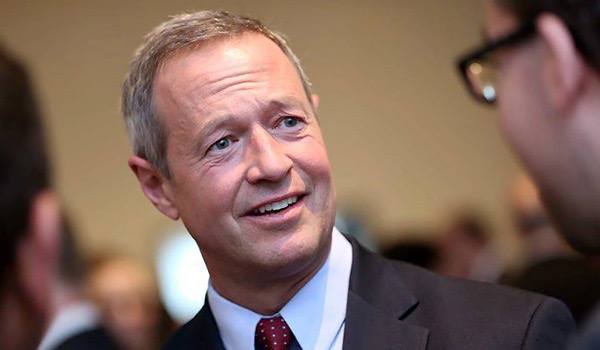
Martin O'Malley
Source:The New Democrat

No one is saying that Martin O’Malley is going to win the Democratic nomination for president in 2016. Governor O’Malley knows that he’s a long shot. But so was Governor Jimmy Carter in 1975, Governor Bill Clinton in 1991 and Senator Barack Obama in 2008. Jimmy Carter probably had the least name ID of any of these Democrats and he won the Democratic nomination for president going away in 1976. Bill Clinton had the Democratic nomination locked up by February or March of 1992. With Barack Obama and Hillary Clinton in 2008, it went to June. But Senator Clinton was a well-financed frontrunner in 2007-08 who lost to Senator Obama.

When someone starts off as high as Hillary Clinton for president like she is now, there’s only one way for her to go, which is down. Doesn’t mean she’ll go all the way down, but Democrats have wanted a strong challenger to her since at least the summer of 2014. And with her latest controversy that makes even more sense. And that the fact that she’s not campaigning and has kept quiet about when she’ll officially announced just gives Democrats that itch about wanting an alternative to her even stronger. They want to know where she is and where she is on the issues, right now and what type of campaign she’ll run.

Lack of name ID is certainly a weakness and can be a problem. But if played right it can also be a strength. Because it gives the candidate the opportunity to introduce themselves to the people who they’ll need to vote for them. Tell them all about them self and what they are about, what they’ve done in the past, what they’ll do in the future and why people should vote for them. That is where Jimmy Carter, Bill Clinton and Barack Obama and now Martin O’Malley all were before they became Democratic nominees for president and then won the presidency the same year.

Martin O’Malley has everything that voters I believe especially Democrats at least say they want in a presidential candidate. Youth, energy, outsider, newcomer to the national scene, intelligence, experience, likability, charm, humor and vision. He connects to everyday people very well and also appeals to lets say yuppy Democrats, wine and cheese Democrats who have a tendency to look down at working-class Americans. He’s a Democrat that is liked by women, young people and minorities. Young Democrats and perhaps minorities are, Secretary Clinton’s weakness’s right now. And if Governor O’Malley is successful in getting his name and message out in the next 8-9 months, we’ll have a real Democratic contest in 2016.

Posted in The New Democrat | Tagged , , , , , , , , , , , , , , , , , | Leave a comment

Quentin Mislag: Martin O’Malley: The Nation’s New JFK?

Martin O'Malley For President

Martin O’Malley For President

Source:The New Democrat

I don’t think there will ever be another John F. Kennedy, Bill Clinton or Barack Obama. These are great politicians and I use the term accurately and positively that don’t come around very often. Which of course that might sound cheesy, but its true. Politicians that not only have a strong grasp of the issues and knowledge of the subjects they deal with and are especially interested in, but can communicate them in a way that makes people think, “you know what, that’s very interesting. I’ve thought about that issue myself, just not in that way.” Don’t come around very often.

As well as giving people the feeling that the person whose campaigning for their votes also understands how they feel and what they are going through. But is interested in not only helping them out, but also has a plan to do that. As well as having good ideas, whose likable, can make people laugh, intentionally. Martin O’Malley has all of these great qualities. He represents the best of Jack Kennedy and Bill Clinton, but without the negatives of Hillary Clinton. You don’t have to worry about Governor O’Malley running just on his name ID. Because frankly he doesn’t have much to run on. Or running straight for the middle and not taking strong positions on key issues. Because he has a track record of making tough decisions.

You don’t have to worry about Governor O’Malley running simply for the women’s vote and simply wanting to be the first female President of the United States. Without any real clear agenda and vision for where he would take the country. And giving people an idea about what a Hillary Clinton Administration would look like. And would she actually be doing the job as President and not her husband Bill Clinton. Whose always wanted to run for President again. Because in case Martin is not a big enough clue, he’s a man. Governor O’Malley is a Democrat who’ll appeal to all factions of the Democratic Party. Just as soon as they discover him, if that happens at all.

Americans are and will be looking for something different in 2016. Democrats and Republicans and most importantly Independents. Who’ll decide who the next President of the United States is. And running for President with the message of, “vote for me because of my last name, resume and oh by the way, I’m a women”, won’t be good enough. Americans also aren’t looking for another Bush. Someone who on policy grounds will probably look very similar as President George W. Bush, but perhaps a bit smarter with better experience and better track record. They want someone who tell them like it is, at least how they see things. And tell them where they want to take the country and what their presidency would look like.

Martin O’Malley would be that Democrat. Senator Rand Paul would be that Republican. Not that I’m endorsing Senator Paul for President, but at least he would be different and you would have a pretty good idea of what type of President he would be before he got the job. Governor O’Malley is someone who believes in both economic and personal freedom. Using government to expand the opportunity, middle class and even upper class. Making government work and not just bigger and making more people dependent on it. He not Far-Left and won’t scare Independents and their wallets away from them. And he’s not Dead-Center and not being able to expire anyone behind him. He’s a Center-Left Liberal Democrat in the Jack Kennedy sense. Who believes in opportunity and freedom for everyone. And deserves a long look from Democrats and Independents as the next President of the United States.
David Weigel: Martin O’Malley in Iowa

Posted in The New Democrat | Tagged , , , , , , , , , , , , , , , , , , , , | Leave a comment

The New Republic: Elizabeth Stoker Bruenig: ‘House GOP, White House Budget Overuse The Word Taxpayers’

House GOP, White House Budgets Overuse the Word _Taxpayer_ _ The New RepublicSource:The New Republic– if TNR had their way, Tax Day would be a national holiday that they and other Socialists would celebrate.

Source:The New Democrat 

“Earlier this week, House Republicans released their budget for the 2016 fiscal year, “A Balanced Budget for a Stronger America.” There is much to criticize in it, including deep cuts to social spending, questionable accounting, increasingly quixotic Obamacare repeal procedures, and disturbing gestures toward more military spending. But the plan is also an ideological document meant to advance a particular set of beliefs about how government should function, and toward what end. Its composition and slick rollout (including an upbeat YouTube presentation, a BuzzFeed-esque gif set, and a highly navigable website complete with rolling documentation of news coverage) are meant not only to advance certain policy measures, but persuade voters to adopt its ideological point of view.

Which is why its use of the term “taxpayer”—though hardly atypical of political documents—is notable. In the 43-page budget, the word “taxpayer” and its permutations appear 24 times, as often as the word “people.” It’s worthwhile to compare these usages, because the terms are, in a sense, rival ideas. While “people” designates the broadest possible public as the subject of a political project, “taxpayer” advances a considerably narrower vision—and that’s why we should eliminate it from political rhetoric and punditry.

Though addressing people as “taxpayers” is common enough to appear politically neutral, it tends to carry more argumentative weight than it’s typically credited with. The House budget is full of examples of seemingly straightforward deployments of the term which are, upon closer inspection, clearly furthering a particular ideology. “There are too many scenarios these days in which Washington forgets that its power is derived from the ‘consent of the governed,’” the plan reads in one instance of the term’s use. “It forgets that its financial resources come from hard-working American taxpayers who wake up every day, go to work, actively grow our economy and create real opportunity.” In other words, Americans’ taxes are parallel with taxpayers’ consent, suggesting that expenditures that do not correspond to an individual’s will are some kind of affront. The report goes on to argue that

food stamps, public housing assistance, and development grants are judged not on whether they achieve improved health and economic outcomes for the recipients or build a stronger community, but on the size of their budgets. It is time these programs focus on core functions and responsibilities, not just on financial resources. In so doing this budget respects hard-working taxpayers who want to ensure their tax dollars are spent wisely.

Put simply, taxpayers should get what they pay for when it comes to welfare programs, and not be overcharged. But, as the Republican authors of this budget know well, the beneficiaries of welfare programs tend to receive more in benefits than they pay in taxes, because they are in most cases low-income. The “taxpayers” this passage has in mind, therefore, don’t seem to be the recipients of these welfare programs, but rather those who imagine that they personally fund them. By this logic, the public is divided neatly into makers and takers, to borrow the parlance of last election’s Republicans.

Democrats often refer to “taxpayers,” too. At 150 pages, the White House budget proposal for 2016 uses the term 26 times, predictably invoking it when referring to cuts and reductions in services. “The Budget includes initiatives to improve the service we provide to the American public; to leverage the Federal Government’s buying power to bring more value and efficiency to how we use taxpayer dollars…,” President Barack Obama writes in his introductory message. “The Budget includes proposals to consolidate and reorganize Government agencies to make them leaner and more efficient, and it increases the use of evidence and evaluation to ensure that taxpayer dollars are spent wisely on programs that work.”

There are countless examples of this reading of “taxpayer” bleeding out of official rheotric and into mainstream political commentary. Consider Megan McArdle’s recent meditation on prison reform in Bloomberg View, in which she points out that “prison is … very expensive,” and therefore, “while we’re punishing the criminal, we’re also heavily punishing the taxpayer.” Imagining tax payment as a kind of punishment is the upshot to the general use of the term, however innocuously the majority of its speakers may intend it. If money owed in taxes is imagined, as in the budget plan and McArdle’s usage, to belong to the taxpayer, then programs operating off of public revenue do seem to have some obligation to correspond to their funders’ consent, and serving the interests of others does seem unfair. But these are all obfuscations brought on by the term.

The same laws that determine that money deposited into a person’s bank account belongs to that person also determine that taxes owed on that deposit do not. Public revenue is just that: a pool of public money to be used for the good of the public, not 300 million pools of private money each to be used to serve private individuals’ interests. What is in the interest of the public may involve expenditures that can’t be filed in a pay-in-cash-out formula, as the “taxpayer” terminology would suggest. Kids, for example, usually don’t pay taxes whatsoever, but spending on children is a necessary social function. Our roads and public utilities, too, are available to anyone inside our borders, not because they have been purchased, but because strong infrastructure provides for the common good.

Along with wrongly dividing the public into various private interest sets, taxpayer terminology also seems to subtly promote the idea that a person’s share in our democratic governance should depend upon their contribution in taxes. If government should respond to the will of taxpayers because programs are incorrectly supposed to be financed on their dime, then those contributing larger shares would seem to be due greater consideration, like shareholders in a company. (It would also mean that the countless undocumented immigrants who contribute more than $10 billion a year in taxes ought to become voting citizens.) But this view is precisely contrary to the democratic vision invoked in historical verbiage like “consent of the governed,” as it mistakes the source of a person’s rights. Our share in democracy arises not from what we can pay into it, but from the fact that we are persons and personhood confers certain obligations and dues.

Whereas “taxpayers” is strewn throughout political documents, “people” is associated with populist and revolutionary movements, and not for nothing. Power to the people, the evergreen revolutionary slogan trumpeted by popular fronts around the world, has a ring that power to the taxpayers does not precisely because it demands an inclusive view of public goods. The same could be said about the first line of the U.S. Constitution: “We the Taxpayers” would have been an odd construction for a nation born from a revolt against British taxation. So let’s leave “taxpayer” to the IRS and remove it from everyday speech. With every thoughtless repetition of the word, we’re carrying political water.”

From The New Republic

This article from Elizabeth Stoker Bruenig in The New Republic is just another example that TNR is gone and finished and has now become a different current affairs magazine. Another version of the New-Left The Nation or Salon. (To put it nicely)

To suggest that using the term taxpayer is somehow insulting to people who don’t make enough money to pay federal income taxes, is ridiculous. The term taxpayer is generally used for Americans who pay federal income taxes. Most of those Americans tend to be middle-class Americans and even the wealthy, even after all of their tax breaks. It is not used as an insult for people who collect public assistance because they don’t make enough money to support themselves. And in some cases don’t work at all.

Americans who do collect public assistance especially if they are working, do pay taxes. They pay payroll taxes to pay for Social Security, Medicare and Unemployment Insurance. If they drive and own a car even a cheap one, they pay gas taxes to pay for roads and other infrastructure. And they may even pay state and local income taxes even if they are low-income. And if they aren’t working and are on Welfare or Unemployment Insurance, they pay sales taxes and perhaps even gas taxes if they have a car. So even low-income Americans are taxpayers. And even income taxpayers when it comes to payroll taxes. So really except for being a political correctness warrior or something, I don’t see what Elizabeth Bruenig is complaining about here.

Posted in The New Democrat, TNR | Tagged , , , , , , , , , , , , , , , , , , , , , , , , , , | Leave a comment

From Cult Til Camp: Jayne Mansfield Interview by Wim Sonneveld

Source:The New Democrat

Holland has a lot of English speakers, at least today and perhaps back then as well. Something like 9-10 Dutch speak English at least as their second language. And can travel to Britain, Scandinavia, Canada and America just speaking English, because of how well they speak it and understand it. And most of this interview was done in English with Wim Sonneveld speaking it very well. And then he would do a little translation for Holland. And I guess Jayne Mansfield was over in Holland promoting Will Success Spoil Rock Hunter. A movie that she did with the great comedic actor Tony Randall in 1956.

In Will Success Spoil Rock Hunter, Jayne Mansfield essentially plays herself. A very young and hot starlet named Rita Marlowe who has very similar characteristics as the real-life Jayne Mansfield. A hot baby-face goddess who is somewhat immature and looks and acts a lot younger than she actually is. Who portrays herself in real-life as a dumb blond or blonde bimbo, but behind the scenes is a lot sharper than that. And knows exactly what she wants and how to get it. Which is to be taken seriously as an entertainer. And not just someone who looks great and needs those looks to be successful in life.

And that is how Rita Marlowe played by Jayne and Rock Hunter played by Tony Randall connect. Because Rock Hunter is an up incoming advertiser whose looking that one big client that can move him up in his company. And he meets Rita Marlowe whose in New York looking for that person to give her the positive publicity and image that she’s looking for. This is a pretty funny and entertaining movie. But hardly a stretch or hard role for Jayne to play in this movie. Because the Rita Marlowe character is very similar to the real-life Jayne Mansfield.

From Cult Till Camp: Wim Sonneveld Interview of Jayne Mansfield

Posted in Baby Jayne, Hollywood Goddess, The New Democrat | Tagged , , , , , , , , , , , , , , | Leave a comment

Jayne Mansfield: Interview in 1964

Source:The New Democrat

I think part of Jayne Mansfield’s dumb blonde image had to do with the fact, one because of the roles she got. But two she never really grew up personally and was basically a big teenage girl with the baby-face her whole adult life with the personality to match. And if you look at a lot of her movies and a lot of those movies are either very funny, or she’s very funny in them and she was a very funny actress with a great personality, you see her playing women that are a lot like her. I’ve blogged before that I don’t see Jayne as dumb, but as immature and simply too cute personally for someone of her years.

Jayne Mansfield was always a big little girl who never grew up. When she turned 16 or 17 and perhaps even 18 that is about as far as she ever got emotionally. And when her career went south in the early 1960s, she handled that like a teenage girl who doesn’t know how to manage disappointment like a mature grown women would be able to. And as a result her life goes south as well and she stops taking care of herself. Not that she ever did a good job of that to begin with. But she starts drinking way too much and using drugs. And was never happy again in her life.

The interviewer questioned Jayne about her dumb blonde image. And she intelligently answered that had to do with a lot of the parts that she got in Hollywood. Hollywood saw her as this hot baby-face adorable goddess with the great body and they ran with that as long as she was useful to them. In the movies Will Success Spoil Rock Hunter and The Girl Can’t Help It, she essentially plays herself in those two movies. But that was just part of why she was portrayed the way that she was. The other part had to do with how she presented herself in public as this baby-face adorable little girl with the great body. And how she lived her life.

Posted in Baby Jayne, Hollywood Goddess, The New Democrat | Tagged , , , , , , , , , , , , | Leave a comment

Foreign Affairs: Graham K. Brown and Arnim Langer: ‘Lessons From Affirmative Action Around The World’

Does Affirmative Action Work_ Lessons From Around 
the World - Google Search

Source:Foreign Affairs– Does affirmative action work? 

Source:The New Democrat

“Americans tend to think of affirmative action as a uniquely American institution: an outgrowth of the civil rights movement, intended primarily to improve economic opportunities for African Americans, who have continued to face obstacles to equality long after the Jim Crow era of segregation and overt discrimination. And it is true that as part of the Civil Rights Act of 1964, the U.S. government began to implement affirmative action policies. State agencies and public universities soon followed suit. As these programs expanded to assist other groups, such as women, Native Americans, and Hispanic Americans, affirmative action began to seem like a strategy specifically suited to a Western liberal democracy struggling to reconcile its ideals with its history.”

From Foreign Affairs

Asian-Americans Weigh in on Affirmative Action

Source:The Associated Press– Michael Kao, talking about affirmative action. 

“As the US Supreme Court decides what role race should play in college admissions, some Asian-Americans argue that the use of race as a criteria hurts more than helps. Asian-American college students discuss their personal experiences.”

From The Associated Press

Imagine fifty-years ago when the U.S. Government under the Johnson Administration had a federal policy designed to empower racial and ethnic minorities in this country who were stuck in poverty that was built around infrastructure, education and job training. That all of that money, or at least some of it that went into the Great Society was put into low-income communities. Things like roads, bridges, schools, health care centers, job training centers, incentives for economic development. Are we still looking at an African-American poverty rate of thirty-percent today and a Latino-American poverty rate of twenty-five percent today?

Fifty-years later after affirmative action, who’s benefited from it the most part. Caucasian-American women who were already doing well. And Asian-Americans who were already doing well. Latinos are doing better, but a lot of them have come to America and started their own business’s. And some of them have benefited from affirmative action. Like the kids of immigrants and others. And yes African-Americans no longer have a poverty level of fifty-percent and that is a good thing. But at thirty-percent it is still twice that of the national average. About the level they were fifty-years ago. Twice that of the national average.

So what we’ve done as a country with affirmative action is to tell Caucasian men and women as well, as well some Asian-Americans, that they are already doing very well in this country. And because of that they are going to be denied access in some cases like at college and federal contracts, so people who aren’t doing as well and in many cases aren’t as qualified for those opportunities to have that new access so they can do better as well. And a lot of African and Latino-Americans have taken advantage of that access that they wouldn’t of gotten except for affirmative action. But at the expense of Caucasians and Asians who were more qualified going in.

I’m all for empowering people of poverty regardless of race and ethnicity to do well in America. That is something I believe as a Liberal, liberating people from poverty. But there’s a right way to do that and a wrong way. And the wrong way to empower people who are struggling at the expense of people who are doing well and have taken advantage of the opportunities they were given in life by working hard and being productive. What you do with people who are struggling is give them opportunities to get themselves out of poverty. You invest in their communities with new economic development. You give them education and job training opportunities so they can get themselves the skills that they need to get a good job. You modernize their schools, roads, bridges and everything else that communities have to have to be strong.

And when you invest ins struggling communities, you invest in inner cities and rural areas. And you don’t make those communities even poorer by building new public housing projects in those communities, so you have more poor people moving in there. And even few property owners and leaving the schools there without the resources that they need to give their students a good education. You instead put public housing projects in economically successful areas. So the residents there can immediately get the resources that they need to be able to live a good life. Where their kids can go to good schools. While you’re tearing down or renovating the public housing projects in poorer communities as part of a community rebuilding plan.

We could’ve been doing these things fifty-years ago when economic times were good and weren’t running up huge debts and deficits. Even with the Vietnam War, instead of affirmative action. Instead concentrating so many poorer Americans in one community where they are dealing with bad schools for their children. Where the parents of these kids haven’t finished school themselves in many cases. Where they are dealing with high crime and criminal gangs. Because when business’s leave communities crime tends to move in. Because the resources aren’t there to fight crime in an effective way. And with a better more proactive and even more liberal approach to economic inequality, we could be dealing with much lower poverty rates in this country.

Posted in Foreign Affairs Video, The New Democrat | Tagged , , , , , , , , , , , , , , , , , , | Leave a comment

Ron Chusid: Al Gore As The Liberal Alternative To Hillary Clinton?

Source:The New Democrat

I’ve blogged several times even within the last year that the Democratic Party needs to challenge Hillary Clinton with a center-left liberal challenger. And if Hillary does end up as the Democratic nominee for president, she’ll need that challenge as well for her to the strongest presidential candidate in the fall of 2016. That gets here out of this run for the middle mushy-middle shell that she’s in right now. Where she doesn’t take any strong stances on anything other than traditional Democratic women’s issues.

Not sure that person is Al Gore. For one, he doesn’t seem to want to do it. He didn’t have a very good experience in 2000 even though he came damn close to winning that election. And he’s sort of remembered as losing a presidential election that he could’ve won going away had he simply ran a smart presidential campaign. He ran bad campaign at least up until the convention that year and still came close to winning that election. But at least part of that had to do with who he was running against. And that voters weren’t sold on George W. Bush at least not until the end.

I don’t see Al Gore as someone who wants to go through that again. “Hey, you’re the guy who lost to that idiot. If you could’ve only of beaten that idiot, you could’ve saved America eight years of hell. From a president who simply wasn’t up for the job.” That is sort Vice President Gore’s legacy right now because of how he ran in 2000 and who he lost to. And all the dumb mistakes that he made to little things like rude behavior at the presidential debates. Debates that he won handily at least on substance.

Hillary should get a challenger and she should get a liberal challenger. But a real liberal challenger and not someone who’s a self-described Democratic Socialist in Senator Bernie Sanders. The country is simply not ready for someone that Far-Left as President. Or someone who reminds America of Senator George McGovern. Like Senator Elizabeth Warren whose always putting down American business’s and wealth as if those are bad things that some Americans have become really successful. And now have a lot of money.

I agree with Ron Chusid about Senator Ron Wyden. One of my favorite Liberal Democrats in Congress. And I think Senator Wyden will at least look at a presidential run. My former Governor Martin O’Malley, will run and comes from one generation up from Hillary and would represent a fresh young handsome liberal democratic face. Who was a successful government of a major state in Maryland. And a successful mayor of a big city in Baltimore. Someone with real world experience and success as an executive and knows how to work with people and get things done. Who would be able to appeal to young Democrats that the party will have to have in big numbers. With real liberal credentials as a two-term governor. And there a few others, but those would be Hilary alternatives that I would be looking at.

Posted in The New Democrat | Tagged , , , , , , , , , , , , , , , | Leave a comment